
Beautiful Plants For Your Interior

Discover the quality and safety of Illinois drinking water. Our listicle explores the latest on water standards, testing, and treatment.
Did you know over 12 million people use the same network of pipes and treatment plants daily? Clean water is key to public health for everyone in the state.
Some links below are affiliate links. If you buy through them we may earn a commission at no extra cost to you. See our Affiliate Disclosure.
Keeping Illinois drinking water quality safe is a big job. Local and state teams work hard to check for harmful substances. They make sure every tap has clean water.
Learning about safe drinking water in Illinois helps us all make better choices. By looking at the rules and local efforts, we see how our water is protected. This guide is your key to understanding how we keep our communities healthy.
The health of our communities depends on the quality of our tap water. Safe, clean water is key to public health. Illinois works hard to keep its water safe for everyone.
Clean water is essential for a healthy society. Good water systems stop waterborne illnesses. Keeping our water sources clean is vital.
“Water is the driving force of all nature. Protecting our water supply is the most important investment we can make for our future generations.”
The state values transparency. The Drinking Water Watch web portal lets people check their water’s safety. It helps keep everyone informed.
Here are the main ways we check our water’s health:
| Monitoring Metric | Purpose of Test | Frequency |
|---|---|---|
| Bacterial Analysis | Detects harmful pathogens | Monthly |
| Lead and Copper | Checks pipe corrosion | Triennial |
| Chemical Contaminants | Ensures safety standards | Annual |
Many groups work together to ensure our water is safe. The Illinois Environmental Protection Agency leads in enforcing Illinois water pollution control rules. They work with federal agencies to keep our water quality high.
Knowing where your tap water comes from is key to understanding its journey. Illinois gets its water from many places, like deep underground and big surface bodies. This knowledge helps people see how the environment affects their water.
The state uses two main types of water: groundwater and surface water. Surface water comes from rivers, lakes, and streams. It’s treated by big facilities. Groundwater, on the other hand, is pumped from under the ground.
Many places in Illinois use both types to keep the water flowing. Public systems are checked often to keep the water safe. But, there are also private wells, and their owners must make sure the water is safe to drink.
Aquifers are like hidden water tanks under the ground. They store lots of water in rock and sediment. These underground layers are key for a steady water supply, even when it’s dry.
But, keeping aquifers healthy is important. They can get polluted from the surface. It’s vital to protect these hidden water sources for Illinois’ future.
Illinois also uses big surface reservoirs for water. These are key for cities and suburbs. They collect water for treatment plants and are watched closely.
These reservoirs are more than just water storage. They’re also important ecosystems. By using both groundwater and surface water, Illinois makes its water system strong. This helps avoid problems from relying on just one source.
Keeping our water safe and clean is a big deal. Yet, water contamination in Illinois is a big challenge. Many things can get into our water, like minerals and man-made chemicals. Knowing what these are is key to keeping our water safe.
PFAS, or “forever chemicals,” are a big topic today. Made for their water and oil resistance, they’re in many products. They don’t break down, so they stay in the environment for a long time.
Other contaminants like lead, copper, and germs are also a concern. They can get into the water through old pipes or the environment. Testing is constant to keep the water safe.
Industrial activities have harmed our water for a long time. Factories and plants release chemicals that can get into our water. These chemicals are hard to remove and need special treatment to make the water safe.
Industrial waste can change the water’s chemistry. Places near old factories face more risks. So, local groups work to watch these areas and enforce strict rules to protect our water.
Agriculture is important in Illinois, but it’s hard on our water. Rain can carry fertilizers, pesticides, and animal waste into streams. This water contamination in Illinois can cause algae blooms in our lakes.
| Contaminant Source | Primary Impact | Mitigation Strategy |
|---|---|---|
| Industrial Waste | Chemical toxicity | Advanced filtration |
| Agricultural Runoff | Nutrient pollution | Buffer zones |
| Aging Infrastructure | Heavy metal leaching | Pipe replacement |
In Illinois, water treatment plants work hard every day. They turn raw water from rivers, lakes, and underground into clean water for millions. This process is vital for keeping our water safe and fresh.
In 2021, Illinois made a big step by checking for PFAS in drinking water. This shows the state’s dedication to keeping our water safe. It’s part of a bigger plan to protect our health.
From natural sources to your tap, water goes through many steps. Facilities use a set process to remove harmful stuff.
Disinfection is the most crucial part of water treatment. It makes sure no harmful germs are left before the water is distributed.
“The primary goal of disinfection is to provide a multi-barrier protection system that guarantees the biological safety of our water supply.”
Chlorination and UV light treatment are common methods. They are very good at killing off bad microorganisms that could make us sick.
Illinois water treatment plants use advanced filtration systems. These systems catch impurities that get past the first steps.
Many plants now use membrane filtration or activated carbon. These help target specific chemicals. By updating these systems, Illinois can handle both old and new pollutants.
The Illinois Environmental Protection Agency (IEPA) is our state’s water guardian. They make sure the water from your tap is safe. They check both public and private systems to keep our communities healthy.
The IEPA’s main job is to enforce Illinois water quality regulations strictly. They decide what makes water safe to drink and make sure public water meets these standards. They stop harmful pollutants from getting into our homes.
The agency also helps local water operators by giving them technical advice. This helps them improve their systems and use better treatment methods. Their dedication ensures our water is reliable and safe.
Monitoring water quality is a big part of the IEPA’s work. They test water from wells and reservoirs regularly. This helps them catch problems early, before they become big health issues.
The agency uses modern technology to check for chemicals and bacteria. They analyze this data to spot trends and adjust safety measures as needed. This keeps our water supply safe for the long term.
Being open is key for the IEPA. They must tell the public and well owners if they find contamination. This keeps everyone informed about their water’s quality.
The agency also holds public meetings and keeps databases open for the community. They encourage people to get involved in water safety. Staying informed helps you protect our local water resources.
Every resident in Illinois should know what’s in their tap water. Being open about water quality helps keep homes healthy and informed.
Water system operators must share safety info with you. By checking these reports, you can help watch over your water quality.
The Consumer Confidence Report, or water quality report, comes from your local water supplier every year. It tells you where your water comes from and what’s in it.
These reports are key because they show if your water meets Illinois’ strict standards. If it doesn’t, the supplier must tell you right away.
Many water utilities in Illinois post their reports online. Look for a link called “Water Quality Report” or “CCR” on their website.
If the report isn’t online, you can ask for a copy. Just call your water provider using the number on your bill. They must give you the report.
When you get your report, look at the table with contaminants. Check the “Maximum Contaminant Level” (MCL) to see if your water is safe.
Compare the “Detected Level” to the “MCL” to see if your water meets safety standards. Here’s a table with common metrics you’ll see.
| Metric | Description | Why It Matters |
|---|---|---|
| MCL | Maximum Contaminant Level | The legal limit for a specific substance. |
| MCLG | MCL Goal | The level with no known health risk. |
| Detected Level | Measured Amount | The actual concentration found in tests. |
| Violation | Compliance Status | Indicates if the water met safety rules. |
Water safety in Illinois varies greatly. It depends on the size and management of Illinois water treatment facilities. Whether you live in a big city or a small town, your tap water experience is unique.
In cities, water is managed by big companies or the government. For example, the University of Illinois Urbana-Champaign gets its water from Illinois American Water Corporation. This ensures that water is checked regularly and safely.
In rural areas, people often use private wells or small systems. These are more at risk from environmental changes. Homeowners or local groups must test the water themselves to keep it safe.
Rural areas face old infrastructure problems. Small systems can’t afford new technology, making them vulnerable. Private well owners must also test and maintain their water.
“The strength of our water security lies in our ability to modernize aging infrastructure, ensuring that every citizen has access to clean, reliable water regardless of their location.”
Urban areas are focusing on big upgrades to improve water safety. They aim to tackle new contaminants and make water distribution better. By using smart technology, cities can quickly spot and fix water problems.
| Feature | Urban Systems | Rural Systems |
|---|---|---|
| Management | Professional Corporations | Private/Small Boards |
| Monitoring | Continuous/Automated | Periodic/Manual |
| Infrastructure | Modernized/Large-scale | Aging/Decentralized |
| Primary Goal | Efficiency and Scale | Local Accessibility |
Traditional pollutants have been managed for years. But, new contaminants are challenging our water safety systems. These come from modern habits and industrial growth, posing risks to water contamination in Illinois. Scientists are racing to find these risks before they harm public health.
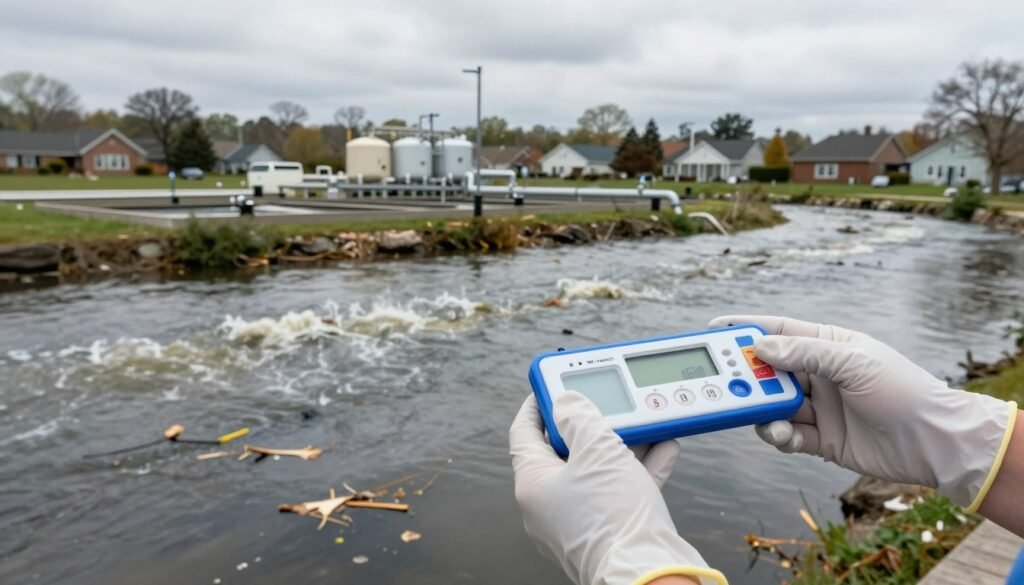
Medications, lotions, and soaps often find their way into our water. These pharmaceuticals and personal care products (PPCPs) are not fully removed by treatment plants. Their biological activity means even small amounts can harm aquatic life and human health.
Microplastics, tiny plastic pieces, are a big concern worldwide. They come from plastic waste or synthetic fibers in clothes. Scientists are studying how these particles move through our systems and their effects on humans.
PFAS, stable, persistent chemicals, are a major focus. They build up in blood and organs over time. Because they don’t break down, they’re a key area of research for water contamination in Illinois. Learn more about these risks in the PFAS drinking water fact sheets from state health officials.
To tackle these risks, we need better monitoring and advanced filters. Investing in new testing methods will help keep our water safe for the future.
| Contaminant Type | Primary Source | Health Concern |
|---|---|---|
| PFAS | Industrial/Firefighting foam | Bioaccumulation in organs |
| Microplastics | Plastic waste breakdown | Potential systemic toxicity |
| Pharmaceuticals | Human waste/Disposal | Endocrine disruption |
Improving water quality in Illinois is a big job, but communities can do it. Working together, we can protect our water. By using local knowledge and scientific help, we can make a real difference.
In Illinois, local groups are leading the fight against environmental issues. They connect complex science with community needs. For example, community-led water quality solutions show how local efforts can greatly improve water health.
“True environmental stewardship begins at the local level, where people are most connected to the land and water they rely on every day.”
The Illinois EPA supports local efforts with tools and guidance. They focus on helping private well owners keep their water safe. They provide a fact sheet on testing for contaminants, giving residents the info they need.
The state also lists certified labs for water testing. This is key for families on private wells to improve water quality.
It’s easy to get involved and help protect our water. There are many ways to contribute, like water monitoring, education, or policy work. Here are some ideas:
By staying active and informed, you help keep your community healthy. Together, we can ensure clean water for all Illinois residents for years to come.
Climate change is changing how we manage water in Illinois. It brings new challenges for local utilities and state agencies. By understanding these risks, we can work on improving water quality in Illinois for the future.
Illinois sees more intense rain, leading to runoff. This runoff carries pollutants into our waterways. Heavy storms also stress our drainage systems, making it hard to keep water safe.
On the other hand, dry spells reduce water volume. This makes contaminants more concentrated. So, keeping water quality high is a constant battle.
Warmer air and water are now common in the Midwest. This encourages harmful algae blooms. These blooms can make water treatment harder and risk public health.
Also, warmer temperatures lead to more evaporation. This reduces our water supply. Our infrastructure faces more pressure. We must ensure our treatment systems can handle these evolving environmental stressors.
The state has taken steps to protect our water. On December 7, 2021, the Illinois EPA updated groundwater regulations. These changes aim to safeguard our groundwater against new threats.
Adapting means updating policies and using new technologies. By focusing on improving water quality in Illinois, we can build a stronger system. The table below shows how we’re tackling climate impacts with strategic responses.
| Climate Impact | Primary Risk | Adaptation Strategy |
|---|---|---|
| Increased Runoff | Contaminant Loading | Enhanced Filtration |
| Rising Temperatures | Algae Blooms | Advanced Disinfection |
| Groundwater Shifts | Resource Depletion | Part 620 Regulations |
| Extreme Weather | Infrastructure Stress | System Modernization |
These steps help keep our water supply stable despite climate change. Investing in infrastructure and following new rules are key. Together, these efforts are vital for improving water quality in Illinois.
Illinois is stepping into a new era of water safety. This is thanks to new tech and stricter rules. The state is working hard to keep its water safe and reliable for everyone.
Many cities in Illinois face old pipes and outdated facilities. To fix this, they’re focusing on large-scale upgrades. They aim to replace old pipes and update systems to stop leaks and keep water clean.
Communities are also adding smart technology to their water systems. This tech gives real-time data on water flow and pressure. It helps catch problems early, making the water system more reliable.
New methods are being used to clean water better. Technologies like granular activated carbon and reverse osmosis are becoming more common. They catch tiny pollutants that older methods miss.
Scientists are also working on ways to treat water that use less energy. This makes water treatment cheaper and more efficient. It helps keep water affordable for everyone in Illinois.
New rules are coming to keep up with what we know about chemicals. By 2029, water systems will have to test for and meet new limits for PFAS. This means big changes to water testing standards in Illinois.
These new Illinois water quality regulations aim to protect us from new dangers. They set clear limits to keep our water safe. The table below shows what’s coming next.
| Focus Area | Primary Goal | Expected Impact |
|---|---|---|
| Infrastructure | Lead line replacement | Reduced heavy metal exposure |
| PFAS Compliance | Mandatory testing by 2029 | Higher safety standards |
| Digital Monitoring | Real-time data tracking | Faster response to leaks |
| Treatment Tech | Advanced filtration | Cleaner, safer water supply |
Protecting our natural resources is a team effort for everyone in Illinois. We need strict rules, community awareness, and new technology to ensure safe drinking water.
Staying informed about your local water supply is key. Reading your annual water quality reports tells you what’s in your water. This knowledge helps you make better choices for your health.
Many families also use water filters at home. These filters, certified by NSF/ANSI 53 or 58, remove harmful contaminants. They give you peace of mind when you drink water.
Supporting state projects for water infrastructure is important. Your help in local programs keeps water safe for everyone. Together, we can make sure Illinois has safe drinking water for all.
← Drinking Water Quality by State — see how all 50 states are rated on our 5-factor composite methodology covering PFAS, lead, violations, disinfection byproducts, and infrastructure.
If your home uses a private well, your water is exempt from federal testing requirements and may contain contaminants not covered by municipal reports. See our comprehensive review: Best Water Filters for Well Water in 2026 (Iron, Sulfur & PFAS).