
Beautiful Plants For Your Interior

Get the inside scoop on Nebraska tap water quality. Our listicle provides an in-depth look at the state's water sources and treatment processes.
Did you know over 80% of people in Nebraska get their water from underground aquifers? This makes it very important to know if our water is safe.
Some links below are affiliate links. If you buy through them we may earn a commission at no extra cost to you. See our Affiliate Disclosure.
Keeping Nebraska’s tap water safe is a big job. It involves strict rules from the federal government and local efforts. Even though most water meets safety standards, old pipes and farm runoff can be big problems.
We aim to provide a clear picture of how these systems work to keep your water safe. By looking at recent EPA data, we can see how good our water is and the state of our tap systems in Nebraska.
Knowing where your water comes from is key in Nebraska. The state uses many natural resources to keep water flowing. This knowledge helps us understand how our communities stay hydrated.
Nebraska gets its water mainly from two places: rivers and underground aquifers. Rivers and streams are the source of surface water. Groundwater comes from deep underground. Keeping the water safe is a big job.
In big cities, water treatment plants handle the water. For example, Omaha’s water comes from the Missouri and Platte Rivers. These plants use filters to make sure the water is clean.
In rural areas, wells and small water systems are common. These often draw from the Ogallala Aquifer. Keeping this aquifer clean is very important.
The table below shows the main differences in water sources across the state:
| Source Type | Primary Use | Key Benefit |
|---|---|---|
| Surface Water | Urban Municipalities | High volume capacity |
| Groundwater | Rural/Agricultural | Consistent availability |
| Aquifers | Private/Small Systems | Natural filtration |
Where you live affects your water source. Knowing about these systems helps us protect our water. Together, we can keep Nebraska’s water safe and reliable.
When you turn on your tap, you get clean water thanks to strict rules. Keeping safe drinking water in Nebraska is a team effort. It balances national rules with local actions. This way, every community gets the water it needs.
The Environmental Protection Agency (EPA) leads in water safety. The Safe Drinking Water Act sets enforceable standards for harmful substances. This law makes sure every state meets these high standards.
These rules change as science learns more about water safety. The main goals are:
In Nebraska, the state takes charge with the help of federal rules. The Nebraska Department of Environment and Energy (NDEE) sets Nebraska water quality standards. They focus on the state’s unique needs.
The state finds about 1.8 water safety issues per water system on average. This number shows the need for constant checks. It also helps improve local policies.
Together, federal and state rules protect Nebraska’s residents. By following Nebraska water quality standards, the state keeps its water safe. This is key for safe drinking water in Nebraska now and in the future.
Knowing what’s in our water helps us protect our homes. Many water systems are safe, but it’s good to know about possible problems. Learning about water contamination Nebraska helps us keep our families safe.
Many things can get into our water, like natural rocks or farm runoff. Arsenic is a big worry, found in 488 systems in Nebraska. It affects over 1,577,436 people who use these water sources.
Nitrates are also common, often from farms. They can harm Nebraska groundwater contamination. Keeping an eye on these levels is key to safe water for everyone.
It’s important to know how these substances can harm us. Arsenic can cause serious health problems if levels are too high. Regular tests are a good idea.
High nitrate levels are dangerous, too, for babies and young kids. Being proactive can help avoid these risks. Many families use filters to protect their water. This simple step keeps our tap water safe and healthy.
Transparency in utility performance is key for public health in the state. By looking at official reports, people can understand how their local providers keep Nebraska water quality standards. These reports connect complex data to everyday needs of families.
Every year, public water systems must issue Consumer Confidence Reports. These reports show what contaminants are in the water and if the utility met safety standards. Staying informed helps keep your household safe.
When you read these reports, look for important details:
Looking at long-term trends shows if our water systems are getting better or facing new issues. By using the EPA’s Enforcement and Compliance History Online (ECHO) database, we can track performance from July 2021 through June 2024. This data gives a comprehensive look at how well local authorities manage their infrastructure over time.
Comparing recent data to older records shows important patterns in system reliability. While most utilities meet Nebraska water quality standards, finding minor changes helps communities push for upgrades. Consistent monitoring is the best way to keep water authorities accountable for their service to every resident.
How do Nebraskans really feel about their tap water? It often depends on what they know about how it’s treated. When local authorities are transparent, people tend to trust their water more.
But, when it’s hard to find clear information, doubts grow. This lack of clear communication makes people wonder if their water is safe and reliable.
Recent studies show that trust in tap water is fragile. It relies a lot on consistent reports. Many people feel secure when they get annual water quality reports.
When these reports are shared openly, it builds a sense of partnership between the utility providers and the public.
In some areas, rural Nebraskans voice water quality concerns that show the need for better outreach. These surveys show that people worry not just about safety, but also about the long-term health of their aquifers. Building trust means more than just meeting legal standards; it means engaging with the people being served.
The quality of tap water affects a community’s well-being. When people trust their water, they use it freely for drinking and cooking. But, if they don’t trust it, they might rely more on bottled water.
This can lead to waste and extra costs for families. Informed citizens can better advocate for their neighborhoods. When they know the challenges their water system faces, they can support needed improvements. Community involvement is key to ensuring clean, safe water for future generations.
Nebraska, from small towns to big cities, is using new tech to clean water. These new methods help improve water quality in Nebraska. They make it easier to remove tough pollutants.
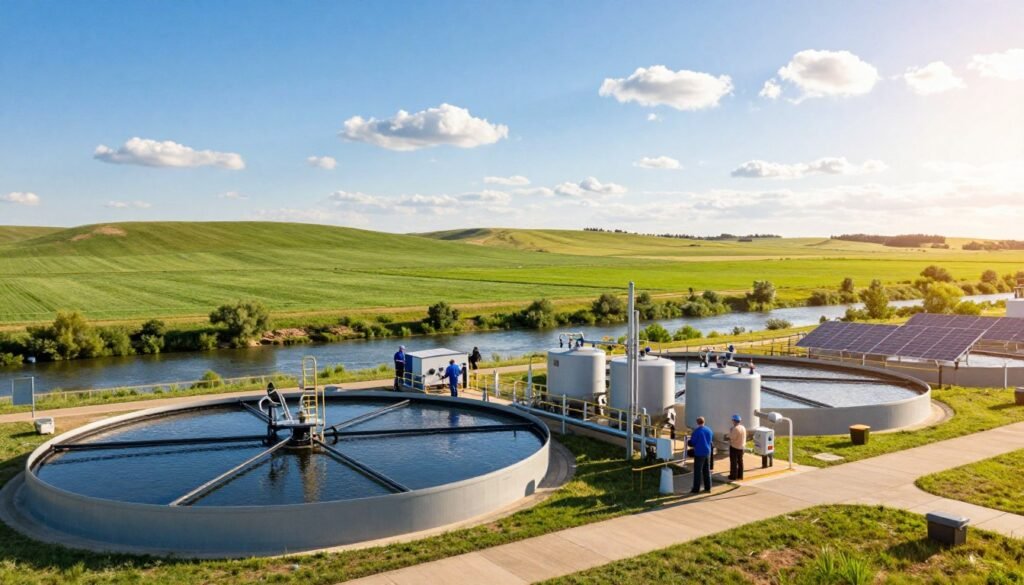
Now, engineers use advanced filters that are way better than old methods. These filters use reverse osmosis and ion exchange to get rid of things like arsenic and nitrates.
Disinfection has also gotten a big boost. Ultraviolet light and ozone treatment are now used. They kill harmful germs without needing lots of chemicals. This means people in Nebraska get cleaner, safer water from their taps.
“The integration of smart technology into our water infrastructure is not just a luxury; it is a fundamental necessity for public health and long-term sustainability.”
Many towns in Nebraska have seen big improvements. For example, places with high nitrate levels have lowered them with new treatment systems.
The table below shows how these new technologies have helped local water systems:
| Technology | Primary Target | Efficiency Gain |
|---|---|---|
| Reverse Osmosis | Arsenic | High |
| Ion Exchange | Nitrates | Very High |
| UV Disinfection | Pathogens | Excellent |
These successes are a guide for other areas to update their water systems. By improving water quality in Nebraska with these methods, the state is working towards a healthier future for everyone.
Knowing about your tap water starts with finding official data. Many people are surprised to find detailed info about their local water online. By using these tools, you can do your own water quality testing Nebraska to keep your home safe.
There are many platforms to check your drinking water’s safety. Start by visiting the Environmental Protection Agency (EPA) website or your local water department’s site. These places often have annual reports on your local water’s chemical makeup.
For deeper checks, private services offer more. Look into these trusted options for your next steps:
At first, reading a technical report might seem hard. But the info is meant to be easy to understand. Reports list contaminants, allowed levels, and actual amounts in your area. If you’re into water quality testing Nebraska, these reports are a great starting point.
When looking at these reports, check the Maximum Contaminant Level (MCL) column. This shows the highest allowed level of a substance in drinking water. If your report shows levels below these, your water meets federal safety standards.
If the data seems unclear, reach out to your local water provider. They can explain specific findings or how their water quality testing Nebraska works. Being informed is key to keeping your family healthy and at peace.
Nebraska’s wide open spaces face unique challenges that affect our water quality. To tackle Nebraska water pollution control, we must understand how land impacts our aquifers and surface water. Knowing these risks helps protect our community’s resources.
The state’s big farms play a big role in managing our water. Runoff from fields can carry harmful nutrients and sediments into our water. This is a big concern for those who rely on wells for their water.
It’s not just farms. Well owners need to watch out for nearby hazards like landfills and industrial sites. These areas can contaminate wells. Regular water tests are key to keeping your well safe.
Changing weather patterns are putting more pressure on our water systems. Extreme weather events can mess up our usual water cycles. This makes Nebraska water pollution control harder than before. We need new strategies to keep our water safe and reliable.
“Water stewardship is not just about today’s usage; it is about ensuring that our environmental footprint does not limit the access of future generations to clean, safe water.”
To tackle these challenges, we’ve listed common threats to our water. Knowing these risks is the first step to protecting our water for the future.
| Risk Factor | Primary Impact | Mitigation Strategy |
|---|---|---|
| Agricultural Runoff | Nutrient loading | Buffer zones |
| Industrial Spills | Chemical seepage | Site monitoring |
| Climate Variability | Supply fluctuation | Infrastructure upgrades |
| Landfill Proximity | Groundwater leaching | Wellhead protection |
Keeping our water healthy is a team effort. By learning about environmental impacts, we can support efforts to keep our water clean and safe for everyone in Nebraska.
Improving water quality in Nebraska starts with knowing what’s in your pipes. Municipal systems aim to meet safety standards, but many want more protection. Taking charge of your home’s water is a smart and proactive move for your family’s peace of mind.
Finding the best water filters for Nebraska tap water needs some research. Not all filters catch every contaminant. You must pick a filter that matches your water analysis.
Many find point-of-use systems, like under-sink filters, work best for drinking and cooking. These are easy to keep up and filter out specific issues like lead or chlorine. Make sure the filter is certified to remove the contaminants you’re concerned about.
| Filter Type | Primary Benefit | Best For |
|---|---|---|
| Activated Carbon | Removes chlorine and odors | Improving taste and smell |
| Reverse Osmosis | Reduces dissolved solids | Removing heavy metals |
| UV Purification | Eliminates microorganisms | Well water safety |
For those on private wells, water quality testing Nebraska experts say is essential. You should get a professional test every year for bacteria, nitrates, and more. This helps catch problems early that you can’t see.
Even on public water, testing can reveal a lot about your plumbing. If your water looks, tastes, or smells off, test it. Regular checks keep your water quality high for years to come.
Protecting our natural resources is a job for everyone in Nebraska. The state ranks 15th for drinking water violations, which is a big warning sign. We need to work together to keep our water safe for everyone.
New challenges will face our water systems soon. Experts say we need to watch our water closely and update our treatment plants. By focusing on Nebraska water pollution control, we can handle problems from farms and weather changes.
Your voice matters in making local decisions. You can go to town hall meetings or join water boards to push for better water testing. By staying involved, you help make sure Nebraska’s water is safe for all. Every effort we make now will help our state’s health for a long time.
← Drinking Water Quality by State — see how all 50 states are rated on our 5-factor composite methodology covering PFAS, lead, violations, disinfection byproducts, and infrastructure.
If your home uses a private well, your water is exempt from federal testing requirements and may contain contaminants not covered by municipal reports. See our comprehensive review: Best Water Filters for Well Water in 2026 (Iron, Sulfur & PFAS).
If your home uses a private well, test it annually — private wells have no federal testing requirement. See our complete guide: How to Test Your Well Water (2026).