
Beautiful Plants For Your Interior

Curious about what is better, spring or mineral water? Our expert guide breaks down the key differences in quality and safety to help your family decide.

Water remains the cornerstone of human life, as our bodies consist of 65% fluid. We simply cannot survive more than three days without it, making the quality of your supply vital for health.
Some links below are affiliate links. If you buy through them we may earn a commission at no extra cost to you. See our Affiliate Disclosure.
Many families feel confused when faced with different types of bottled options at the store. Understanding the unique difference between these sources helps you provide the best for your home.
Related guide: Best Bottled & Drinking Water — our complete guide
Recent data shows 40% of people miss the daily target of 6-8 glasses of drinking water. While men need 3 liters, women require 2.2 liters to maintain essential biological functions and cell performance.
This article explores the benefits of spring water compared to mineral water using research-informed guidance. We examine safety standards and how a natural spring source impacts your daily hydration.
Both spring water and mineral water offer distinct advantages for the conscious consumer. Our goal is to clarify the facts about spring water so you can make a smart choice for your family.
Every water source has a unique story, starting from a spring or an underground aquifer. Ensuring that your fresh water is clean remains our top priority in this guide.
Protecting water quality involves knowing exactly what goes into every glass. We are here to help you navigate the world of safe water with ease and confidence.
Your choice of hydration directly impacts how your body functions and maintains its vital systems. Water is essential for critical biological tasks, including cell function and nutrient transportation throughout your organs. It also provides necessary lubrication for your joints and eyes while regulating your internal temperature.
The urgency of maintaining quality hydration is a matter of pure survival. While a person might survive for three weeks without food, they cannot last more than three days without water. This reality highlights why choosing a quality water source deserves serious consideration from health-conscious families.
Daily needs often depend on physical factors like fat-free body mass and energy levels. On average, men require 3 liters of daily fluids, while women need 2.2 liters to stay healthy. Meeting these targets with high-quality sources supports long-term health outcomes and ensures that cellular waste removal remains consistent.
| Category | Daily Requirement | Key Factor |
|---|---|---|
| Adult Men | 3.0 Liters | Energy Expenditure |
| Adult Women | 2.2 Liters | Fat-Free Mass |
| Survival Limit | 3 Days Max | Cellular Hydration |
Not all bottled options deliver the same measurable benefits. The distinction between spring sources and natural minerals levels often dictates the level of purity you receive. Understanding these differences empowers homeowners to make informed decisions that protect their family’s daily safety.
Ultimately, selecting the right type of hydration is about understanding what your system actually requires to thrive. Whether you opt for spring water or a source rich in minerals, the primary goal is consistent health. Quality water ensures that every cell has the resources it needs, making a reliable source of water the foundation of daily wellness.
To make an informed choice for your home, you must first understand the strict regulations governing natural water categories. Many people assume these terms are just marketing fluff used by brands. However, they actually represent legally defined types that protect the consumer.
According to federal regulations, spring water must originate from an underground aquifer that naturally rises to the earth’s surface. A manufacturer might collect this liquid directly at the source or through a borehole tapping the underground formation. To keep the label honest, they must prove the collected water spring water maintains the same physical properties as the natural flow.
This specific type of bottled water requires strict evidence of a hydraulic connection to the spring. Companies cannot simply label any groundwater as “spring” to attract buyers. It represents a water source that is protected and naturally filtered by the layers of the earth.
When we choose spring water, we are looking for a product that reflects its unique natural environment. The water must reach the surface on its own to qualify for this official designation. Recognizing water spring water helps homeowners identify authentic products versus simple filtered tap water from a spring.
Natural mineral water follows even stricter regulatory standards to ensure its unique character and health profile. This water comes from a protected underground water source and maintains its original purity from extraction to the bottle. Unlike other varieties, its mineral composition water must remain stable and be clearly listed on the packaging.
Authorities require that these mineral properties stay exactly the same throughout the entire bottling process. This means producers cannot add minerals artificially to mimic a natural spring. It must receive official recognition from local authorities after extensive testing of its water consistency over time.
Both spring water and mineral water share a commitment to bottled water quality and safety. They both originate from deep underground and undergo bottling directly at the source to prevent any outside contamination. These rules protect your family by ensuring the mineral water you buy is a true reflection of its geographic origin.
| Feature | Spring Water | Mineral Water |
|---|---|---|
| Origin | Natural underground aquifer | Protected underground source |
| Mineral Content | Naturally occurring levels | At least 250 ppm of minerals |
| Stability | Can vary with seasons | Must remain constant |
| Bottling Rule | Bottled at the source | Bottled at the source |
At first glance, it is easy to confuse spring water with mineral water because they share several fundamental characteristics. They are both popular forms of bottled water that consumers rely on for purity and refreshing taste. Because they appear so similar on store shelves, many families view them as interchangeable options for daily hydration.
The first major similarity is that both water types must originate from a natural underground source. This means they cannot be pulled from surface lakes or municipal tap systems and simply relabeled for profit. Both choices represent a protected spring or aquifer that remains shielded from environmental pollutants found above ground.
These options also contain naturally occurring minerals absorbed as the fluid moves through geological formations. Unlike purified or distilled varieties, this type water maintains its organic chemical profile without human intervention. The presence of these minerals is what gives each brand its unique character and mouthfeel.
To preserve quality, regulations require both to be captured and bottled directly at the spring location. This strict bottling requirement prevents contamination during transport and ensures the bottled water matches the origin point. It guarantees that the fluid you drink in your home is as clean as it was deep underground.
Families can trust that both options meet strict safety requirements before reaching the market. Rigorous testing for chemicals and bacteria ensures the water is safe for everyone. While a spring might produce different volumes than a mineral well, the high standard for quality remains the same.
Recognizing these shared qualities helps homeowners understand that both represent legitimate and healthy choices. While they are not identical, choosing spring water or its mineral counterpart is usually about specific benefits rather than basic safety concerns. Both provide a reliable way to stay hydrated with water that is free from the additives found in processed alternatives.
| Feature | Spring Water | Mineral Water |
|---|---|---|
| Underground Origin | Yes | Yes |
| Bottled at Source | Yes | Yes |
| Naturally Occurring Minerals | Yes | Yes |
Understanding the legal definitions of your drinking water helps you make more informed health choices for your family. The Food and Drug Administration (FDA) establishes standards that prevent companies from using misleading names on their labels. These federal rules ensure that every bottle you buy meets a specific set of criteria based on its source and chemistry.
While both options come from underground sources, their legal identities rely on what they carry inside. This regulatory framework protects consumers by creating a clear distinction between basic hydration and mineral-rich options. By looking at the details, we can see how the government manages these resources to keep our drinking water safe and consistent.
The primary divider between these two types of water is a specific measurement of total dissolved solids. According to federal law, mineral water must meet a strict chemical threshold to earn its name. It must contain no less than 250 parts per million (ppm) of naturally occurring minerals from a protected underground source.
This requirement of 250 parts per million ensures that the liquid provides a significant level of minerals like calcium or magnesium. Does your water contain enough solids to qualify? Most spring water does not have to meet a minimum mineral level, meaning it often has a much lower concentration of dissolved solids.
Furthermore, producers cannot add minerals to the water later to reach this 250 parts threshold. The minerals must be present at the source, exactly as nature intended. This rule guarantees the authenticity of the product and prevents manufacturers from selling enhanced tap water as a natural mineral product.
Transparency is a key goal of water regulations in the United States. Labels on mineral water bottles must clearly display the mineral composition to inform the buyer. This includes a stable count of dissolved solids that the water must maintain over time, proving the source is consistent and reliable.
In contrast, spring sources focus more on the physical origin of the liquid rather than the mineral count. Spring water must come from an underground formation from which water flows naturally to the surface. While companies may choose to list minerals on a spring label, they are not legally required to follow the same rigid disclosure rules as mineral varieties.
This difference means that consumers who need specific minerals for health reasons should look for the “mineral” designation. It offers a more predictable nutritional profile. Meanwhile, those seeking a lighter taste often prefer the varied and lower mineral levels found in different spring water brands.
The process of getting water from the ground to the bottle involves strict hygiene rules. Mineral water producers must follow rules that preserve the original purity and composition of the source. They cannot use treatments that significantly alter the natural mineral balance of the liquid.
The spring water bottling process allows for more flexibility in treatment to ensure safety and clarity. Producers test the liquid for chemical, microbiological, and radioactive limits to meet safety standards. They must use collection equipment that prevents contamination while keeping the water’s natural properties intact.
Both types require bottling at the source or transporting it in a way that keeps it clean. Using secure containers with proper lids is a mandatory step for every brand. These measures ensure that the final product remains a safe and healthy choice for your household.
| Feature | Mineral Water | Spring Water |
|---|---|---|
| Min. Mineral Count | 250 Parts Per Million | No Minimum Limit |
| Added Minerals | Strictly Prohibited | Strictly Prohibited |
| Labeling Rules | Must list composition | Focuses on source origin |
| Treatment | Must maintain purity | Allows safety filtration |
When you stand in the grocery aisle, you might wonder whether spring or mineral varieties offer the most health advantages. Both sources provide hydration that is far superior to sugary drinks or processed juices. However, experts often lean toward one specific option for daily use based on its natural balance and purity.
Experts generally name spring water as the top choice for everyday drinking. This water spring source provides vital nutrients as it moves through your body. It delivers much-needed oxygen to the brain and aids in smooth digestion while supporting a healthy weight.
The taste of this water is usually crisp and clean because it lacks the heavy metallic aftertaste found in some processed brands. Many people prefer it because it undergoes natural filtration through underground rock formations. This process keeps the water pure while retaining its refreshing quality.
However, consumers must remain vigilant about authenticity when shopping. Data shows that only 55% of bottled spring water is actually bona fide. Roughly 45% of products are simply treated tap water, so you must verify the source on the label.
Spring water provides a naturally balanced mineral profile that mimics the hydration sources our ancestors relied upon for thousands of years.
While spring sources are popular, mineral water acts as a powerful supplement for specific health goals. To earn this label, the liquid must contain at least 250 parts per million of dissolved solids. This guaranteed consistency offers predictable benefits for those looking to boost their nutrient intake.
Research suggests that these minerals play a key role in physical development. They help support bone strength and improve lipid metabolism. Regular consumption can also regulate cell permeability and enhance overall digestive function.
Selecting the best water depends on your individual health needs and your family’s diet. If you already eat a nutrient-rich diet, the clean taste of a natural spring may be your best bet. It provides high-quality hydration without overwhelming your system with excess minerals.
However, if you have specific deficiencies, mineral water serves as a functional benefits-driven beverage. Consider your budget and taste preferences before committing to a specific water spring brand. Both are safe, healthy ways to optimize your spring hydration levels compared to standard tap options.
| Feature | Spring Water | Mineral Water |
|---|---|---|
| Mineral Content | Naturally variable levels | Minimum 250 PPM required |
| Health Focus | Oxygenation & digestion | Bones & metabolism |
| Primary Advantage | Superior natural taste | Predictable mineral dose |
| Source Quality | 55% verified authenticity | Highly regulated standards |
Comparing the actual mineral content of various bottled waters reveals exactly what nutrients your body receives with every sip. Many people assume that clear liquids are all the same, but the source determines the nutritional value. The specific minerals found in your glass depend heavily on the geological path the water took before reaching the bottle.
The common minerals in your water include calcium, magnesium, and sodium. These elements exist in different levels depending on the brand and the extraction site. While mineral water typically offers a denser profile, a spring source provides a lighter, more natural composition for daily hydration.
To see the difference, we can look at two popular brands: Buxton and Highland Spring. Buxton, a well-known mineral water, contains roughly double the calcium and magnesium compared to Highland Spring. Specifically, it offers 55mg of calcium per liter, while the spring water provides 40.5mg.
The minerals found in these bottles serve vital biological purposes. Calcium helps build and maintain strong bones, while magnesium supports energy metabolism. Additionally, potassium maintains normal fluid levels inside your cells, and sodium supports nerve and muscle function.
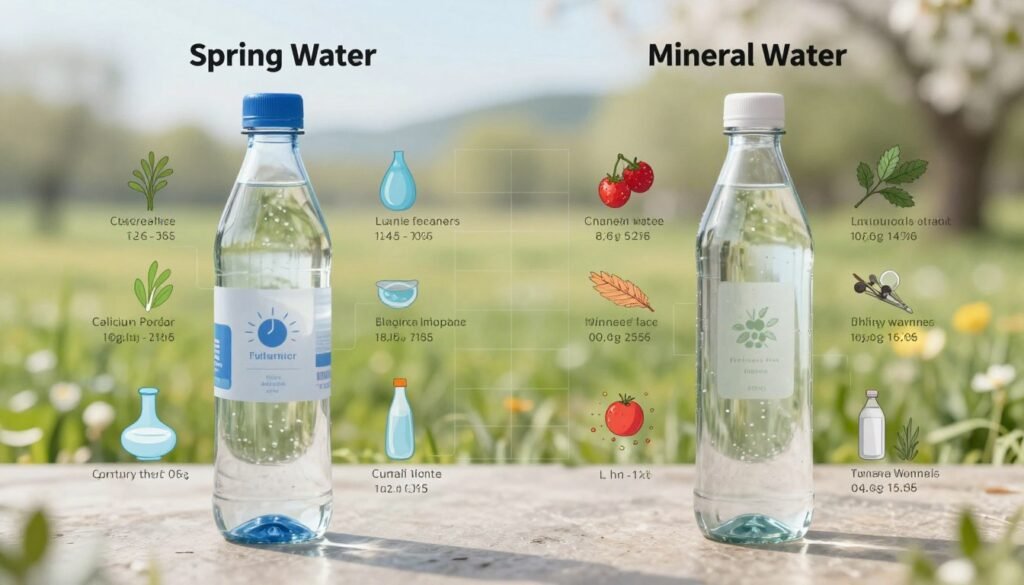
| Mineral (mg/L) | Buxton (Mineral) | Highland Spring (Spring) |
|---|---|---|
| Sodium | 24.0 | 5.6 |
| Calcium | 55.0 | 40.5 |
| Magnesium | 19.0 | 10.1 |
| Potassium | 1.0 | 0.7 |
It is important to put this mineral content into perspective. An adult needs about 700mg of calcium every day to stay healthy. Even a high-quality mineral water only contributes less than 8% of that total requirement per liter. This suggests that you should not rely solely on your beverage for nutrition.
Water only provides some of the minerals our bodies need daily—eating a healthy, balanced diet helps achieve the full amount of minerals required.
Choosing between mineral water vs spring water often comes down to individual dietary needs. For instance, mineral versions have over four times the sodium found in spring sources. While 24mg is still well below the 2,400mg daily limit, people on strict sodium-restricted diets might prefer the spring water option to keep their intake low.
Ultimately, both water types are healthy choices for the body. However, the magnesium and potassium from these bottles represent only small fractions of your recommended daily intake. Always prioritize a varied diet alongside your hydration to ensure you get all the minerals you need to thrive.
When evaluating drinking options, understanding the health benefits and safety protocols is essential for every family. Both mineral water and spring sources offer high-quality hydration that is generally free from common contaminants. By following specific regulations, these products ensure that the drinking water you bring home is clean and reliable.
Before reaching store shelves, both mineral water spring options and standard bottled varieties must pass rigorous FDA testing. These protocols verify that the water is free from harmful bacteria, toxins, and chemical pollutants. Manufacturers must test for chemical, microbiological, and even radioactive limits to maintain high health standards.
Since bottled water from natural sources is heavily regulated, it typically does not require the same harsh chemical treatments as tap water. This ensures your family consumes a product that remains close to its original, pure state. Choosing a trusted mineral water spring brand means you are opting for a beverage that has been checked for safety at every stage.
Research suggests that the natural minerals found in drinking water can play a vital role in physical wellness. The health benefits of these waters include supporting bone development through calcium and aiding in better digestion. Some studies indicate that certain types of water may also improve lipid metabolism and help regulate cellular functions.
| Essential Mineral | Potential Wellness Impact |
|---|---|
| Calcium | Supports strong bone density and development |
| Magnesium | Aids digestion and improves metabolic function |
| Potassium | Regulates cellular permeability and heart health |
Specifically, magnesium-enriched water may help individuals who struggle with mineral deficiencies by increasing nutrient absorption. This type of mineral water increases the body’s ability to use essential nutrients effectively. When you choose a high-quality mineral water spring source, you are providing your body with bioavailable minerals that support long-term health while providing the health benefits your body needs.
While the water itself is pure, the packaging has raised new questions for many consumers in recent years. A recent study revealed that 93% of bottled water brands contain microplastics, which are tiny particles from the containers. This issue affects both the spring and processed varieties, as it is an industry-wide challenge related to plastic usage rather than the source itself.
A recent study found that 93% of bottled water brands contain microplastics, affecting both spring and mineral water products stored in plastic bottles.
To reduce your exposure, we suggest looking for bottled water sold in glass whenever it is available. You might also explore mineralized home filtration systems as a practical alternative to standard water. Despite these concerns, both types of water remain safe options that meet all federal safety standards for bottled water consumption.
Beyond the health benefits, the sensory experience of drinking remains a top priority for most households. We find that people drink this water often because of its crisp profile rather than just its laboratory report. Understanding the difference between natural sources and processed alternatives helps you identify a high-quality water spring.
The taste of water comes directly from its unique mineral content and pH balance. High levels of calcium and magnesium create a “hard” texture that some drinkers find crisp, while others find it slightly chalky. Because of these distinct minerals, a mineral water spring usually has a much bolder flavor profile.
This distinctive taste can be off-putting to some family members who prefer a lighter, more neutral drink. Mineral water is highly regulated, but its intense flavor doesn’t always appeal to everyone’s palate. Conversely, a natural water spring provides a clean, refreshing flavor that never feels flat or metallic.
The consistent quality of authentic spring water makes it an excellent choice for daily hydration. It provides a smooth drinking experience that encourages you to stay hydrated throughout the day. When a spring is properly protected, the taste remains pure and vibrant from the source to the bottle.

Many consumers are surprised to learn about the authenticity issues in the bottled water industry. Research indicates that only 55% of products labeled as spring water actually come from a bona fide spring. The remaining 45% is essentially treated tap water that lacks the natural character of the earth.
To find genuine water spring water, you must look for specific source information on the brand label. Many people unknowingly buy processed water that does not offer the same unique taste as a true mineral water spring. This processed liquid might be safe, but it misses the naturally balanced minerals found in the wild.
Quality-conscious families should prioritize a mineral water spring that offers full transparency about its collection process. Finding authentic water spring water requires a bit of research into the company’s sourcing practices. Investing in real water spring water ensures your family enjoys the most refreshing taste and natural benefits available.
The purity of what we drink is defined by its origin, not just its filtration process.
| Quality Factor | Authentic Spring Water | Mineral Water | Treated Tap Water |
|---|---|---|---|
| Primary Source | Natural underground aquifer | Geologically protected source | Municipal supply |
| Flavor Profile | Clean and refreshing taste | Bold and distinctive taste | Neutral or flat taste |
| Mineral Level | Naturally balanced | High (250+ ppm) | Artificially adjusted |
| Authenticity | 55% of market labels | Highly regulated | 45% of market labels |
Many homeowners discover that they don’t need a mineral water spring if they invest in a high-quality home filtration process. Quality home filtration systems and municipally treated tap water offer cost-effective and sustainable options for the modern household. These systems allow families to rely on their own tap for daily hydration needs without the environmental toll of plastic bottles.
Reverse osmosis filters serve as excellent tools for purifying water. They remove many contaminants that carbon filters might miss, such as heavy metals and organic compounds. This creates healthy, fresh drinking water comparable to many premium bottled brands found in stores.
Advanced filtration systems water also naturally add beneficial minerals back into the liquid after the purification stage. This creates what experts call “mineralized” water, which provides essential electrolytes. Some studies show that magnesium-enriched water may increase urinary excretion of minerals in those with a current deficiency.
For those who enjoy bubbles, specialized home systems can replicate the experience of a mineral water spring. While sparkling water is often bottled containing the same carbon dioxide that was at the source, home carbonation offers a similar type of experience. These devices allow you to control the exact amount of carbon dioxide added to your drinking water.
Choosing these home options reduces plastic waste and exposure to microplastics. While municipal water also remains safe for most people, well owners should perform regular testing for certainty. Reliable tap filtration provides a steady supply of minerals and high-quality water for the entire family. Water filters effectively combine safety with great taste for a lower long-term cost.
| Feature | Reverse Osmosis | Standard Carbon Filter | Bottled Spring Water |
|---|---|---|---|
| Contaminant Removal | High (99%) | Moderate | Varies by Source |
| Mineral Content | Added Post-Filter | Retains Existing | Natural |
| Environmental Impact | Low | Low | High (Plastic) |
Navigating the world of bottled water requires a clear look at mineral content and sourcing standards. Both spring water and mineral water represent safe, healthy drinking options that meet rigorous FDA requirements. They provide naturally occurring minerals that support your daily health.
Spring water is often the preferred choice for experts because it offers a balanced taste and natural purity. However, you should check labels carefully to ensure authenticity. This water often comes from a protected spring source, but some brands sell treated tap water instead.
Real spring sources encourage consistent hydration without a distinct or heavy aftertaste. In contrast, mineral water provides a higher concentration of dissolved solids for those seeking specific benefits. To use this label, the water contain must reach at least 250 parts per million.
These types of beverages must contain consistent levels of minerals from the start of the bottling process. While these drinks provide some nutrients, they are not a primary source for your body. You should still get most daily minerals from a balanced diet.
Microplastics affect many bottled water brands, so glass or home filtration remains a viable option. Ultimately, the main difference depends on your family needs and flavor preferences. Selecting the right water ensures you stay hydrated while enjoying the benefits of each natural spring.
Choosing any safe water, quality water, or verified drinking water is a positive step for your well-being. Whether you prefer natural water or highly mineralized varieties, staying informed helps you make the best decision for your home.
