
Beautiful Plants For Your Interior

Discover what is the correct way to drink water for better health. Our guide lists essential habits to ensure you stay properly hydrated throughout the day.

The correct way to drink water is to sip it steadily throughout the day, mostly between meals, rather than chugging large amounts at once. Increase intake around exercise, heat, or illness, when fluid losses climb faster than usual. Posture and water temperature make little measurable difference — consistency is what actually moves the needle.
Some links below are affiliate links. If you buy through them we may earn a commission at no extra cost to you. See our Affiliate Disclosure.
Most healthy adults land close to 9 cups a day for women and 13 for men, adjusted up for activity, climate, and body size. This guide covers how much to drink, when to drink it, what kind of water is worth choosing, and how to spot the warning signs at both extremes. For the broader picture of hydration’s role in sleep, skin, digestion, and long-term health, see our complete hydration and health guide.
There’s no single number that fits everyone, but a widely used starting point is about 9 cups (roughly 2.2 liters) of water a day for women and about 13 cups (roughly 3 liters) for men, not counting fluid from food. That works out to roughly five to eight standard 16-ounce bottles.
Activity level, heat, illness, pregnancy, and body size all push that number up or down. A better daily check than a fixed target is urine color (covered below) combined with thirst — if you’re rarely thirsty and your urine runs pale yellow, your current intake is probably enough.
Certain conditions raise the baseline further: pregnancy and breastfeeding increase fluid needs, some medications (diuretics and certain blood pressure drugs among them) change fluid balance, and dry or high-altitude climates increase water loss through breathing alone. If you manage a kidney, heart, or liver condition, ask your doctor for a personalized target instead of following a general guideline.
| Category | Approx. Daily Amount | 16-oz Bottle Equivalent |
|---|---|---|
| Women | ~9 cups (2.2 L) | ~4.5 bottles |
| Men | ~13 cups (3 L) | ~6.5 bottles |
The National Institutes of Health treats totals like these as a general guide rather than a rigid quota — actual needs shift with climate, activity, and overall health.
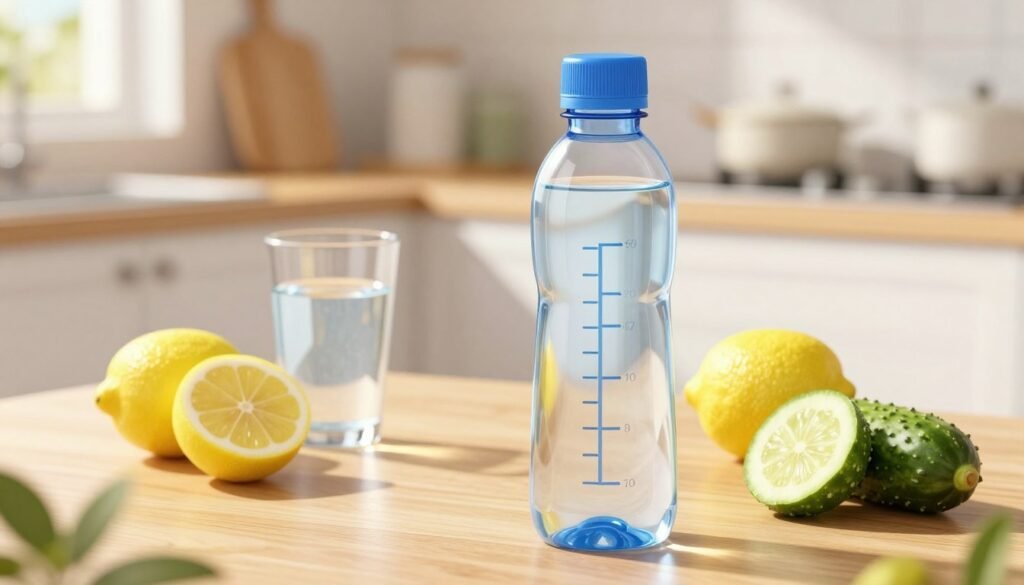
Sip in small, regular amounts rather than drinking a large volume in one sitting. Your body absorbs water gradually — it typically takes 15 minutes to an hour to reach your cells — so gulping a liter at once mostly sends you to the bathroom instead of hydrating you evenly.
A simple anchor routine beats watching the clock: a glass when you wake up, a glass before each meal, and a glass in the evening, with steady sipping in between. Carrying a bottle you’ll actually reach for removes most of the friction.
Not every moment calls for a full glass, though — some situations call for pausing or cutting back rather than sipping on autopilot. Our guide to which times are not good for drinking water breaks down when to ease off.
If your routine gets disrupted — travel, a busy shift, a change in schedule — don’t try to make it up with one oversized glass later. Pick up the steady pace again at the next natural break, such as the next meal or the next time you pass your bottle.
Small sips with meals are fine for most people and won’t meaningfully dilute digestion. Timing matters more right after eating: giving your stomach roughly 30 minutes before a large glass of water lets digestive enzymes stay concentrated instead of getting watered down.
This isn’t a hard rule for everyone — people with reflux or slow digestion may benefit more from the wait than someone with an otherwise healthy gut. For the underlying science, see why you should wait 30 minutes to drink after eating.
Instead of sipping continuously, some people find it easier to take about ten solid gulps whenever they pick up their bottle. The logic is simple: a handful of deliberate gulps empties more of the bottle per trip than a string of small sips you forget to repeat, so total daily intake climbs without extra reminders.
It’s a habit trick, not a physiological requirement — the goal is still steady intake across the day, just reached through fewer, larger pulls. See our full breakdown of the 10-gulp rule for the method.
Plain water is the default for a reason, but it isn’t the only option. Milk and unsweetened tea both count toward fluid intake and add electrolytes; water-rich foods like cucumber, watermelon, and leafy greens contribute meaningfully too, especially in hot weather. Sugary sodas and juices work against you — concentrated sweeteners force your kidneys to use more fluid to process the waste — and alcohol pulls moisture out of tissues rather than replacing it.
Safety matters as much as source. The CDC’s healthy water resources cover safe drinking water practices, and MedlinePlus has background on water quality and contamination risks. If you’re deciding between tap, filtered, or bottled, our guide to the healthiest water to drink compares the options directly.
If you’re on municipal water, an annual consumer confidence report from your utility will tell you what’s actually in your tap. If you’re on a private well, testing is on you — wells aren’t covered by the same municipal monitoring, so annual testing is worth the small cost for the peace of mind.
Yes, for most people. Caffeine has a mild diuretic effect, but at typical intake — one to three cups a day — coffee and tea still contribute net fluid rather than a deficit. The old idea that any caffeinated drink dehydrates you has been largely set aside for moderate drinkers.
The exception is heavy intake: more than four or five cups a day can tip the diuretic effect enough to offset the fluid you’re taking in. If you drink that much coffee, add a glass of plain water alongside it rather than counting on the coffee alone.
Thirst is a lagging indicator — by the time you notice it, you’re already mildly dehydrated. Watch for dry mouth, fatigue, headache, dizziness, muscle cramps, and noticeably fewer bathroom trips. Dehydration develops fastest during exercise, hot weather, vomiting or diarrhea, and fever, when fluid loss outpaces normal intake; children and older adults are especially vulnerable because their bodies compensate less efficiently. Urine color is the fastest daily check:
| Urine Color | Status | Action |
|---|---|---|
| Pale yellow | Well hydrated | Maintain current intake |
| Bright yellow | Mild dehydration | Drink a glass of water now |
| Dark amber | Significant dehydration | Rehydrate steadily and monitor symptoms |
Drinking too much, too fast, is rarer but more dangerous. Overhydration dilutes blood sodium faster than the kidneys can correct it, which can cause confusion, nausea, swelling in the hands, or in severe cases seizures. It’s mostly a risk for endurance athletes and anyone replacing large fluid losses with plain water and no electrolytes. If you or someone else shows these symptoms after heavy fluid intake, treat it as a medical emergency and seek care immediately — see MedlinePlus for more on electrolyte imbalance.
Yes — sweat, heat, and fever all increase fluid loss beyond baseline. After intense exercise or heavy sweating, plain water often isn’t enough on its own; electrolyte drinks help replace the sodium and potassium lost through sweat and speed up fluid absorption. For everyday activity, plain water still covers it.
Sun exposure adds to the load too — heat and UV draw moisture through the skin as your body works harder to cool itself, so hot, sunny days call for more frequent sipping, not just more sunscreen.
If you’ve been increasing your water intake, it’s worth knowing what’s actually coming out of your tap. Your utility’s annual report covers the whole system average, not your house — and it says nothing at all about private wells or your own plumbing. A certified lab test gives you a full contaminant panel and, just as often, tells you your water is fine and you don’t need to buy anything.
Sipping steadily throughout the day is more effective than drinking large amounts infrequently. Your body can only absorb so much fluid per hour, so spreading intake out helps you actually retain it instead of losing the excess to frequent urination. This is also why a single large glass before bed can disrupt sleep more than it helps hydration.
Temperature doesn’t meaningfully change how well your body absorbs water. Some people find cold water easier to drink in volume, which can indirectly help them drink more, but there’s no physiological hydration advantage to one temperature over another — pick whichever you’ll actually finish.
Food supplies a meaningful share of daily fluid, but it can’t fully replace drinking water on its own. Water-rich produce like cucumber, watermelon, and soups helps close the gap, especially in hot weather, but it should supplement, not substitute for, regular fluid intake.
Pale yellow urine and rarely feeling thirsty are the two simplest signs you’re getting enough. If you want a device-free check, a marked bottle or a basic tracking app can help build the habit until it becomes automatic and you no longer need the reminders.
Thirst sensation weakens with age, which raises the risk of unnoticed dehydration. Older adults often benefit from drinking on a schedule rather than waiting for thirst cues, particularly in hot weather, during illness, or when taking medications that affect fluid balance.
This article is for general informational purposes only and is not a substitute for professional medical advice. Read our full health disclaimer.
