
Beautiful Plants For Your Interior

Wondering what are 5 foods that seniors should eat every day? We explore essential, nutrient-dense options to support healthy aging and daily wellness.

The five foods with the strongest evidence for daily benefit in adults over 65 are: fatty fish, leafy greens, berries, legumes, and nuts or seeds. Each addresses a specific nutritional gap that becomes more pronounced with age — and each works significantly better when paired with adequate daily hydration from clean water.
Some links below are affiliate links. If you buy through them we may earn a commission at no extra cost to you. See our Affiliate Disclosure.

Why daily: Omega-3 fatty acids reduce inflammatory markers linked to heart disease, cognitive decline, and joint pain. Adults over 65 absorb and utilize omega-3s less efficiently than younger adults, making regular dietary intake more important. The American Heart Association recommends at least two servings per week, but daily small portions (2–3 oz) are well tolerated and provide consistent anti-inflammatory support.
Aim for wild-caught salmon or canned sardines in water — high omega-3 content, lower mercury than tuna, and practical for daily use.
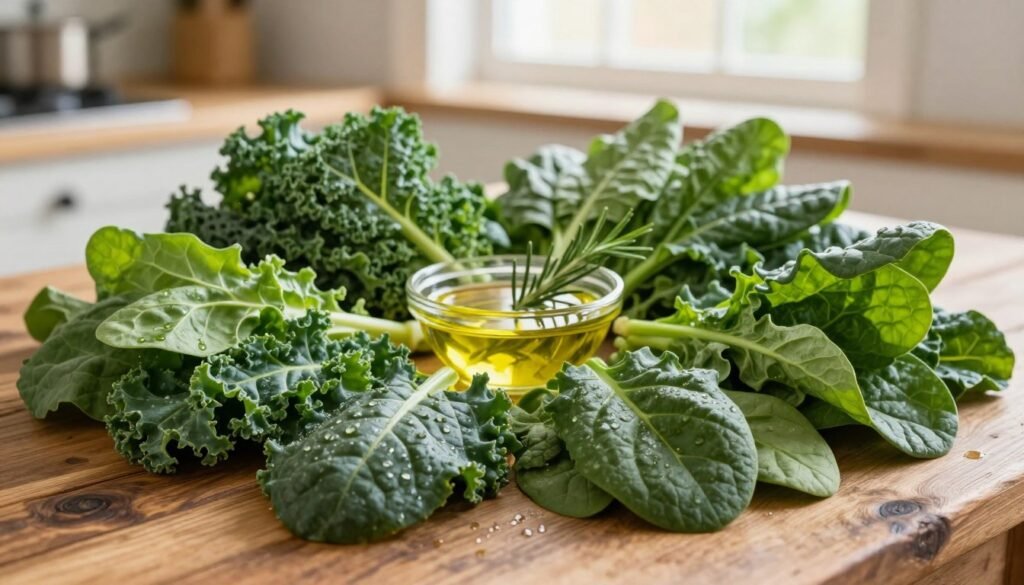
Why daily: Vitamin K1 and K2 in leafy greens are essential for bone density maintenance — a critical concern after 65 when fracture risk accelerates. Leafy greens also provide folate, magnesium, and lutein (eye health). One to two cups per day, raw or lightly cooked, provides meaningful nutritional return. Note: if you take warfarin, maintain consistent — not zero — leafy green intake and discuss with your physician.
Why daily: Berries have the highest antioxidant density of any common fruit, with specific research linking blueberry consumption to slowed cognitive decline in older adults. A 2022 study in Nutrients found daily blueberry consumption improved memory scores in adults 65–80 over a 16-week period. One half-cup serving provides meaningful benefit. Fresh or frozen are equivalent nutritionally.
Why daily: Protein becomes harder to absorb efficiently with age. Legumes provide both protein and fiber — a combination that supports muscle preservation, gut health, and blood sugar stability simultaneously. Half a cup of cooked lentils delivers 9g of protein and 8g of fiber. Legumes also cost far less per gram of protein than most animal sources, making daily inclusion practical across budgets.
Why daily: A small daily portion (1 oz of walnuts or 1 tablespoon of ground flaxseed) provides plant-based omega-3s, vitamin E, magnesium, and healthy unsaturated fats. Walnut consumption is specifically associated with reduced LDL cholesterol and improved arterial flexibility in studies of adults over 60. Flaxseed provides lignans — compounds with documented benefits for hormone balance in older women.
Every item on this list works better when the body is adequately hydrated with clean water. Seniors face a compounded risk: the thirst mechanism weakens with age (many older adults are chronically mildly dehydrated without realizing it), and kidneys process contaminants less efficiently. Lead, PFAS, and other water contaminants carry elevated health risks in older adults compared to younger populations.
If you are advising a senior on daily nutrition, water quality deserves the same attention as food quality. Check your state’s drinking water safety: Drinking Water Quality by State: All 50 States Rated. For private well users, see our testing guide: How to Test Your Well Water (2026).
If you’ve been increasing your water intake, it’s worth knowing what’s actually coming out of your tap. Your utility’s annual report covers the whole system average, not your house — and it says nothing at all about private wells or your own plumbing. A certified lab test gives you a full contaminant panel and, just as often, tells you your water is fine and you don’t need to buy anything.
Most research supports 1.0 to 1.2 grams of protein per kilogram of body weight per day for adults over 65 — significantly higher than the outdated 0.8g/kg RDA. For a 150-lb (68kg) senior, that is 68 to 82g of protein daily. The five foods above, combined with other protein sources, can comfortably meet this target.
For some nutrients (vitamin D, B12), supplementation is often necessary because absorption declines with age regardless of dietary intake. For the nutrients in these five food categories, whole food sources are generally more bioavailable and provide fiber and cofactors that isolated supplements do not. Use supplements to fill specific diagnosed gaps, not as a substitute for dietary quality.
