
Beautiful Plants For Your Interior

Some links below are affiliate links. If you buy through them we may earn a commission at no extra cost to you. See our Affiliate Disclosure.
Some links below are affiliate links. If you buy through them we may earn a commission at no extra cost to you. See our Affiliate Disclosure.
Texas and New York consistently rank as the states with the worst tap water, based on the sheer number of Safe Drinking Water Act violations and the size of the population exposed to contaminants like PFAS and disinfection byproducts. Pennsylvania, New Jersey, Wisconsin, and Florida also rank near the bottom depending on which metric you use — violation counts, contaminant counts, or people affected. No single “worst” list is definitive, because water quality is measured a few different ways and the answer changes depending on which one you ask.
Before naming names, it helps to know that rankings of state water quality use at least three different yardsticks, and they don’t always agree:
💧 Curious what’s in your city’s tap water — at YOUR faucet?
Utility reports cover the treatment plant, not your pipes. SimpleLab’s Tap Score Advanced City Water Test screens the water you actually drink for lead, disinfection byproducts, PFAS and more.
Read our full breakdown of drinking water quality by state for a state-by-state hub, or see our companion guide on which state has the best water quality for the flip side of this question.
Texas shows up at or near the top of nearly every “worst” list, largely on volume: it has more public water systems than almost any other state, and EPA compliance data has logged over 20,000 documented violations in recent reporting years, including hundreds of systems exceeding legal limits for trihalomethanes (a disinfection byproduct), affecting millions of residents. Read more in our Texas drinking water guide.
New York frequently ranks worst by population affected. EWG testing has found close to 200 distinct contaminants across the state’s community water systems, and an estimated 20 million residents are served by systems reporting detectable PFAS or disinfection byproducts above health-based guidelines. See our New York water quality report.
New Jersey’s tap water has tested positive for as many as 130+ distinct contaminants statewide, with some systems reporting PFOA levels more than double the state’s own limit. That has already led to enforcement settlements affecting tens of thousands of residents in the affected service areas. Details are in our New Jersey drinking water breakdown.
Pennsylvania trails only Texas in total documented SDWA violations, driven in part by an aging infrastructure problem: the state has one of the largest counts of lead service lines in the country, alongside ongoing PFAS detections near industrial and military sites. Our Pennsylvania water quality page has the specifics.
These three states round out most contaminant-count rankings, each showing well over 100 detected substances in EWG’s testing, from agricultural runoff byproducts in Wisconsin’s rural systems to saltwater-intrusion and disinfection byproduct issues in Florida’s coastal utilities.
Across the lower-ranked states, the same handful of contaminant categories show up again and again:
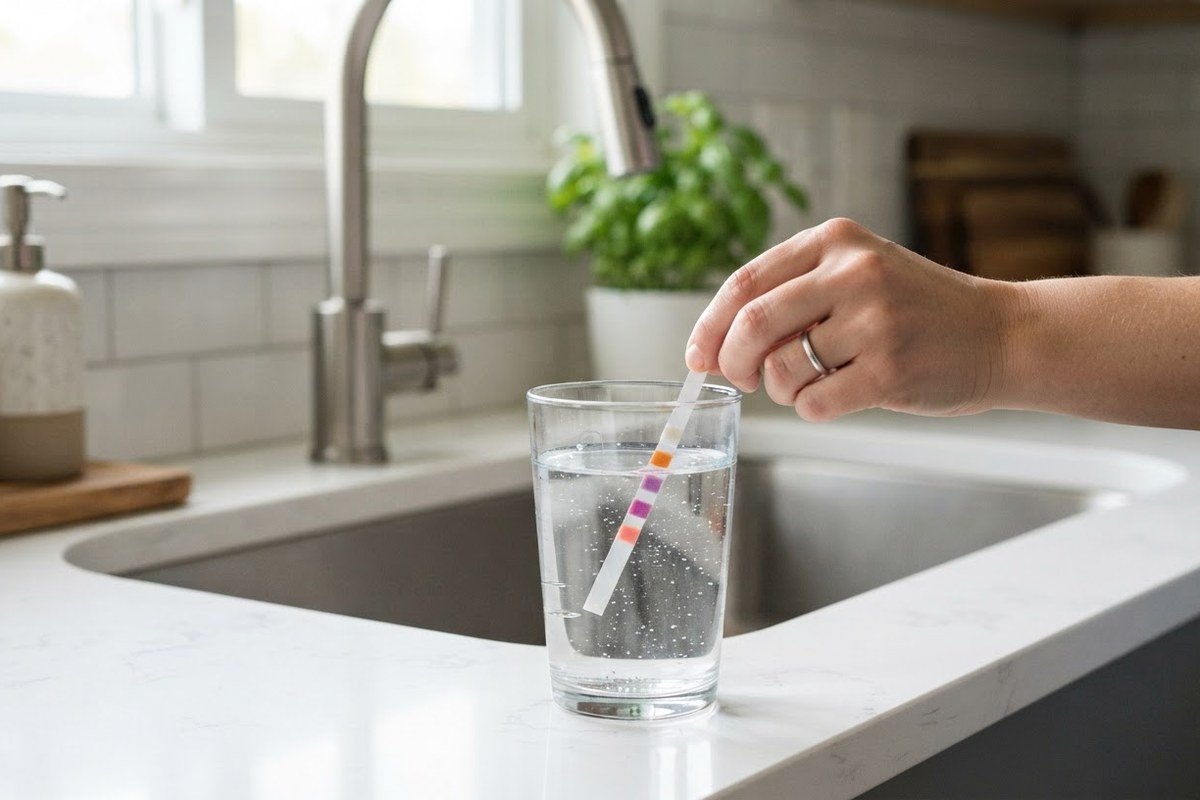
Not necessarily. A state-level ranking is an average across hundreds or thousands of individual water systems, and water quality can vary enormously within a single state, even within a single city, depending on the treatment plant, the age of the pipes on your specific street, and whether you’re on a private well (which isn’t covered by the Safe Drinking Water Act at all). The most reliable way to know what’s in your specific water is to look up your local utility’s Consumer Confidence Report, search your address on EWG’s Tap Water Database, or test your water directly with an at-home water test kit.
Because contamination risk depends more on your specific utility and plumbing than your state as a whole, the most effective step for most households is filtration rather than moving or relying on bottled water long-term:
Our water filter comparison guide walks through which filter type matches which contaminant profile in more detail.
On the other end of the spectrum, states like Hawaii, North Dakota, and South Dakota consistently post the fewest detected contaminants and lowest violation rates, often due to smaller, less industrialized water systems and naturally cleaner source water. See our Hawaii drinking water report for an example of what a lower-risk profile looks like in practice.
There’s no single official “worst” state because rankings depend on the metric used. Texas and Pennsylvania rank worst by total EPA violation counts; New York and New Jersey rank worst by population exposed to PFAS and disinfection byproducts; Wisconsin, Florida, and Connecticut rank worst by total distinct contaminants detected in EWG testing.
In most cases, tap water in these states still meets federal legal limits, which is different from meeting the stricter health-based guidelines that groups like EWG recommend. It’s rarely an emergency, but it’s worth checking your specific utility’s compliance report and considering filtration for contaminants of concern in your area.
Not automatically. State averages combine data from thousands of individual water systems that can vary enormously in quality. Your city, your neighborhood, and even your building’s plumbing age all matter more than the statewide average.
PFAS, disinfection byproducts (like TTHMs), lead, nitrate, and arsenic are the most frequently cited contaminants across the lowest-ranked states, though the specific mix differs by region and by whether the source water is a river, lake, or aquifer.
Request your local water utility’s annual Consumer Confidence Report, search your address on EWG’s Tap Water Database, or use an at-home water test kit if you’re on a private well, since wells aren’t covered by the Safe Drinking Water Act or routinely tested by any agency.
A properly certified filter matched to your specific contaminants (NSF/ANSI 53 for lead and VOCs, reverse osmosis for PFAS and heavy metals) will meaningfully reduce most of the substances driving these rankings, though it won’t change your state’s underlying infrastructure or source water issues.
Last updated July 9, 2026. This article is for informational purposes only and is not medical advice. See our Health Disclaimer for more information.
