
Beautiful Plants For Your Interior

Get the inside scoop on Alaska tap water quality. Our listicle reveals what you need to know.
Alaska’s water quality challenge is fundamentally one of geography. With hundreds of remote communities spread across an area larger than Texas, California, and Montana combined, maintaining centralized water treatment infrastructure is logistically and economically difficult. Septic contamination, corroding underground storage tanks, and significant indigenous community water access gaps define Alaska’s water reality — one where zip code determines safety far more than statewide averages suggest.
Some links below are affiliate links. If you buy through them we may earn a commission at no extra cost to you. See our Affiliate Disclosure.
This guide dives into how your local water is sourced, treated, and checked. We aim to make the complex rules easy to understand. You can find more info at the official resources for consumer information.
Empowering yourself with knowledge is the first step to clean, reliable water for your family. We use public data to help you understand your local water system.
Getting clean water is key for every Alaskan. It doesn’t matter if you live in a big city or a small village. The water from your tap is part of a big system. Following Alaska water quality regulations keeps this water safe and healthy for everyone.
Good drinking water is essential for your health. It stops waterborne illnesses and helps your body work right. When you know your tap water is safe, you can enjoy Alaska’s beauty without worry.
Public water systems must meet high standards. If they find a health risk, they must tell people within 24 hours. This quick action is key to keeping us safe.
Many groups work together to keep our water safe. They test and check water often to make sure it’s clean. By sticking to Alaska water quality regulations, they protect every home.
The table below shows who keeps our water safe and open for everyone.
| Agency | Primary Responsibility | Scope of Oversight |
|---|---|---|
| EPA | Sets national safety limits | Federal compliance |
| ADEC | Enforces state-level rules | Local water systems |
| Local Utilities | Daily water treatment | Community distribution |
Every glass of water in Alaska has a story. It starts in the rugged landscape outside. The state gets its water from diverse and unique places like deep wells and glacial rivers. Knowing where water comes from helps us appreciate its journey to our taps.
Alaska gets its water from two main sources: groundwater and surface water. Groundwater comes from underground aquifers through wells. This is how most small water systems in Alaska work.
Surface water comes from lakes, rivers, and streams. While fewer systems use this method, more people get their water from these sources. The type of source affects how the water is treated to make it safe to drink.
The geography of Alaska greatly affects water collection and delivery. Areas near mountains get water from snowmelt and glacial runoff. But, this water may need special treatment because of sediment and organic matter.
Coastal and low-lying areas might use more groundwater or protected reservoirs. Local factors like permafrost and temperature changes also impact water quality. By learning about your local watershed, you can understand how your water is kept clean and reliable.
Effective municipal water treatment in Alaska uses a multi-barrier approach. This method protects public health. It combines physical barriers with chemical safeguards to keep water safe from source to tap.
Filtration is the first defense in water purification. It removes suspended solids, sediment, and harmful microorganisms like protozoa. These can resist simple chemical treatments.
Many facilities use sand or membrane filtration. Water is forced through fine media to clarify it. This makes the water clear and free of debris before the next treatment stage.
After filtration, water undergoes disinfection. This step is key to neutralizing microscopic threats. It inactivates bacteria and viruses that could cause illness.
Chlorine or high-intensity UV light are common disinfection methods. These processes create a powerful shield against pathogens. They ensure the water meets strict safety standards.
“The goal of modern water treatment is to provide a consistent, reliable, and safe supply that residents can trust every single day.”
While municipal systems are effective, some prefer to improve their water quality. Choosing the best water filters for Alaska can address specific concerns. This includes removing chlorine taste or dealing with old plumbing in older homes.
| Treatment Method | Primary Function | Target Contaminants |
|---|---|---|
| Physical Filtration | Particle Removal | Sediment, Protozoa |
| Chlorination | Chemical Disinfection | Bacteria, Viruses |
| UV Irradiation | Light-based Inactivation | Microorganisms |
| Activated Carbon | Adsorption | Chlorine, Odors |
Knowing about these technologies shows the effort behind your daily water. Whether through municipal water treatment in Alaska or home systems, the goal is to provide clean water to every Alaskan home.
Even in a state known for its natural beauty, residents should be aware of what flows from their taps. While public water systems undergo rigorous testing, contaminants in Alaska tap water can sometimes emerge from the pipes inside your own home. Understanding these risks is the first step toward maintaining a healthy household.
Lead and copper are the most frequently discussed concerns for homeowners. These substances often enter the supply through the corrosion of plumbing materials. If your home was built before 1986, it is more likely to have older pipes or fixtures that may leach these metals into your drinking water over time.
“Water quality is a fundamental pillar of public health, and vigilance at the point of use is just as vital as the treatment process itself.”
You can often reduce your exposure by flushing your taps for a few minutes after the water has been sitting stagnant. This simple habit helps clear out water that has been in contact with older plumbing. Monitoring these contaminants in Alaska tap water remains a priority for local health officials.
Microbial threats are another area where constant vigilance is required. These organisms can pose immediate health risks if they manage to enter the distribution system through leaks or pressure drops. Public water providers monitor these levels closely to ensure that the water remains safe for daily consumption.
If a system failure occurs, authorities typically issue a boil water notice to protect the public. Staying informed about your local water reports is a great way to track the presence of any microbial concerns. By staying proactive, you ensure that your water remains clean and safe for your family.
Drinking enough water is key to staying healthy. Your tap water is a great way to stay hydrated. It’s easy and doesn’t cost much, unlike bottled water.
Many wonder if bottled water is better than tap water. But, both must meet strict safety standards. So, tap water is a safe choice for your family.
Drinking enough water keeps you energized and your skin healthy. Using a reusable bottle helps you stay hydrated. It also helps you avoid sugary drinks.
Your tap water may also have important minerals. These can include calcium and magnesium. When your water system is well-maintained, these minerals are a natural bonus.
Choosing tap water is good for your health:
The quality of your water depends on your local system. Knowing about your community’s water reports helps you enjoy its health benefits. Drinking local water is a simple step towards better health.
Even if your tap water is safe, it might not always taste or smell good. Many people notice changes in their water’s taste, which can be surprising. Remember, the way water looks doesn’t always mean it’s safe.
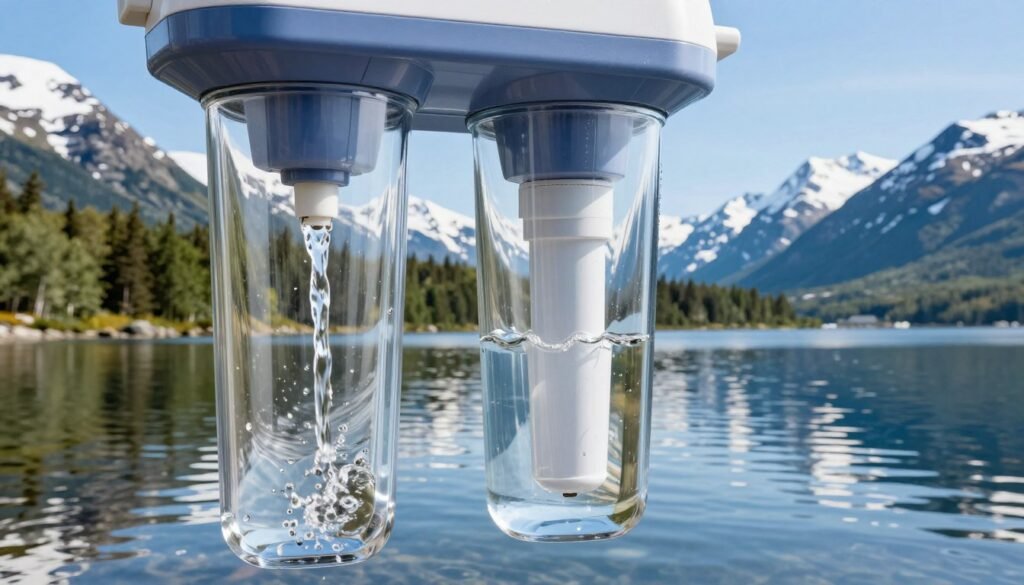
Many people notice a strong chlorine smell. This smell comes from chlorine added to keep water safe from harmful germs. Proper disinfection is key for our health, even if it smells.
“Water is the driving force of all nature, and ensuring it tastes as good as it is safe is a priority for every household.”
Some also complain about a metallic or earthy smell. These smells are usually not harmful but can make water less enjoyable. If you dislike these tastes, look into the best water filters for Alaska to improve your water’s taste.
Many things can affect how your water tastes. The age and material of your pipes can add metallic notes. Also, the water’s temperature can change how you taste it.
Minerals like calcium or magnesium can also affect the taste. While these minerals are good for you, they can change how water feels in your mouth. By picking the best water filters for Alaska, you can remove these issues and enjoy better-tasting water.
Alaska’s beautiful wilderness is facing new challenges. Environmental changes are affecting our water systems. The state is known for its clean water, but our water quality is under pressure.
Understanding these changes helps us know what’s happening with our water. It tells us about contaminants in Alaska tap water.
Rising temperatures and changing weather patterns are changing Alaska. As permafrost thaws, it releases organic matter and minerals into our water. This makes it harder to keep our water clean.
Local facilities must change how they treat water to keep it safe. This is because of climate instability.
Human activities and industrial runoff also affect our water. When we treat water to kill germs, it can create new problems. For example, over 60% of Alaskan cities have TTHMs and Chloroform in their water.
These chemicals come from chlorine reacting with organic materials in the water. It’s important to know that while treatment is needed, it’s a delicate balance.
| Factor | Impact Level | Primary Concern |
|---|---|---|
| Permafrost Thaw | Moderate | Increased organic matter |
| Industrial Runoff | High | Chemical residues |
| Disinfection Process | High | TTHMs and Chloroform |
| Seasonal Flooding | Low | Sediment and turbidity |
Knowing about water testing in Alaska is key for a healthy home. Public water systems are closely watched, but private well users must take action. Controlling your water quality helps spot problems early.
DIY kits are easy for homeowners to use for quick water testing in Alaska. They check pH, hardness, and chlorine or nitrates. They’re great for regular checks.
But, these kits have limits. They’re for screening, not detailed chemical tests. If your water looks, smells, or tastes off, a basic kit might not find the cause.
For certain issues, skip DIY kits and call a certified lab. Heavy metals like lead or copper, or ongoing microbial problems, need lab tests. Labs give precise, reliable results that DIY kits can’t.
Also, get a pro if you’re selling your home or have a new well. Experts give detailed reports on many contaminants. Professional analysis ensures your water is safe for your family.
Keeping your home safe requires teamwork between local water providers and you. You are key to your family’s health by being proactive about your water. This means knowing what comes out of your kitchen faucet.
To keep tap water safe in Alaska, stay informed about local news and your water source. Talking to your water provider regularly keeps you in the loop about any changes.
The Environmental Protection Agency’s Enforcement Targeting Tool helps you see if your water meets standards. It shows how well your provider follows federal rules.
Local health departments can also help if you use a private well. They can give you info on testing programs or risks in your area.
Improving old water systems is a big goal for health officials. They want to make sure everyone has access to safe drinking water. This is important for every corner of Alaska.
Your interest in clean water drives the needed changes. This keeps our water systems strong against changes in the environment. Your involvement ensures clean water for all Alaskans for years to come.
← Drinking Water Quality by State — see how all 50 states are rated on our 5-factor composite methodology covering PFAS, lead, violations, disinfection byproducts, and infrastructure.
For households in remote or rural areas where centralized treatment is limited, multi-stage countertop and gravity systems offer an effective solution. See our guide: Best Countertop Water Filters for Off-Grid Homes (2026).