
Beautiful Plants For Your Interior

Discover the truth about Florida's drinking water quality and learn what you need to know to protect your health.
Did you know over 90 percent of Floridians get their water from underground aquifers? This fact makes knowing about Florida drinking water quality very important for every home in 2025.
Some links below are affiliate links. If you buy through them we may earn a commission at no extra cost to you. See our Affiliate Disclosure.
Knowing about your local water supply is key to keeping your family healthy. By understanding how these systems work, you can take proactive steps to ensure safe drinking water in Florida. We aim to make this process easy and confident for you.
Ever thought about where your water comes from before it hits your sink? In Florida, our water system is huge and essential. Reliable access to clean water is something we often overlook, but it’s based on underground aquifers and modern plants.
Groundwater wells are the main source of our water, covering over ninety-two percent of our needs. Protecting these wells from pollution is a big deal for local water companies. You can find out more about your water by checking the water quality reports for your area.
In Florida, water treatment is a detailed process to keep it safe. First, water is pumped from the ground and then aerated to remove gases and minerals. Next, it goes through coagulation and sedimentation to settle particles. After that, it’s filtered and disinfected to kill off harmful bacteria.
“Water is the driving force of all nature, and ensuring its purity is the cornerstone of public health in our communities.”
The main source for most people is the Floridan Aquifer, a very productive groundwater system. While some coastal areas might use surface water or desalination, most of the state relies on these deep underground layers. This makes keeping our aquifers healthy a critical concern for all Floridians.
Several agencies work together to keep our water safe. The Environmental Protection Agency (EPA) sets national standards, and the Florida Department of Environmental Protection (FDEP) enforces these at the state level. Below is a table showing what each group does to ensure water safety.
| Organization | Primary Responsibility | Scope of Oversight |
|---|---|---|
| EPA | Federal Standards | National Policy |
| FDEP | State Enforcement | Florida Regulations |
| Local Utilities | Daily Operations | Municipal Distribution |
By working together, the state makes sure water treatment in Florida is up to par. These groups constantly watch for risks and update treatment methods as new science comes in.
Keeping safe drinking water in Florida is a big deal for families here. Clean water is not just a nice thing; it’s key for a healthy community and lifestyle.
Good water quality helps keep our most vulnerable people safe. Having access to clean water is vital for our community’s health and growth.
Poor water quality can harm our health a lot. For example, too much nitrate in water is very dangerous for babies under three months.
Contaminants in water can cause serious problems like anemia or brain damage. Following strict Florida water quality standards helps keep our kids safe and healthy.
Bad water quality costs us a lot, affecting our wallets and society. When our water is not clean, it can lead to expensive health issues and taxes.
By investing in our water systems, we save money and keep our economy strong. Keeping safe drinking water in Florida is a wise move for our economy.
It’s critical to protect our water sources for the planet’s future. Our state’s water systems are fragile and need constant care.
Learn more about how we watch over these resources at the Integrated Water Quality Assessment. By sticking to Florida water quality standards, we protect our environment for the next generations.
Most public water systems in Florida are safe. But, substances can get into our water through natural or human actions. Knowing about water quality issues in Florida helps us understand what might be in our tap water.
Knowing the risks is key to having clean water at home. We’ll look at the main culprits that local authorities watch closely.
Bacteria and viruses are big worries for water safety. They can get into water from sewage or heavy rain that carries waste into our supplies.
Water utilities use chlorination to kill these harmful microbes. Keeping these systems working is crucial to prevent sickness and keep us healthy.
Heavy metals, like lead, can get into water from old pipes or fixtures. Lead isn’t usually found in Florida’s water, but old pipes can be a problem.
Other chemicals might be in water due to industry or natural deposits. Testing these levels is key to keeping our water safe for drinking.
Florida’s big farms can lead to nitrates and pesticides in groundwater. These can move into the soil and reach our drinking water sources.
Controlling these agricultural byproducts needs teamwork between farmers and environmental groups. By watching runoff, officials try to fix long-term water problems in Florida.
Every glass of water in Florida is protected by strict rules and oversight. Keeping your tap water safe is a team effort. This involves many levels of government working together.
By following water quality regulations in Florida, authorities can check and treat our water. This is done every day.
The Federal Safe Drinking Water Act is the foundation of our safety. It sets the standard for public water systems across the country. About 80% of Florida’s residents get their water from these systems.
These rules set maximum contaminant levels for harmful substances. This ensures public health. It’s the main defense against health risks in our water.
Florida goes beyond federal laws with its own strict rules. These Florida water quality standards are managed by state agencies. They watch local conditions closely.
State oversight is essential for our unique environment. By tailoring regulations, the state tackles issues federal laws might miss. This keeps our water safe from local threats.
Local water management districts and utility providers are the last line of defense. They handle the daily tasks that keep our water flowing. They test water samples and maintain the pipes.
Effective local management is key to upholding Florida water quality standards. When local utilities invest in new tech and regular upkeep, they make sure these standards are real. Their focus on safety and transparency is vital for our community’s health.
We often overlook the importance of our tap water. But, several factors are putting Florida’s water at risk. We must stay alert to avoid water contamination in Florida and keep our water safe for all.
As cities grow, so does the amount of hard surfaces. When it rains, water can’t soak into the ground. This leads to stormwater runoff that pollutes our waterways.
This runoff carries harmful substances like:
Many of our water delivery systems are old. Over time, they can leak and break.
A big worry for Florida water pollution control is leaking tanks. These tanks are a major source of contamination, threatening our aquifers.
The climate is changing, bringing more extreme weather. Heavy rain can overwhelm treatment plants. Rising sea levels also threaten our water sources.
These changes make it tough to keep our water clean. We need strong Florida water pollution control efforts to adapt. By staying informed and supporting local efforts, we can protect our water for the future.
Checking your water quality is a smart move. It helps you make better health choices. If you’re unsure about your tap water, there are ways to find out. The best way is to do Florida water testing to make sure it’s safe.
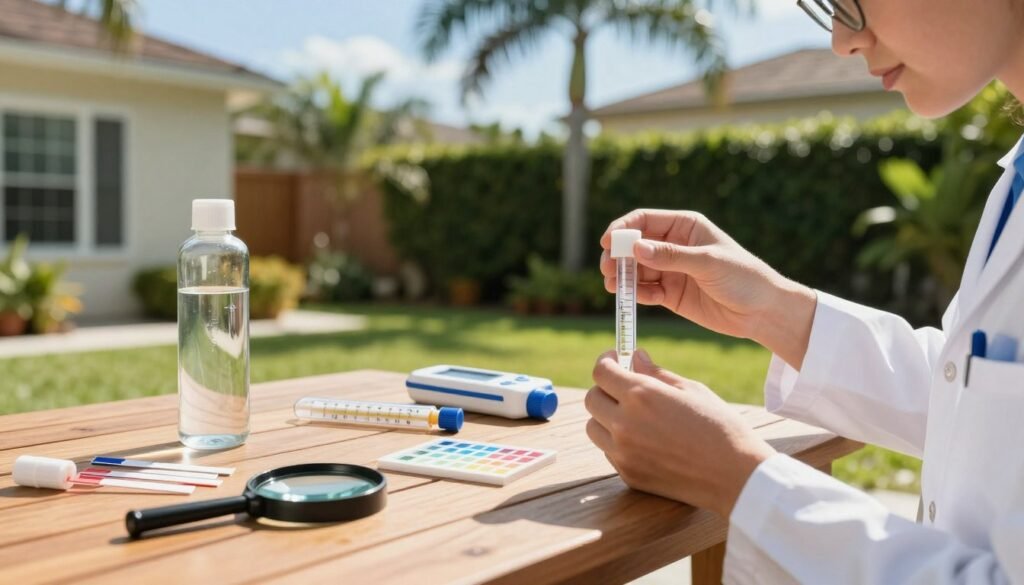
Home testing kits are a quick fix. They’re easy to find and check for things like pH levels and chlorine. But, they might not catch every problem.
Some things need a pro to check. For example, coliform bacteria are a sign of bigger issues. If your kit shows weird results, get a lab to check it out.
Your water company gives you a yearly report. It tells you what’s in your water. Learning to read these reports is key to Florida water testing.
“Knowledge is the first step toward ensuring the safety and health of your family’s water supply.”
Look for parts of the report about contaminants and limits. If levels are high, talk to your water company. This helps keep everyone’s water safe.
There are many places to learn about water safety. The EPA has lots of info on water rules. Your local health department can help with well or city water questions.
| Method | Best For | Accuracy |
|---|---|---|
| Home Test Kits | Quick DIY Checks | Moderate |
| Utility CCR Reports | General Compliance | High |
| Certified Labs | Detailed Analysis | Very High |
Using these resources helps you get good results from Florida water testing. By mixing official info with your own tests, you can keep your water safe for your family.
Improving your home’s water quality starts with knowing the local challenges. Municipal systems work hard to keep water safe. But, many people find that taking proactive steps at home gives them peace of mind. Fixing common water quality issues in Florida is easier than you think with the right plan.
Installing a home filtration system is a great way to remove unwanted particles and chemicals. You can choose from simple pitcher filters to whole-house systems. These devices act as a vital barrier against impurities. Pick a system based on the contaminants in your local water report.
Your plumbing system is key to the water quality at your tap. Lead in drinking water usually comes from old pipes or solder, not the well itself. Routine inspections of your pipes and fixtures can stop these materials from getting into your water.
Teaching your family about water safety is powerful. By learning about the importance of Florida water testing, your family can spot changes in water taste or clarity. Empowering your household to take part in water safety makes your home a healthier place.
| Filter Type | Best For | Maintenance Frequency | Florida Water Testing Need |
|---|---|---|---|
| Activated Carbon | Taste and Odor | Every 3-6 Months | Recommended |
| Reverse Osmosis | Heavy Metals | Every 6-12 Months | Highly Recommended |
| UV Purification | Microbial Issues | Annual Bulb Change | Essential |
Creating a cleaner future for Florida’s water starts with local efforts. Big policies set the stage, but real change happens in neighborhoods. Together, we can keep our water safe for all to enjoy.
Counties across Florida offer ways to check your water. For example, the Florida Department of Health tests water for a fee. Using these services helps you know if your water is safe.
These programs are vital for keeping trust in our water. They show us the water quality regulations in Florida for our areas. Knowing what’s in our water helps us push for better.
Non-governmental organizations connect policy to action. They host workshops and cleanups to protect our waters. Supporting these groups strengthens our voice for better water standards.
Working together is essential. NGOs team up with experts to make complex water quality regulations in Florida easy for us. This way, our voices reach those who can make a difference.
Every drop we save helps our environment. Fixing leaks or using native plants in our gardens helps a lot. These small steps are key to Florida water pollution control.
Using less water means less runoff in our waters. This proactive approach is critical for Florida’s water health. By caring for our water, we protect it for future generations.
Cleaner resources come from smart tech and public help. We’re moving to a time where everyone must protect our water.
New water treatment in Florida uses advanced filters and smart systems. These systems find impurities quickly, keeping our water safe. Scientists work on green methods that save energy and make water cleaner.
Lawmakers are making rules to tackle new environmental dangers. These changes aim to improve water quality in all Florida counties. Clear rules help water companies serve everyone well.
Getting people involved is key to success. The Florida Department of Environmental Protection uses Gtranslate to reach many. Your interest in local news matters a lot. Stay updated and join water-saving events. Your voice helps shape our water’s future.
← Drinking Water Quality by State — see how all 50 states are rated on our 5-factor composite methodology covering PFAS, lead, violations, disinfection byproducts, and infrastructure.
If your home uses a private well, your water is exempt from federal testing requirements and may contain contaminants not covered by municipal reports. See our comprehensive review: Best Water Filters for Well Water in 2026 (Iron, Sulfur & PFAS).
If you travel through this state by RV or spend time at campgrounds, water quality can vary significantly regardless of the state’s overall rating. Campground and hookup water is not always tested to the same standards as municipal supplies. See our guide: Best RV Water Filter Systems in 2026 (Compact, No-Plumber Install).