
Beautiful Plants For Your Interior

Explore Vermont's drinking water quality and safety concerns in this informative listicle. Learn about the state's water sources, testing, and regulations.
Did you know almost half of Vermont’s residents use private wells? Unlike public systems, these wells don’t get tested as often. This makes it harder for people to know if their water is safe.
Some links below are affiliate links. If you buy through them we may earn a commission at no extra cost to you. See our Affiliate Disclosure.
Keeping safe drinking water in Vermont is a big job. It affects everyone’s health. It’s not just up to the state; it’s a job for every household too.
To understand Vermont drinking water quality, we need to look at both public and personal efforts. Many people check official water quality monitoring sites. This helps them know if their water might have harmful things in it.
Whether you get your water from a community tap or a private spring, it’s key to know how to check and protect it. This way, you can feel sure about the water you drink.
Vermont’s water comes from many places, like mountain springs and underground aquifers. Most people get their water from a mix of these sources. These resources are key to Vermont public water systems, which work hard to give clean water to everyone.
The state gets its water mainly from two sources. Surface water, like lakes and rivers, is used by big cities. This water comes from snowmelt and rain, so it depends on the weather.
Smaller towns and rural areas use groundwater. This water comes from deep wells in the ground. It’s often clean because it passes through soil and rock.
Before we drink it, water goes through a lot of steps. Most Vermont public water systems use filters and disinfectants. Filters get rid of dirt, and disinfectants kill bad stuff.
Some places also add chemicals to adjust the water’s pH or remove minerals. This helps prevent pipes from corroding and makes sure the water is safe. By the time it reaches us, it’s ready to drink.
Regular checks are vital for keeping us safe. By testing water often, officials can spot problems early. This helps Vermont public water systems keep our water safe.
They look for all sorts of things in the water, like minerals and germs. When they find something, they make sure it meets rules. This constant vigilance means we can trust our water every day.
Vermont has strict rules to make sure every glass of water is safe. These rules help keep everyone healthy. By following Vermont water quality regulations, we can protect our water and health.
The Safe Drinking Water Act is key at the national level. It sets limits for harmful substances in water. Vermont’s drinking water standards must be as tough as these federal rules to protect everyone.
The Vermont Department of Environmental Conservation (DEC) leads in water safety. They work with Vermont public water systems to check if rules are followed. This agency helps local water providers give clean water to their communities.
The Environmental Protection Agency (EPA) is essential. They do research to find health risks in water. Then, they set rules that guide states and local actions.
| Regulatory Body | Primary Responsibility | Scope of Influence |
|---|---|---|
| Environmental Protection Agency | Sets national safety limits | United States |
| Vermont DEC | Enforces state compliance | Vermont |
| Public Water Systems | Daily testing and treatment | Local communities |
Keeping these standards means always being watchful and working together. Whether you get water from a big city system or a small one, these rules protect you. By sticking to these rules, Vermont keeps its people healthy and safe.
Vermont is known for its beauty, but some invisible substances can affect our tap water. Knowing about water contaminants in Vermont is key to keeping your family safe. It’s important to be aware of these risks to protect your home.
Microbiological organisms are a big worry for private well owners. These tiny invaders, like E. coli or coliform bacteria, can get into water through surface runoff or failing septic systems. If not treated, they can cause serious stomach problems.
Regular testing is the best way to catch these biological threats early. Disinfection methods are very effective at killing these pathogens before they reach your glass. Being watchful ensures your water is safe to drink every day.
Heavy metals like lead, arsenic, and uranium can be found in local water sources. Lead often gets into the supply through old plumbing or service lines. Arsenic and uranium are naturally occurring elements found in the bedrock in parts of the state.
To tackle Vermont water pollution from these metals, special filtration technology is needed. These substances don’t change the taste or smell of your water, making them “silent” contaminants. Testing is the only sure way to know if they’re in your water.
Agricultural activities can sometimes lead to chemical runoff getting into the groundwater. Pesticides and herbicides used on farms may get into nearby wells, mainly after heavy rain or snowmelt. These chemicals are closely watched to make sure they stay within safe levels.
The state has strict drinking water standards in Vermont to manage these risks. By working with local farmers and monitoring runoff, the state tries to keep these chemicals out of our drinking water. If you live near farms, getting your water tested regularly can give you peace of mind.
Ensuring your home’s water safety starts with a simple test. Whether you get your water from a city supply or a well, it’s key to check its purity. This is vital for keeping safe drinking water in Vermont. Knowing the risks helps you stay healthy.
To test your water in Vermont, reach out to a certified lab. They give you special bottles and tell you how to collect the water. Don’t use kitchen faucets with aerators, as they can hide bacteria.
You can also buy home test kits for quick checks. But, these kits might not be as accurate as lab tests. Always go for a certified lab for the best results.
When you get your lab results, you might feel confused. Most reports compare your water to drinking water standards in Vermont. Look for “Result” and “Maximum Contaminant Level” (MCL) columns to see if your water is safe.
If your water has too much of something, don’t worry. Contact your local health department or a water expert. They can tell you if it’s a one-time problem or if you need a filter.
How often you test depends on your water source. Well owners should test yearly for bacteria and nitrates. If your water tastes, smells, or looks different, test it right away.
The table below shows when to test for common issues. It helps you stay ahead of problems.
| Contaminant Type | Recommended Frequency | Primary Concern |
|---|---|---|
| Coliform Bacteria | Annually | Sanitation |
| Nitrates/Nitrites | Annually | Agricultural Runoff |
| Lead and Copper | Every 3-5 Years | Plumbing Corrosion |
| Arsenic | Every 5 Years | Geological Deposits |
Every tap in Vermont has a complex system behind it. Water treatment in Vermont facilities work day and night. They make sure the water is safe and clean.
They use old and new methods to clean our water. This way, they remove bad stuff from our natural water sources.
Municipal systems use a multi-step process to purify water. It starts with coagulation and flocculation. Chemicals are added to make small particles stick together.
Then, the water goes through sand or charcoal filters. This step removes any leftover debris. After that, disinfection with chlorine or UV light kills harmful germs. This makes sure the water is safe to drink.
Water quality needs are changing, so facilities are getting better. Now, water treatment in Vermont includes membrane filtration and reverse osmosis. These new methods catch tiny contaminants that old systems miss.
These technologies are great for removing dissolved minerals and salts. By using these upgrades, communities can offer better drinking water. This keeps the water quality high for everyone.
The state is working hard to deal with synthetic chemicals like PFAS. Special treatment methods like granular activated carbon or ion exchange resins are used. These materials soak up chemicals before they reach our water.
Monitoring helps find new threats fast. By updating water treatment in Vermont for these new concerns, the state keeps our water safe. This ensures our water is always a vital resource for all.
Environmental changes are affecting every tap in Vermont. Weather patterns are becoming unpredictable, putting pressure on our water systems. It’s important to understand these changes to keep our water safe.
Vermont has seen more heavy rain and intense storms. These events can flood areas, polluting our water sources. Excessive runoff carries harmful substances into rivers and lakes.
Private well owners face a big risk from these storms. Floodwaters can contaminate wells, making the water unsafe. It’s crucial for well owners to check their systems after a storm.
Rising temperatures are warming our water sources. This change can lead to algae blooms and bacteria growth. These issues can make it harder for treatment plants to keep the water safe.
Warmer water can also reduce the effectiveness of disinfection methods. Treatment plants may need to adjust their processes or upgrade technology. Keeping up with these changes is a priority for water managers.
Communities are finding ways to adapt to these changes. They’re using green infrastructure like rain gardens to manage stormwater. These solutions help filter out pollutants before they reach our water.
Water districts are also upgrading their systems. They’re improving storage and using advanced monitoring. Vermont is working to ensure a reliable water supply for the future. Planning ahead is key to facing climate change.
Grassroots efforts are key to protecting Vermont’s water. When people come together, they form a strong defense against pollution. This ensures the state’s waters stay healthy for the future.
Many Vermont towns have started programs to save water during dry times. They encourage using rain barrels and smart landscaping to cut down on runoff. This teamwork helps reduce the pressure on local water sources.
These programs offer rewards for using water-efficient appliances. Towns work with regional groups to monitor water levels. This helps them make smart choices during the summer.
Advocacy groups are the watchdogs of Vermont’s waterways. Organizations like the Vermont Natural Resources Council fight for clean water. They help people speak out against pollution and land development.
These groups organize clean-up days, getting hundreds to help. They make sure people care about water quality. Their work is essential for keeping the environment safe.
Teaching people about water protection is vital. Community groups hold workshops on spotting contamination. These sessions help families keep their water safe.
Schools also play a big part by teaching about water quality. Students learn about ecosystems and preventing pollution. This education shapes a lifelong commitment to the environment in Vermont’s youth.
Vermont’s farms are key to our rivers, streams, and groundwater. Farming is vital to our economy but must be managed to avoid Vermont water pollution. This care ensures our land and water stay healthy for the future.
Rain or snowmelt can carry substances from farms into water bodies. These include excess nutrients and bacteria. High levels can harm the balance of aquatic ecosystems.
Managing runoff is key to keeping water quality high. Without it, pollutants can reach wells or public water sources. Proactive management is the best way to prevent this.
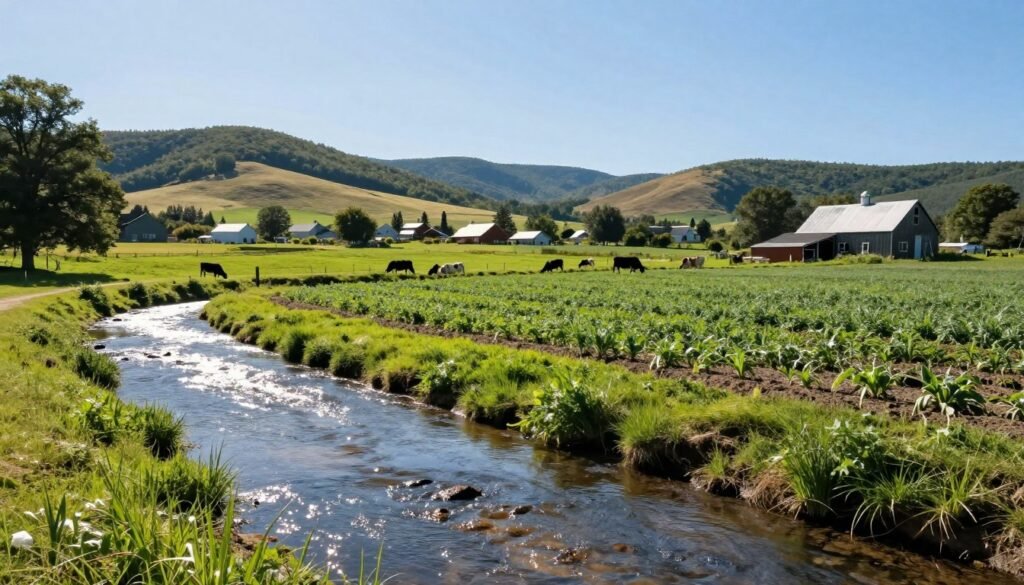
Many Vermont farmers are adopting sustainable practices. These methods help keep soil in place and reduce runoff. Farmers become guardians of the land and water through these efforts.
Combating Vermont water pollution needs teamwork between farmers and environmental agencies. Collaboration helps find solutions that benefit everyone. This teamwork is vital for success.
These partnerships give farmers the support and resources to improve their practices. This ensures farming does not harm water safety. The table below shows how farming activities are managed to protect our water.
| Agricultural Activity | Potential Risk | Mitigation Strategy |
|---|---|---|
| Manure Application | Bacterial contamination | Controlled timing and injection |
| Crop Cultivation | Soil and nutrient runoff | Cover crops and buffer zones |
| Livestock Grazing | Stream bank erosion | Fencing and rotational grazing |
If you get water from a private well in Vermont, you’re in charge of your family’s health. Unlike public systems, private wells are up to the homeowner to keep safe. This freedom is great for rural living but means you must always watch out for your water’s safety.
Private wells face a big challenge: no EPA oversight. This means no regular checks or reports. So, water contaminants in Vermont like arsenic or bacteria might not be caught unless you test it.
What happens nearby can also affect your water. Activities like farming or industrial sites can pollute groundwater. Without someone checking, you might not even notice your water is changing.
To keep your water safe, follow a regular maintenance plan. Check your wellhead every year to make sure it’s secure. Also, keep the area around your well clean to avoid contamination.
Testing your water regularly is key. Experts say test at least once a year for bacteria and nitrates. If your water looks, smells, or tastes different, get it checked right away.
You don’t have to face these challenges alone. The Vermont Department of Health offers great help for well owners. They list certified labs for accurate tests. These resources help you know what water contaminants in Vermont you might face.
By staying informed and doing regular checks, you can enjoy your private well safely. Controlling your water quality is key to protecting your family and property value for the long term.
While Vermont public water systems are regulated, your personal vigilance remains the final line of defense. Taking an active role in monitoring your home environment ensures that you and your loved ones enjoy the safest possible drinking water. By staying informed, you become a key partner in the broader effort to maintain clean water across the state.
Selecting the right filtration system starts with understanding your specific water test results. Not every filter removes every pollutant, so you must match the technology to the specific water contaminants in Vermont identified in your report. For instance, if your test shows high levels of lead, look for a system certified by NSF International for lead reduction.
Always verify that your chosen device is certified for the contaminants you wish to remove. Regular maintenance is equally important, as a neglected filter can eventually harbor bacteria or stop working entirely. Following the manufacturer’s schedule for cartridge replacements ensures your system continues to perform at its peak.
Knowledge is your best tool for maintaining a healthy household. Take the time to explain to your family why water safety matters and how they can help, such as by reporting unusual tastes, odors, or colors immediately. When everyone understands the basics of water treatment in Vermont, the entire household becomes more observant and proactive.
You can find excellent educational resources through local health departments or state environmental agencies. Empowering your children with simple facts about water quality helps build lifelong habits of health and environmental stewardship. Simple actions, like using filtered water for cooking and drinking, can make a significant difference over time.
If you notice a sudden change in your water quality, do not hesitate to take action. Contacting the appropriate authorities is a critical responsibility that helps protect your entire community. If you are on a public system, notify your local water utility provider immediately so they can investigate.
For those using private sources, reach out to the Vermont Department of Environmental Conservation for guidance on how to proceed. Reporting issues promptly helps officials track trends and address problems before they affect more people. Your quick report could be the essential piece of information needed to resolve a localized water quality concern.
Getting safe drinking water in Vermont is a big deal for everyone. Luckily, many groups and agencies are ready to help. They make it easy to check if your water is safe.
The state government is key for health and safety. Check out the Department of Health website for info on drinking water. They have data on public water systems and tips for well owners.
If you’re worried about your water, contact your local environmental office. They can offer advice and explain the rules that keep your water safe.
There are also non-profits working hard to keep our water clean. They hold workshops and share knowledge to help you take action.
These groups often have programs where you can help monitor water quality. Joining a local group can teach you a lot and help your community’s water.
Knowing what’s going on with your water is key. There are many online tools to help you understand water testing in Vermont. They show you how to collect samples and read test results.
Make sure to save these websites for later. They’ll keep you informed and help you feel sure about your water’s quality.
Keeping our water safe is a big job. In Vermont, everyone works hard to keep our drinking water top-notch. This is a big deal for both the state and its people.
New ways to clean water are coming. Scientists are looking at new filters and UV light to get rid of tiny pollutants. These methods could make our water even cleaner for everyone.
The state is making new rules to keep our water safe. They want to test private and public wells more often. This helps keep up with changes in our environment.
Your voice is important in keeping our water safe. By joining local groups or going to town meetings, you can help. Knowing about your water supply lets you speak up for your community. Together, we can keep Vermont’s water clean and safe.
← Drinking Water Quality by State — see how all 50 states are rated on our 5-factor composite methodology covering PFAS, lead, violations, disinfection byproducts, and infrastructure.
If your home uses a private well, your water is exempt from federal testing requirements and may contain contaminants not covered by municipal reports. See our comprehensive review: Best Water Filters for Well Water in 2026 (Iron, Sulfur & PFAS).