
Beautiful Plants For Your Interior

Discover the truth about RV park water safety. Learn if RV park water is safe to drink and what full-timers need to know to stay healthy on the road.
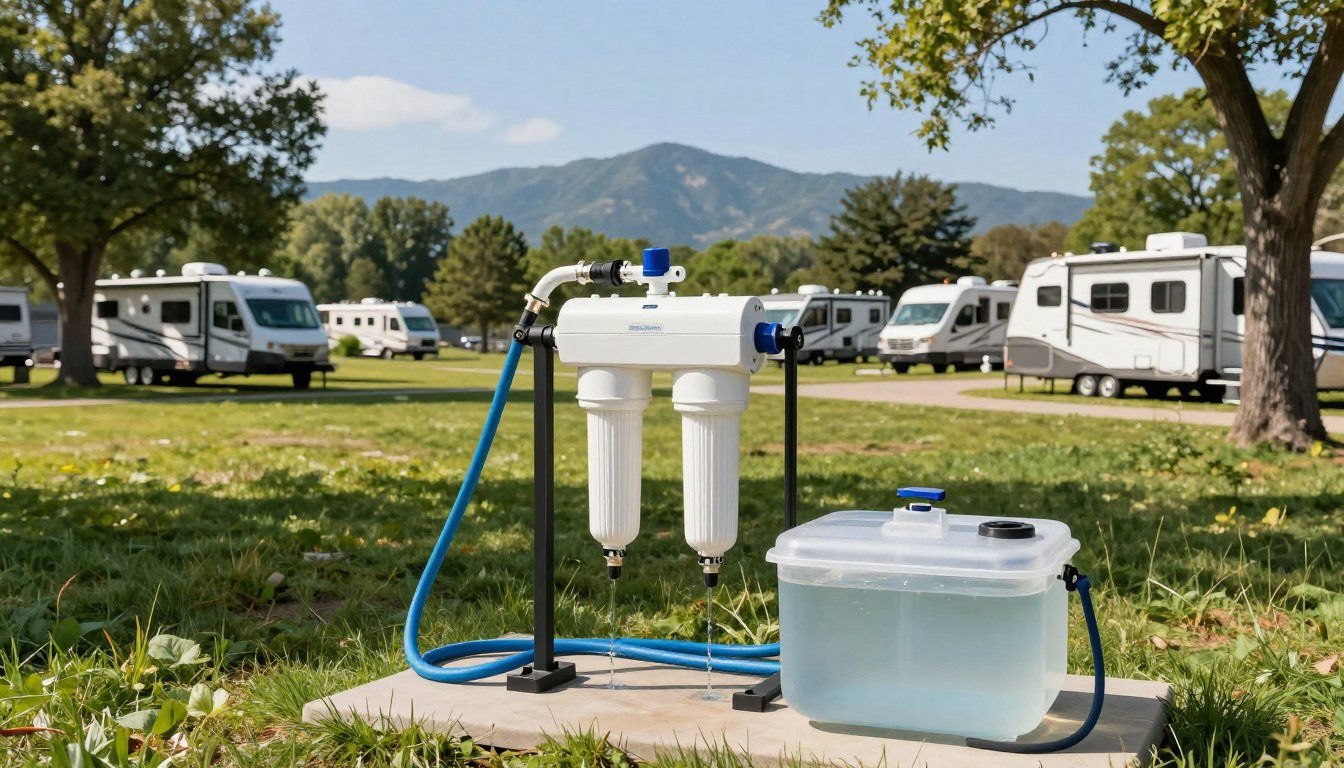
Jacques Cousteau once noted, “We forget that the water cycle and the life cycle are one.” For those living full-time on the road, this connection is a daily reality. Your hydration source directly impacts your well-being.
That spigot at your campsite, labeled “potable,” is your lifeline. Yet, this label only meets a basic legal standard. It does not promise purity from all potential contaminants.
Many travelers trust this supply implicitly. Real-world stories and varying quality across regions suggest a different approach. A proactive stance is your strongest shield for long-term health.
Consistent exposure to low-level impurities can have cumulative effects. This guide tackles the big question about your hookup. We’ll uncover risks, from common microbes to persistent chemicals.
You will learn to interpret quality reports and build a robust defense. We cover solutions for every travel style, from park-hopping to remote boondocking. Our goal is your confidence with every sip, protecting your rig and your peace of mind.
Across North America, campers rely on campground water systems, yet headlines tell a cautionary tale. The straightforward answer is: not always. Many locations provide hydration that meets basic “potable” standards. This label is a starting point, not a guarantee of purity.
Trace levels of certain contaminants are legally permitted. Your personal health and taste preferences require a closer look. Assuming perfection at every site is a gamble full-time travelers cannot afford.
“Potable” simply means the water is treated to a level deemed safe for human consumption by authorities. These standards can vary between regions and even between parks. The definition does not account for issues introduced by aging park plumbing lines.
Your source at a campground might be a municipal supply. It could also be a private well. The latter is a greater cause for concern according to experts like the Mayo Clinic.
Private wells frequently lack any disinfecting system. This makes rural supplies more susceptible to bacteria like E. coli. The term “potable” sets a floor, not a ceiling, for quality.
News reports consistently show this is an ongoing problem. It affects both public and private campgrounds in rural and populated areas alike.
Consider these documented incidents:
These events often stem from private well systems. They can be compromised by animal waste runoff or leaky septic tanks. Inadequate maintenance plays a role too.
Ingesting contaminated drinking water leads to severe gastrointestinal distress. Symptoms include diarrhea, abdominal cramping, and nausea. They may appear days after exposure.
This poses a significant risk to those with compromised immune systems. Children and the elderly are especially vulnerable. Relying solely on a “potable” sign ignores these documented realities.
Proactive testing or a robust water filtration system is the only way to know for sure. Your peace of mind on the road deserves that certainty.
Imagine a hidden world of microbes, chemicals, and particles flowing through your hydration line every time you connect. That simple hose acts as a conduit for a cocktail of unwanted guests. We can categorize these into biological, chemical, and physical contaminants.
Each category presents its own set of risks to your well-being and your vehicle. Understanding them is the first step toward building an effective defense.
Invisible and often tasteless, biological contaminants pose a direct health risk. Bacteria such as E. coli can enter supplies from animal waste runoff or breached septic systems.
Ingesting these microbes leads to serious short-term illness. Symptoms include severe gastrointestinal distress. This is a documented issue at many campgrounds.
Your drinking water should be free from these pathogens. A robust water filtration system targeting microbes is essential.
Chemical contaminants are a broad concern. Chlorine is commonly used for municipal disinfection. It can create an unpleasant taste and odor in your drinking supply.
More insidious are metals like lead. This toxic element can leach from older solder and fixtures in aging plumbing lines.
Then there are PFAS, or “forever chemicals.” These industrial compounds accumulate in the body. They are linked to long-term health issues and are notoriously difficult to remove.
Often visible as cloudy or discolored liquid, physical particles are a common nuisance. Sediment, rust flakes, and mineral scale come from corroded pipes.
While not always a direct threat to your health, they wreak havoc on your rig. These particles clog delicate faucets, valves, and appliances.
Over time, this leads to costly damage and repairs. Protecting your water system from this damage is a key benefit of filtration.
The infrastructure itself is often the wild card. Many campground locations, especially in remote areas, draw from unregulated private wells.
These sources are not subject to the same frequent testing and treatment standards as city supplies. They may contain nitrates, pesticides, or harmful bacteria.
Even if the source is clean, the park‘s own aging plumbing can be the culprit. Stagnant lines can develop bacterial biofilms or introduce rust and scale.
There’s also a risk of cross-contamination in very old campgrounds. Here, water lines and septic lines may run close together. A leak could create a toxic mix.
Understanding these specific risks empowers you to choose the right filter. Target the contaminants you’re most likely to encounter on your travels. This ensures comprehensive protection for you and your family.
A reliable filtration setup acts as your personal quality control station, no matter the source. This guide walks you through building a robust defense. You will learn to select components that match your travel style.
We cover everything from simple attachments to complete purification systems. The goal is crystal-clear hydration and total peace of mind for your adventures.
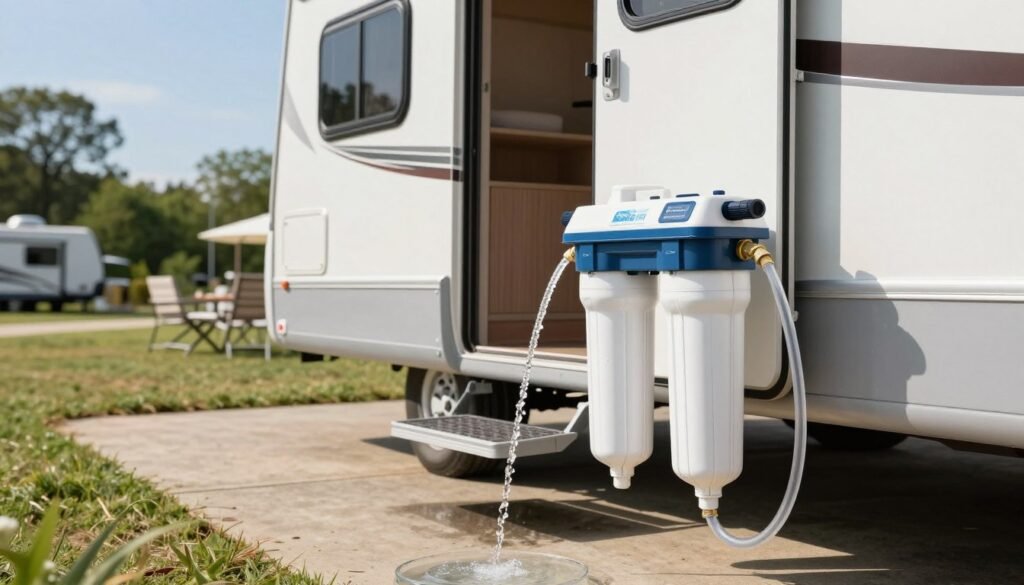
Your selection depends on what you need to remove. Consider your typical stops and health priorities.
A basic sediment filter is a common first step. It catches grit and rust to protect your vehicle’s internal lines. This is a shield against physical damage.
For better taste and odor, a carbon block filter excels. It reduces chlorine and many organic chemicals. Your morning coffee will thank you.
Biological threats require a finer approach. Ultraviolet light sterilizers zap bacteria and viruses as water flows past. A filter with a 0.2-micron rating physically blocks these microbes.
The most thorough purification comes from Reverse Osmosis (RO). This system removes a vast array of contaminants. It is also more complex and uses more water.
Many rvers choose balanced, multi-stage products. Units like the Clearsource Premier combine stages. They tackle sediment, chlorine, and bacteria in one compact canister.
Blu Technology’s 3-stage system offers similar comprehensive filtration. These products are engineered for RV flow rates. They provide broad protection without slowing your supply.
A complete water filtration system involves more than the canister. Proper components ensure safety and prevent costly repairs.
Always use dedicated white “drinking water” hoses. Standard garden hoses can leach harmful chemicals. This is a non-negotiable for your health.
A water pressure regulator is a critical safeguard. Place it between the spigot and your vehicle. It prevents high pressure from bursting internal plumbing.
Here is a typical park setup order:
This sequence treats all hydration before it enters your rig. It protects your appliances and your family at the same time.
Freedom on the road often means miles from a standard hookup. Sourcing and transporting your supply is a key skill.
Apps like iOverlander or Sekr are invaluable tools. They help locate public fill stations. Check truck stops, rest areas, and some RV dealerships.
Always ask for permission at gas stations or fire departments. Many will allow you to fill up. Public campgrounds often have a potable spigot.
To move water, a collapsible bladder saves space in your truck bed. A 32-gallon bladder holds a decent reserve. A small transfer pump then moves it into your fresh tank.
For ultimate independence, consider a system like the Clearsource Nomad. It integrates a pump for pulling liquid directly from a bladder or jug. You can even draw from a natural source in a real pinch.
This way, you maintain your water filtration protocol anywhere. Your life on the road isn’t limited by the nearest tap. You control the quality of every sip.
Tailoring your water system turns worry into confidence. These things empower you, whether at a full-hookup site or deep in the wilderness.
True freedom in exploration means never questioning the purity of your next sip. Your choice is clear: accept unknown quality at each new hookup, or build a reliable barrier.
A robust water filtration system delivers that certainty. It guards your family’s health against invisible microbes and chemicals. This setup also prevents sediment from damaging your vehicle’s delicate plumbing.
This investment rewards you daily. Enjoy great-tasting hydration from any campground source. Remember, a proper setup starts with a dedicated drinking water safe hose for complete protection.
Take this proactive step. Secure your peace of mind for all the miles ahead. Your adventures deserve nothing less.
