
Beautiful Plants For Your Interior

Confused about water softener vs whole house filter? Discover which system is right for your home's water needs and improve your water quality today.
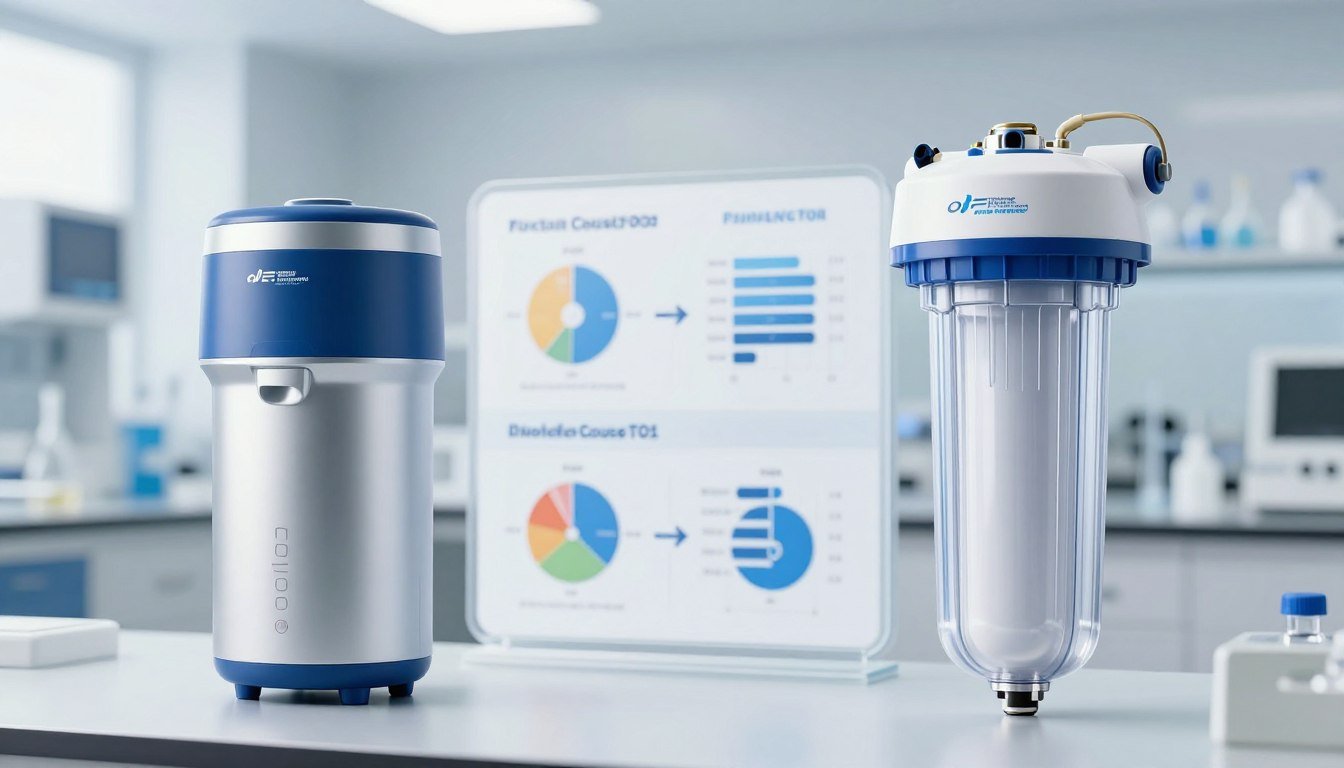
Did you know that mineral deposits can reduce your appliance efficiency by up to 24 percent? You might notice white spots on your clean dishes or feel a dry film on your skin after bathing. Many people struggle to find the right solution for these annoying contamination issues in their home.
Choosing between a water softener vs whole house filter depends on your specific water quality goals. While filtration focuses on removing harmful contaminants like chlorine or lead, a softening system targets calcium and magnesium. High-quality filters ensure your family consumes clean liquid without pesticides or microplastics.
Understanding these unique filters helps you protect your plumbing and improve your overall health. You are likely wondering which technology protects your family best in the long run. This guide clarifies how each process works to solve common household problems efficiently.
Making an informed choice ensures your pipes stay clear and your laundry remains soft. Investing in the right tech brings peace of mind to your daily routine. Let us explore which option fits your lifestyle.
Dealing with white spots on your glassware or dry skin after a shower often points to one common culprit: hard water. Many homeowners across the country struggle with this issue without realizing how water quality impacts their daily routines. Understanding why hard water behaves this way is the first step toward a cleaner home.
At its simplest level, hard water contains a high concentration of dissolved minerals. As water travels through the ground, it naturally picks up calcium and magnesium from limestone and chalk deposits. This calcium magnesium content isn’t dangerous to your health, but it changes how water interacts with soap and heat.
Most municipal supplies treat for bacteria, but they often leave these minerals behind. When these calcium magnesium elements enter your home, they create various household headaches. You will notice hard water most often when it leaves behind a physical residue on surfaces.
You can easily spot hard water by looking at your kitchen dishes. If your glasses have cloudy spots or a white film, you are seeing a mineral buildup. This residue also makes it very difficult to get a rich lather when you are washing your dishes or your body.
The effects of hard water extend to your personal care as well. You might notice that your skin feels itchy and dry after a bath. Similarly, hard water can leave your hair feeling brittle, dull, and difficult to style. This happens because the minerals prevent soap from rinsing away completely from your skin and hair.
The invisible impact of hard water is often the most expensive. Over time, a scaly buildup forms inside your pipes and appliances. This buildup restricts flow in your pipes and forces your water heater to work much harder to reach the right temperature.
Hard water creates significant inefficiency in modern homes, often leading to premature equipment failure and increased utility costs.
When hard water runs through your appliances, it shortens their lifespan significantly. Your dishwasher and washing machine may require frequent repairs due to hard water damage. Fixing these issues early with the right system can save you thousands of dollars in the long run.
| Affected Area | Visual Sign | Root Cause |
|---|---|---|
| Kitchen | Cloudy dishes | hard water residue |
| Bathroom | Dry skin and hair | High minerals |
| Plumbing | Low pressure | hard water scale |
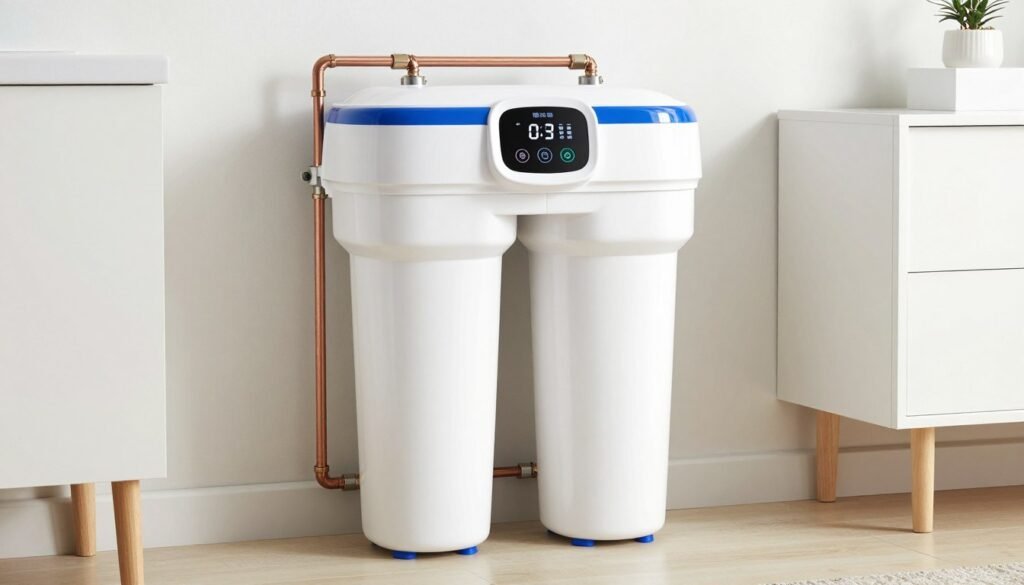
Choosing a water softener for home use is the first step toward ending your hard water nightmares. These specialized water softeners focus on removing the high levels of calcium and magnesium that cause scale buildup. By treating the water at the entry point, you protect your entire plumbing system from damage.
The softening process relies on a scientific method called ion exchange. Inside the softener tank, millions of tiny resin beads wait to trap hard minerals. These beads act like magnets, attracting the calcium and magnesium as the liquid flows through the system.
As the mineral ions stick to the beads, they are swapped for a very small amount of sodium chloride. This water softening technique is incredibly efficient and does not make your water taste salty. Once the beads are full of minerals, the system regenerates to keep the water flow clean and consistent.
High-quality water softeners offer several daily advantages for your household. You will notice that your soft water creates a much richer lather with soap and shampoo. This means you spend less money on cleaning supplies because detergents work more effectively.
Because softeners prevent mineral scale, your appliances like dishwashers and heaters will last much longer. This softening also keeps your skin and hair feeling significantly smoother after every shower. Using a water softener ensures your clothes stay bright and your glassware remains spot-free.
It is important to know that water softeners are not the same as filtration systems. While water softening is great for your pipes, it doesn’t remove contaminants like lead or chlorine. Most water softeners only target the hardness minerals mentioned earlier.
Understanding the limits of these softeners helps you make the best choice for your health. If you are worried about bacteria or chemicals, a softener alone isn’t the final answer. These water softeners are specific tools designed to make your soft water experience comfortable and efficient.
A whole house water filter system acts as a comprehensive shield, removing harmful substances before they reach your faucet. This setup treats every drop of water at its point of entry into your home. You can feel confident knowing your entire plumbing network is protected by high-quality filtration.
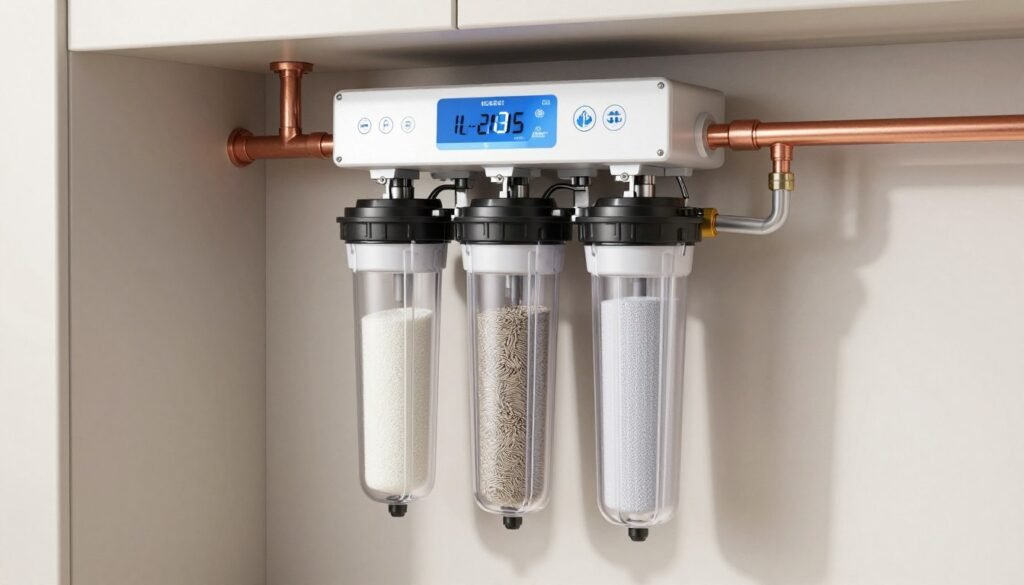
This filtration system protects your home by catching contaminants at the main supply line. Unlike a small filter on one tap, this whole house water solution covers your showers, toilets, and appliances. You will enjoy peace of mind knowing your water filtration starts the moment liquid enters your property.
Modern water filters tackle a variety of dangerous substances found in American tap water. These filters remove heavy metals like lead and arsenic, as well as chlorine and microplastics. Removing these contaminants is vital for your long-term health and safety.
Recent data shows that nearly 200 million Americans have carcinogenic chromium-6 in their drinking water. Powerful water filters provide a defense against these threats, including bacteria, viruses, and PFAS. These filters also strip away pesticides and herbicides that can affect your family over time.
Effective filtration often happens in several distinct steps to ensure maximum purity. First, a sediment pre-filter removes larger impurities and dirt from the flow. Then, the process uses carbon to neutralize chlorine and chemical odors.
A dedicated water filtration system often includes a stage for removing VOCs and dissolved metals. Finally, a polishing filter phase removes remaining sediment or organic particles. This multi-stage filtration ensures your water filter delivers crisp, clean results for drinking and cooking.
By using a filtration system that treats the source, you protect your skin and hair while showering. Your water filter becomes the primary line of defense for your family’s wellness. Choosing the right filter ensures every tap in your home provides safe, refreshing water.
While both systems improve your water quality, they tackle very different problems in your home. You might think one system can do it all, but their roles in your household are unique. Choosing the right one depends on what is actually hiding in your pipes.
A water filter focuses on your health and safety by removing dangerous contaminants. It targets things like lead, chlorine, and bacteria that pose real health risks. These systems are designed to make your drinking water pure and safe for your family.
In contrast, a water softener acts as a shield for your plumbing and appliances. It specifically removes hard minerals like calcium and magnesium. While these minerals aren’t dangerous to drink, they cause scale buildup that ruins your home investment over time.
The process for filtration involves physical barriers or chemical absorption. A filter traps unwanted particles as they pass through various stages, like carbon or sediment layers. This ensures that nothing harmful makes it to your kitchen tap.
A softener uses a chemical process called ion exchange to change the water’s chemistry. Inside the tank, hard mineral ions stick to resin beads. This allows softened water to flow through while the minerals stay behind.
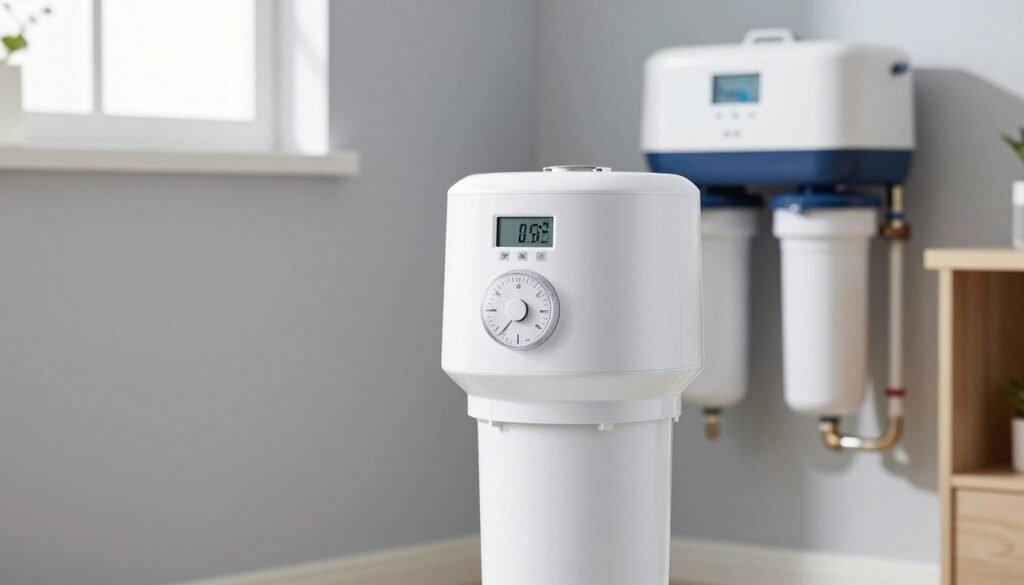
A water filter ensures your drinking water is free from heavy metals and chemicals. This is the ultimate choice for those concerned about long-term health and better-tasting beverages. It acts as a safety net for your entire family’s well-being.
A water softener provides massive household benefits that you can feel. You will notice softer skin, cleaner dishes, and clothes that stay bright longer. It essentially extends the life of every appliance that uses water in your house.
| Feature | Water Softener | Water Filter |
|---|---|---|
| Primary Goal | Removes hard minerals | Removes contaminants |
| Key Benefit | Protects appliances | Improves health/safety |
| System Type | Ion exchange softener | Multi-stage filter |
| Target Concern | Scale and soap scum | Lead, chemicals, and odor |
Determining your ideal setup starts with a simple look at your daily water experiences and local supply. Whether you need water to be clean or just soft depends on your unique home and its plumbing needs. You have several options to consider, including choosing a standalone softener or a dedicated water filter.
You should choose a water softener if your main issues are spotty dishes and dry skin. These systems tackle mineral buildup that ruins appliances and blocks pipes. This solution works perfectly when your water is hard but already tastes and smells great.
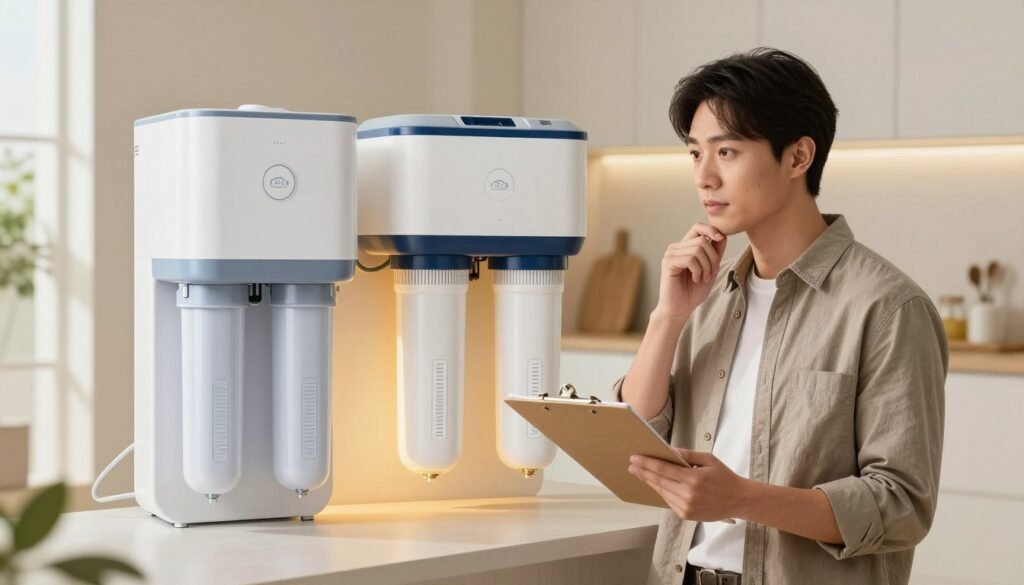
A whole-house filter is the best choice if you notice chemical smells or strange colors. You don’t always need water to be softened if your mineral levels are low. If you aren’t worried about scale, a softener is unnecessary, and a high-quality water filter will provide the purity you desire.
If you face both scale buildup and bad odors, you should use softeners alongside modern water filtration. It is crucial to place the softener before the filters to prevent mineral clogs in the fine media. This setup ensures your home has protection from both physical damage and chemical contaminants.
You can also consider reverse osmosis among your various options for high-purity results. This type of osmosis effectively removes total dissolved solids and most contaminants in one go. While these systems are thorough, a dedicated water softener is often more efficient for heavy hardness since reverse osmosis can waste water during the process.
| Water Issue | Recommended System | Primary Benefit |
|---|---|---|
| Scale and spots | water softener | Protects plumbing |
| Chlorine and odors | Whole house filters | Better taste/smell |
| Hardness and chemicals | softeners + filters | Full protection |
| Dissolved solids | Reverse osmosis systems | High purity drinking |
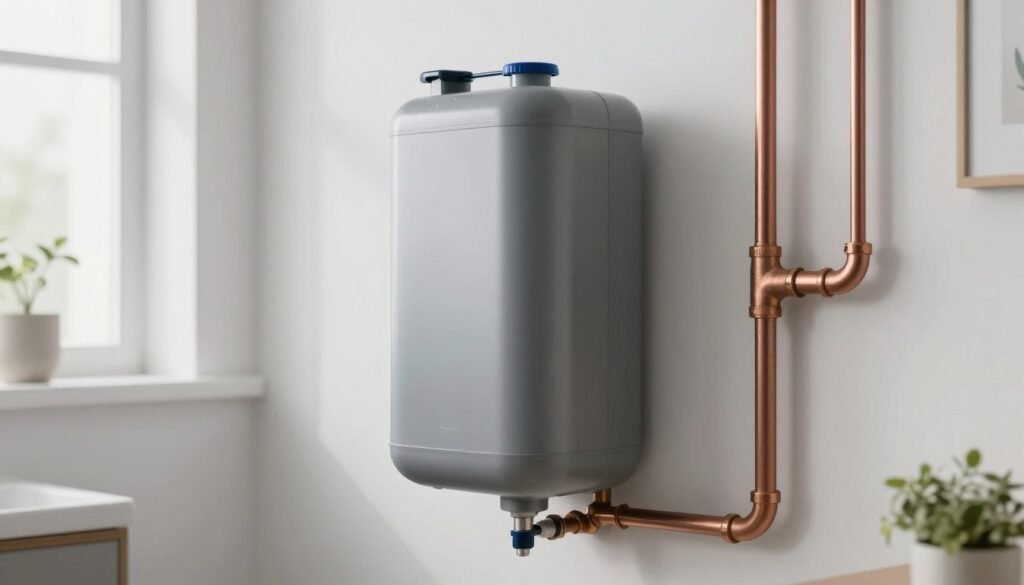
Not everyone wants to deal with heavy salt bags, which is where a salt-free water conditioner comes into play as a clever middle ground. This system sits between doing nothing and investing in a full water softening setup for your home. It offers a maintenance-free way to protect your plumbing and appliances from the inside out.
While traditional softeners require salt, these units operate differently and do not actually remove minerals from your supply. Instead, they use Scale Control Media technology to change the crystal structure of calcium and magnesium. This process prevents harsh buildup on your pipes and fixtures safely and naturally.
Because they don’t use the ion exchange process, they don’t require electricity or generate wastewater. This makes the softening process much more eco-friendly and sustainable for your household. You get to keep healthy minerals in your water without the slimy feel often associated with salt-treated liquid. It is a simple solution for a modern, busy home.
You should consider this water treatment if your hardness levels are only slight or moderate. If you have extremely hard water, a traditional softener is still the most effective choice to prevent scale damage. However, for many families, the lack of chemical use makes this a winning choice for their needs.
Quality conditioners are a great long-term investment since some last up to 10 years or 1,000,000 gallons. While the initial price might be similar to other systems, the lack of ongoing salt costs saves you money over time. It is a cost-effective way to achieve your water softening goals while enjoying a softening effect that requires zero heavy lifting.
Choosing the right unit depends on whether you want to stop mineral scale or remove harmful contaminants. A whole house softener protects your dishes, skin, and hair from hard minerals. This effectively improves your water quality and helps your expensive appliances last much longer.
If your goal is better drinking water, a house water filter is the best solution. These filtration systems target sediment and chemical contaminants to improve the taste of your whole house water. Clean water starts with the right equipment for your needs.
For a healthy home, you might need a whole house setup that combines both filters for better quality. Softener installations range from $800 to $3,000, while a house water filter costs between $1,000 and $2,300. Test your water to ensure your systems provide the best whole house water for safe drinking and crisp taste. These filtration steps remove sediment and ensure clean water in a whole house environment.
