
Beautiful Plants For Your Interior

Last updated July 27, 2026
Some links below are affiliate links. If you buy through them we may earn a commission at no extra cost to you. See our Affiliate Disclosure.
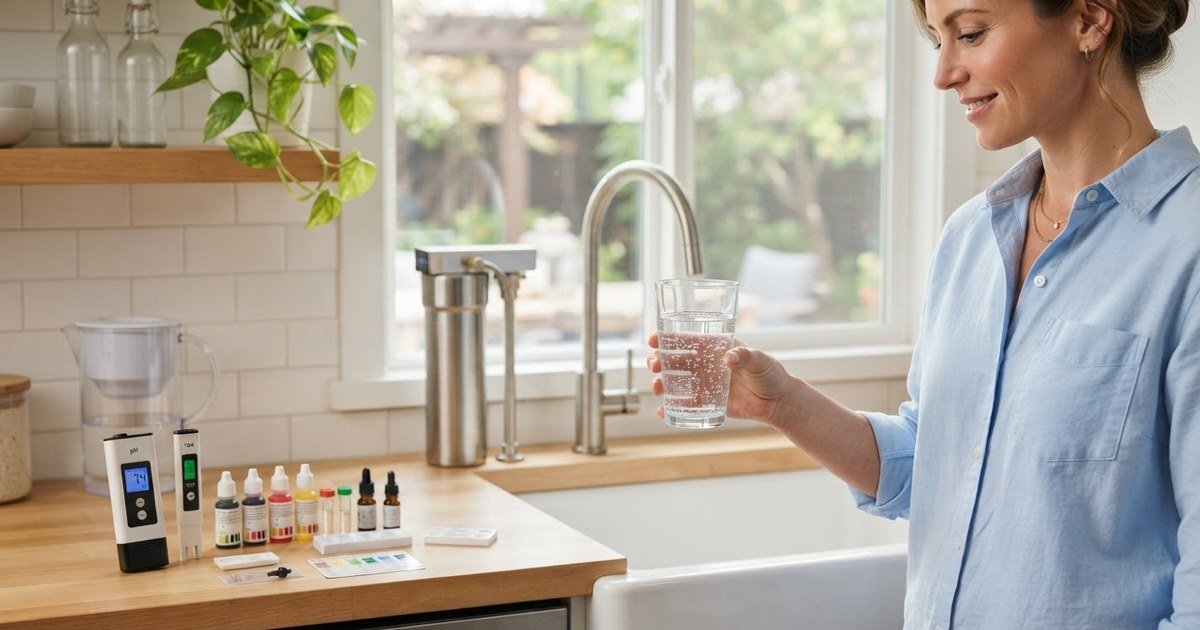
The five standard parameters of water quality testing are pH, temperature, dissolved oxygen, turbidity, and conductivity (often reported as total dissolved solids, or TDS). Scientists study these five because together they give a fast, reliable snapshot of a water body’s overall health — and because a change in any one of them usually signals that something bigger is going on. For drinking water at home, the same five form the baseline of almost every test kit, with bacteria and specific contaminants layered on top.
| Parameter | What it measures | Typical healthy range (drinking water) |
|---|---|---|
| pH | Acidity or alkalinity | 6.5–8.5 (EPA secondary standard) |
| Temperature | Heat content of the water | Cooler is generally better; affects every other reading |
| Dissolved oxygen (DO) | Oxygen available in the water | Higher DO indicates healthier source water |
| Turbidity | Cloudiness from suspended particles | Below 1 NTU for treated drinking water |
| Conductivity / TDS | Dissolved salts and minerals | Under 500 mg/L TDS (EPA secondary standard) |
pH measures how acidic or alkaline water is on a 0–14 scale, with 7 being neutral. The U.S. Environmental Protection Agency’s secondary standards recommend keeping drinking water between 6.5 and 8.5. Water outside that band isn’t automatically dangerous to drink, but it causes real problems: acidic water corrodes pipes and can pull lead and copper into your tap water, while highly alkaline water tastes bitter and scales up appliances.
Researchers call pH the “master variable” because it controls how other substances behave — how metals dissolve, how disinfectants like chlorine perform, and how aquatic organisms survive.
Temperature seems like the simplest reading, but it drives nearly everything else. Warm water holds less dissolved oxygen, speeds up chemical reactions, and encourages bacterial growth. That’s why field scientists always record temperature first — every other measurement has to be interpreted against it. At home, unusually warm tap water sitting in pipes is also the reason the CDC and EPA suggest flushing your tap before drinking if the water has been sitting for several hours, since warm, stagnant water picks up more metals from plumbing.
Dissolved oxygen (DO) is the amount of oxygen gas available in water. In lakes, rivers, and reservoirs — the sources much of our drinking water comes from — DO is the single clearest indicator of ecosystem health. Fish kills, algae blooms, and sewage contamination all show up first as a drop in dissolved oxygen. For source-water monitoring, healthy streams typically run well above 6 mg/L, while readings below about 3 mg/L signal serious stress.
You won’t usually test DO from your kitchen tap, but it matters upstream: low-oxygen source water tends to carry more iron, manganese, and hydrogen sulfide (that rotten-egg smell common in well water).
Turbidity measures how much suspended material — silt, clay, organic matter, microorganisms — is clouding the water, reported in nephelometric turbidity units (NTU). It matters for two reasons. First, cloudy water is unappealing. Second, and more importantly, particles shield bacteria and viruses from disinfection, which is why the EPA requires treated surface water to stay at or below 1 NTU (and below 0.3 NTU in 95% of samples for conventional treatment systems). A sudden turbidity spike in a private well often means surface water is getting in — a red flag worth investigating immediately.
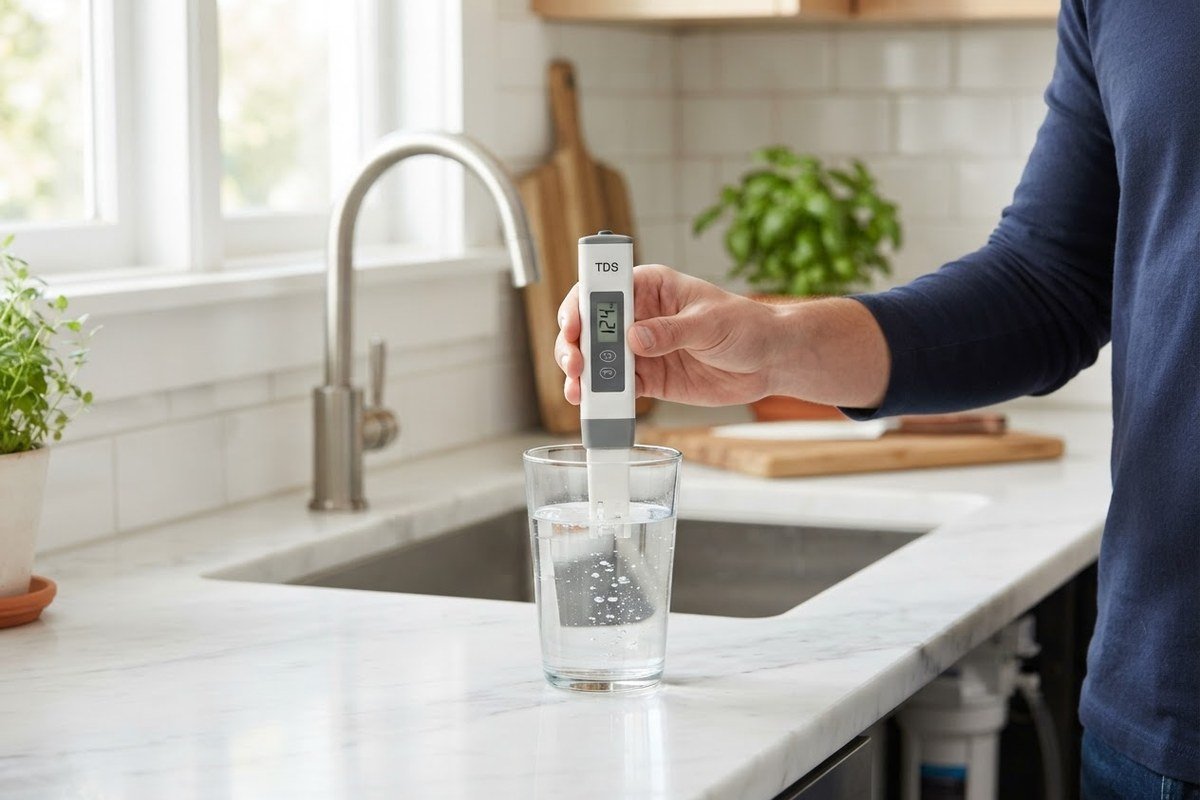
Conductivity measures how well water conducts electricity, which rises with the amount of dissolved salts and minerals. It’s usually translated into total dissolved solids (TDS) in milligrams per liter. The EPA’s secondary standard for TDS is 500 mg/L; above that, water starts tasting salty or metallic and leaves mineral deposits. A cheap TDS pen is the most common “water tester” sold online — useful for spotting big changes, but be aware of what it can’t do (more on that below).
You have three practical tiers, ordered by how much detail you get:
A sensible testing rhythm looks like this: run a certified lab test once to establish your baseline across all five parameters plus metals and bacteria, then use a pen or strips monthly to watch for drift. If a quick reading suddenly jumps — TDS doubles, pH swings a full point, water turns cloudy — that’s your cue to re-test with a lab rather than guess at the cause. Testing this way costs far less than reflexively buying a filtration system for a problem you haven’t confirmed, and it tells you exactly which treatment technology (if any) your water actually needs.
If you’re on a private well, the stakes are higher because no utility is testing for you — our step-by-step guide on how to test your well water walks through exactly what to test and when.
Here’s the catch every water scientist knows: water can pass all five parameters and still be unsafe. Lead, arsenic, nitrates, bacteria like E. coli, and per- and polyfluoroalkyl substances (PFAS) are invisible to pH meters, TDS pens, and turbidity readings. PFAS in particular occur at dangerous levels measured in parts per trillion — far below anything a general parameter can detect. If you’ve never looked into it, start with our guide to what PFAS is in drinking water, because the EPA finalized enforceable limits for six PFAS compounds and utilities are now on a compliance clock.
Treat the five parameters as vital signs — like pulse and blood pressure. Abnormal readings tell you something is wrong; normal readings don’t guarantee everything is right.
Substantially. Groundwater in the upper Midwest tends to run hard with high TDS from dissolved limestone — Wisconsin well owners, for example, routinely see elevated hardness and iron, which is why the state’s health department urges annual well testing (see our breakdown of Wisconsin’s drinking water quality). Mountain-west surface water runs colder with low TDS but seasonal turbidity spikes from snowmelt. To see how your state’s source water, infrastructure, and violation history compare, browse our drinking water quality by state hub — it links to a dedicated page for all 50 states.
The five are the minimum set that captures physical, chemical, and biological water health at once, and all five can be measured quickly in the field with portable instruments. Full laboratory panels test 40–100+ analytes, but the five parameters are the standardized core used in monitoring programs worldwide.
For ecosystems, dissolved oxygen — it’s the clearest single indicator of whether a water body can support life. For drinking water at home, pH arguably matters most because out-of-range pH drives corrosion, which is how lead and copper end up in tap water.
No. TDS meters only measure dissolved minerals as a bulk number. Water with lethal levels of lead or bacteria can show a perfectly normal TDS reading. Use a TDS pen for tracking changes, and a certified lab test for safety decisions.
Physical tests cover temperature, turbidity, color, taste, and odor. Chemical tests cover pH, conductivity/TDS, dissolved oxygen, metals, and nutrients. Biological tests look for organisms — most commonly coliform bacteria and E. coli as indicators of contamination. The five core parameters intentionally sample from all three categories.
If you’re on a public system, review your utility’s annual Consumer Confidence Report and test at the tap if your home predates 1986 (lead risk) or you notice changes. If you’re on a private well, the CDC recommends testing at least once a year for coliform bacteria, nitrates, TDS, and pH — and any time you notice a change in taste, odor, or color.
Between 6.5 and 8.5 under EPA secondary guidelines. Most municipal water is deliberately kept slightly alkaline (7.0–8.0) to protect pipes from corrosion.
This article is for informational purposes only and is not professional medical or safety advice. See our Health Disclaimer.
