
Beautiful Plants For Your Interior

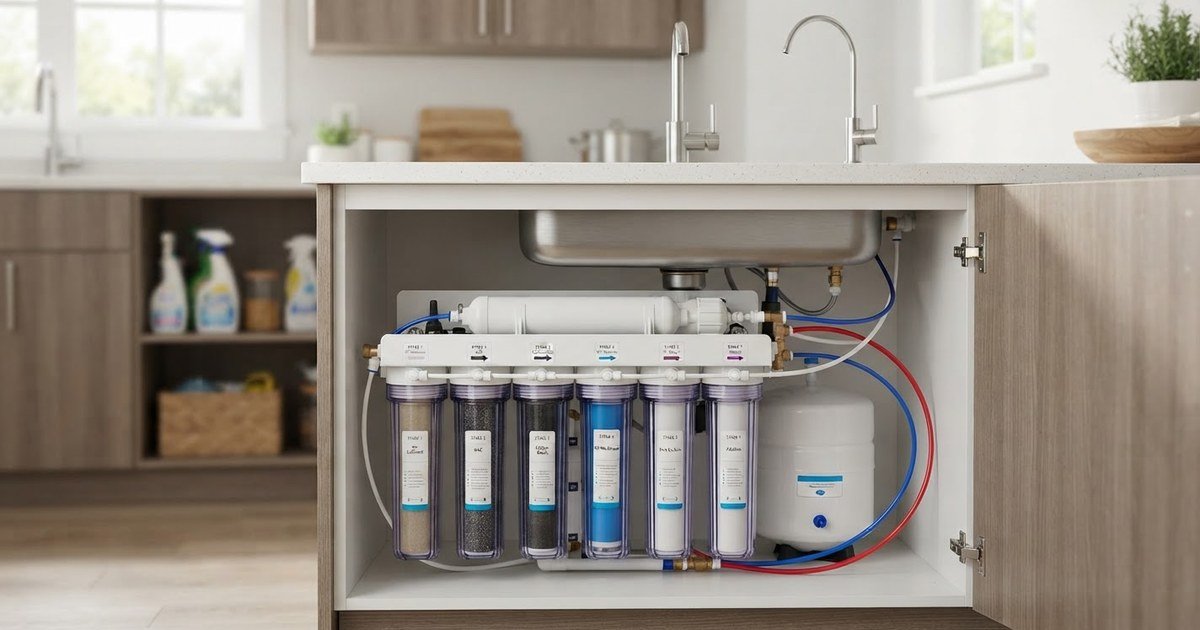
The “7 stages of water filtration” almost always refers to a multi-stage reverse osmosis (RO) system: a sediment pre-filter, granular activated carbon, a carbon block, the reverse osmosis membrane, a post-carbon polishing filter, a remineralization stage, and a UV sterilization stage. The first four stages do the heavy lifting of actually removing contaminants; the last three refine taste, restore minerals, and add a layer of microbial protection. Stage counts are a manufacturer’s design choice, not a regulated standard — so a well-certified 4-stage system can outperform a poorly made 7-stage one.
Below we walk through what each stage does, which stages matter for which problems, and how to figure out how many stages your water actually needs — because the honest answer starts with what is in your tap water, not what is printed on the box.
Some links below are affiliate links. If you buy through them we may earn a commission at no extra cost to you. See our Affiliate Disclosure.
The first stage is a mechanical filter, typically rated around 5 microns, that traps rust, sand, silt, and other visible particles. It does nothing about dissolved contaminants — its job is to protect the more expensive stages downstream. If your water carries a lot of sediment (common on private wells), this cheap cartridge is what keeps the RO membrane from clogging early.
Granular activated carbon adsorbs chlorine, chloramine byproducts, and many organic compounds that affect taste and odor. This stage matters more than most people realize: chlorine chemically degrades thin-film RO membranes, so the carbon stages are there partly to shield stage 4.
A carbon block is compressed activated carbon with a tighter, more uniform structure than loose granules. It picks up what the GAC stage missed and provides finer particulate filtration. Systems certified to NSF/ANSI Standard 53 rely on high-quality carbon stages like this one to reduce health-related contaminants such as lead and certain volatile organic compounds. We compare carbon-only systems against RO in detail in our reverse osmosis vs. carbon filter guide.
This is the heart of the system. Water is forced through a semi-permeable membrane with pores small enough to reject dissolved solids — the category that includes lead, arsenic, nitrates, fluoride, and PFAS. The EPA lists reverse osmosis among the treatment technologies that can be effective for reducing PFAS in home drinking water, and NSF/ANSI Standard 58 is the certification to look for on this stage. The trade-off: RO produces reject water (often a few gallons per gallon filtered) and works slowly, which is why systems include a storage tank.
After the storage tank, a final inline carbon filter “polishes” the water on its way to the faucet, catching any tastes picked up while the water sat in the tank. It is a refinement stage — nice to have, not the stage doing the contaminant removal.
RO is thorough enough that it also strips out calcium and magnesium, leaving water that some people find flat-tasting. A remineralization cartridge adds back a small amount of those minerals and raises pH slightly. This stage is about taste preference, not safety — the mineral contribution is small compared with what you get from food.
An ultraviolet lamp inactivates bacteria, viruses, and protozoan cysts that could pass through or grow downstream of the other stages. UV matters most for well water or any supply that is not reliably disinfected; NSF/ANSI Standard 55 covers UV systems. On treated city water, this stage is largely insurance.
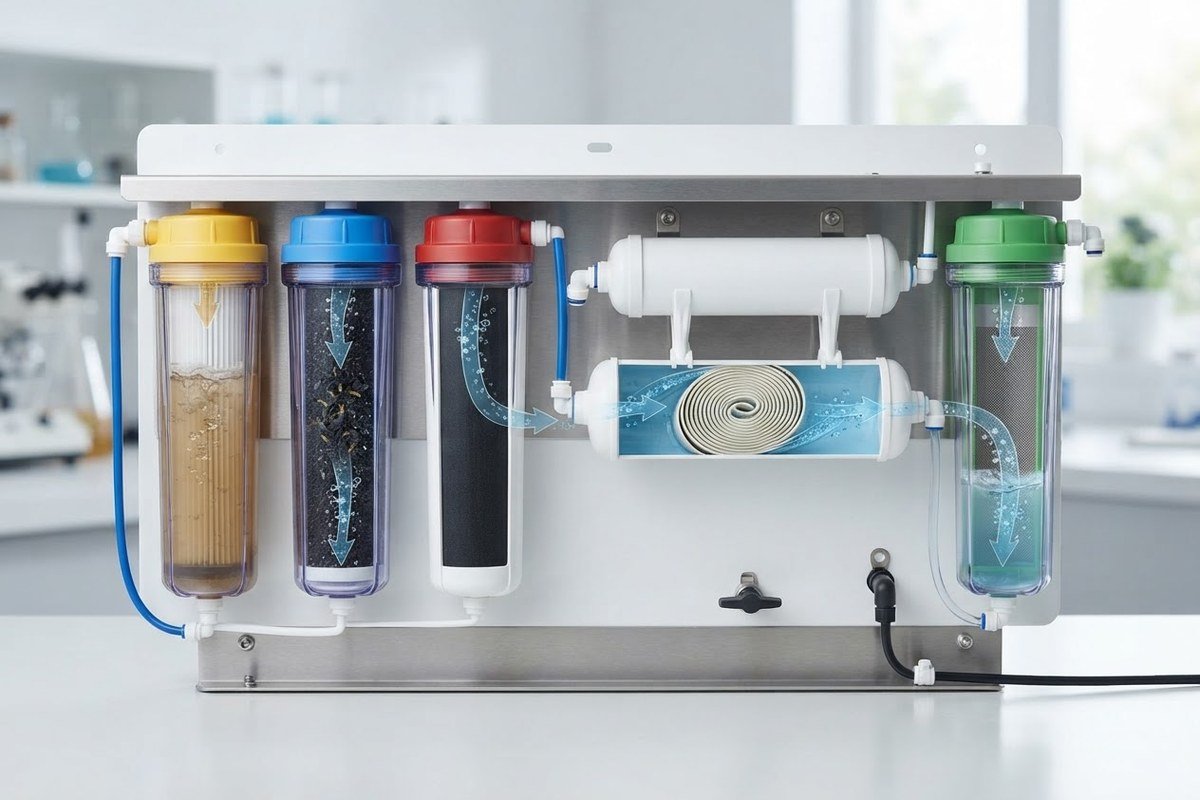
Usually not — and this is where marketing and function part ways. The stage count on the box is a design and marketing decision. What determines performance is the quality of the membrane and carbon inside, and whether the system is independently certified for the specific contaminants you care about. NSF/ANSI 42 covers aesthetic effects like chlorine taste, 53 covers health-related contaminants, and 58 covers reverse osmosis systems. A 4- or 5-stage unit certified to reduce lead and PFAS will serve you better than an uncertified 7-stage unit with generic cartridges.
Both the EPA and CDC make the same underlying point: no single filter type removes everything, so choose treatment based on what is actually in your water. Two extra stages of carbon do nothing for nitrates; a remineralizer does nothing for bacteria.
Start with data instead of guesswork. If you are on a municipal supply, your utility’s annual Consumer Confidence Report tells you what was detected leaving the plant — and our state-by-state water quality hub summarizes the recurring problems in your state. What the report cannot tell you is what your own plumbing adds between the main and your faucet, which is where lead usually enters.
A mail-in lab test closes that gap. A kit like SimpleLab’s Tap Score tests the water at your tap and reports which contaminants are present at which levels, so you can match stages to problems instead of paying for stages you don’t need. Rough translation guide:
Under-sink multi-stage RO systems generally run from around $200 to $600 up front. If you prefer a name-brand unit with certified claims, Aquasana’s SmartFlow reverse osmosis system pairs RO with remineralization, and Crystal Quest’s reverse osmosis line covers configurations from basic 4-stage up to units with UV. You can also compare current 7-stage reverse osmosis systems on Amazon to get a feel for the price spread.
Budget for consumables, too: pre- and post-filters typically change every 6–12 months, the RO membrane roughly every 2–3 years, and the UV lamp annually. Replacement filter sets commonly run $50–$100 per year. A system whose filters you never change stops protecting you — skipped maintenance is the most common way a good system quietly becomes a bad one.
Not sure a full RO setup is the right fit at all? Our water filter comparison guide lines up pitchers, faucet mounts, under-sink, and whole-house options side by side, and our breakdown of the four types of water filtration systems explains which technology fits which problem.
The most expensive mistake in home filtration is buying a system before you know what you’re removing. Start with a certified lab test to identify what’s actually in your water. Then match the system to the result — whole-house filtration for sediment, chlorine and hardness across every tap, or a point-of-use system if you only need better drinking water at the kitchen sink.
Not automatically. The extra stages are usually remineralization and UV, which address taste and microbes — not more contaminant removal. A certified 5-stage system and a certified 7-stage system remove essentially the same dissolved contaminants; pay for the extra stages only if you want what they specifically do.
Sediment first, then carbon stages, then the RO membrane, then post-carbon, remineralization, and UV last. The order protects the membrane: particles and chlorine are removed before water reaches it.
The reverse osmosis membrane (stage 4) is the stage that addresses PFAS. The EPA identifies reverse osmosis among home treatment options that can reduce PFAS. For verified performance, look for a system certified against PFAS reduction claims rather than relying on the stage count.
Yes — any RO-based system sends reject water down the drain. Conventional systems may use several gallons per gallon produced; newer high-efficiency designs cut that ratio substantially. Check the efficiency rating before buying if this matters to you.
Generally no. Municipal water in the U.S. is disinfected before distribution, so UV mostly benefits well owners and homes with known microbial risks. If a boil-water advisory is a recurring event where you live, UV earns its place.
Typical schedules: sediment and carbon pre-filters every 6–12 months, post-carbon annually, RO membrane every 2–3 years, remineralization cartridge annually, and UV lamps annually even if they still light — UV output degrades before the bulb fails.
Last updated August 13, 2026.
