
Beautiful Plants For Your Interior

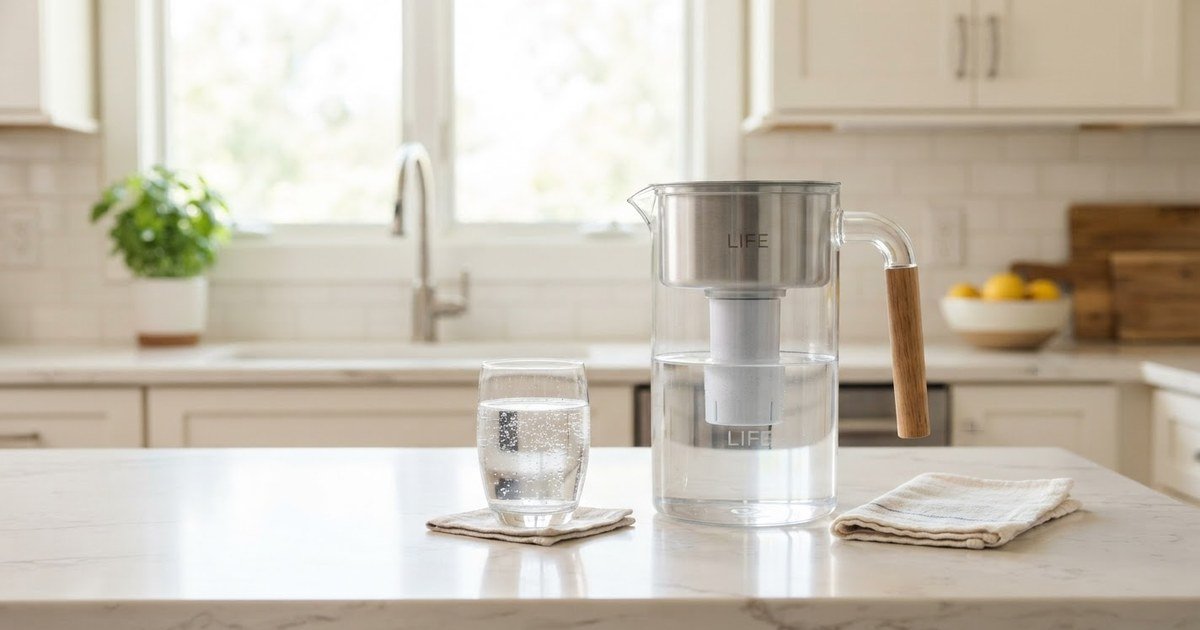
There are four main types of water filtration systems: activated carbon filters, reverse osmosis (RO) systems, sediment filters, and UV purifiers. Carbon filters improve taste and remove chlorine and many organic chemicals, RO systems strip out the widest range of dissolved contaminants, sediment filters catch physical particles like sand and rust, and UV systems neutralize bacteria and viruses. Most home setups combine two or more of these to cover both taste and safety.
Some links below are affiliate links. If you buy through them we may earn a commission at no extra cost to you. See our Affiliate Disclosure.
Not sure which one fits your water? This short video breaks down how to think through the decision before you buy anything.
Before diving into each type, here’s the short version. Every home filtration setup is built from some combination of these four technologies:
Here’s what each one actually does, where it fits in a whole-home setup, and what to look for if you’re shopping.
Activated carbon is processed to be extremely porous, giving it a huge internal surface area. As water passes through, contaminants stick to the carbon through a process called adsorption. It’s the same basic principle used in pitcher filters, faucet-mounted filters, and larger under-sink or whole-house carbon tanks.
Carbon filters are very effective against chlorine and chloramine taste and smell, volatile organic compounds (VOCs), and many pesticides and herbicides. Standard carbon filters are not designed to remove dissolved minerals, most heavy metals, fluoride, or microorganisms, so they’re usually paired with another technology rather than used alone as a whole-house solution.
Households on municipal water who mainly want better taste and odor, plus reduction of common chemical byproducts. It’s also the workhorse pre-filter stage in most RO systems, since it protects the RO membrane from chlorine damage and extends its life.
If you’re comparing carbon against a full RO setup, our reverse osmosis vs. carbon filter guide walks through the tradeoffs in more detail. For a simple, budget-friendly starting point, an under-sink activated carbon filter is usually the easiest upgrade from a pitcher filter.
RO systems push water under pressure through a semi-permeable membrane with pores small enough to block dissolved solids while letting water molecules through. Most residential RO units are multi-stage: a sediment pre-filter, a carbon pre-filter, the RO membrane itself, and often a carbon polishing filter at the end.
RO is the most thorough of the four types, capable of removing dissolved lead, arsenic, fluoride, nitrates, and (with the right membrane and pre-filtration) PFAS “forever chemicals.” The tradeoff is that RO also strips out beneficial minerals like calcium and magnesium, produces some wastewater during filtration, and filters more slowly than carbon-only systems.
Anyone dealing with a known contamination issue (nitrates, arsenic, PFAS, heavy metals) or who simply wants the cleanest possible drinking and cooking water. RO is typically installed as a dedicated under-sink or countertop unit rather than treating your whole house, since whole-home RO is expensive and often unnecessary for water that’s only used for bathing and laundry.
If contamination is a concern rather than just taste, start with a water test before you buy — see our guide to testing your well water at home. Once you know what you’re dealing with, a reverse osmosis system sized for your household is the next step.
Sediment filters are the simplest of the four: a physical barrier, usually a spun polypropylene or pleated cartridge, that catches particles by size. They don’t chemically alter the water at all — they just strain it.
Sand, silt, rust flakes (common with older galvanized pipes or well systems), and other visible debris. Sediment filters are rated by micron size; a lower micron rating catches finer particles but clogs faster and needs more frequent replacement.
Well water systems and older homes with aging pipes, where sediment filters protect downstream appliances, water heaters, and other filter stages from premature wear. Almost every whole-house filtration setup starts with a sediment stage, even if it’s paired with carbon, RO, or UV afterward.
If your water has a gritty texture, runs cloudy after rain, or leaves rust stains in sinks and tubs, sediment filtration is usually the first fix, and replacement sediment cartridges are inexpensive to keep on hand.
UV purifiers pass water through a chamber where it’s exposed to ultraviolet light at a specific wavelength. The light disrupts the DNA of bacteria, viruses, and other microorganisms so they can’t reproduce, effectively neutralizing them without adding any chemicals.
UV is highly effective against biological contaminants — bacteria like E. coli, viruses, and cysts — but it does nothing for chemicals, dissolved minerals, heavy metals, or physical particles. Water needs to be relatively clear (low turbidity) for UV to work properly, which is why UV is almost always installed after sediment and carbon stages, not before.
Homes on private well water, especially where a water test has shown bacterial contamination, or anyone without access to municipally treated (and chlorinated) water. It’s a common final stage in well water filtration systems built to handle iron, sulfur, and biological risks together.
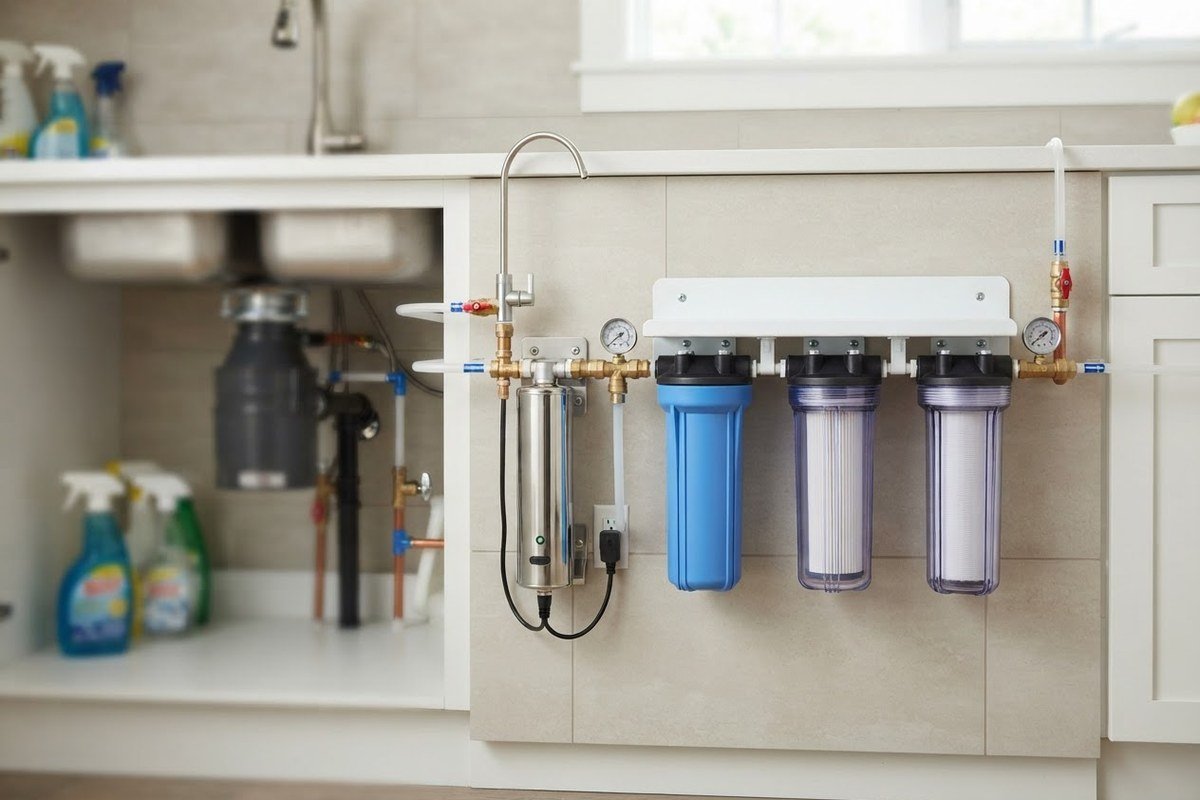
A whole-house UV purifier is typically installed after your sediment and carbon stages, right before water enters your home’s main line.
Once you understand the four types, the buying decision comes down to a few practical questions:
Don’t guess. A basic test kit (or a lab test for well water) tells you whether you’re dealing with chlorine taste, sediment, heavy metals, nitrates, or bacteria — and that determines which of the four filtration types you actually need. Municipal water customers can also request their local Consumer Confidence Report, and it’s worth checking how water quality trends look in your area through resources like our Water Quality by State guides.
Independent certification (NSF/ANSI Standards 42, 53, 58, and 401 cover different contaminant categories) is the most reliable way to confirm a filter actually performs as advertised, rather than relying on marketing claims alone.
City water and well water have very different risk profiles. Municipal water is usually chlorinated and tested regularly, so taste and chemical byproducts are the main concern (carbon does most of the work). Well water is untested and untreated by default, so sediment, UV, and sometimes RO become much more important.
Filter cartridges, RO membranes, and UV bulbs all need periodic replacement. A cheap system with expensive, frequent replacement filters can cost more over three years than a pricier system with long-life cartridges. A simple TDS meter is a cheap way to spot-check whether your filters are still performing between lab tests.
Most effective setups aren’t just one of these four types — they’re a stack. A typical whole-house configuration for well water might run sediment → carbon → UV, with a dedicated RO unit under the kitchen sink for drinking and cooking water specifically.
Related guide: Water Filter Comparison — every system type compared
“Filter” generally refers to systems that remove particles, chemicals, and dissolved solids (carbon, sediment, RO), while “purifier” typically refers to systems that neutralize biological contaminants like bacteria and viruses (UV, and to a lesser extent RO). Many product listings use the terms loosely, so check what contaminants a system is actually certified to address.
Often yes. Whole-house setups commonly combine sediment filtration as a first stage, carbon for taste and chemicals, and sometimes UV or RO depending on your water source and test results. Relying on a single filter type usually means leaving some contaminant category unaddressed.
There’s no single answer without a water test, but well water setups most often need sediment filtration first, followed by carbon and/or UV for bacteria, with iron and sulfur removal added if those show up in testing.
Yes. RO membranes remove dissolved minerals like calcium and magnesium along with contaminants. Some RO systems add a remineralization stage afterward if this is a concern, though the mineral content in filtered drinking water is a small fraction of what most people get from food.
It depends on the type and your water quality: carbon filters typically every 2–6 months, sediment cartridges every 1–3 months (more often with heavily sedimented well water), RO membranes every 1–3 years, and UV bulbs annually. Manufacturer guidance and your actual water usage both affect the timeline.
Reverse osmosis and specialized activated carbon filters certified to NSF/ANSI 53 or 58 for PFAS reduction can significantly reduce PFAS levels. Standard carbon pitcher filters without that specific certification generally cannot.
Whatever combination you land on, the starting point is always the same: test your water, match the filtration type to what the test actually shows, and look for independent certification before you buy.
