
Beautiful Plants For Your Interior

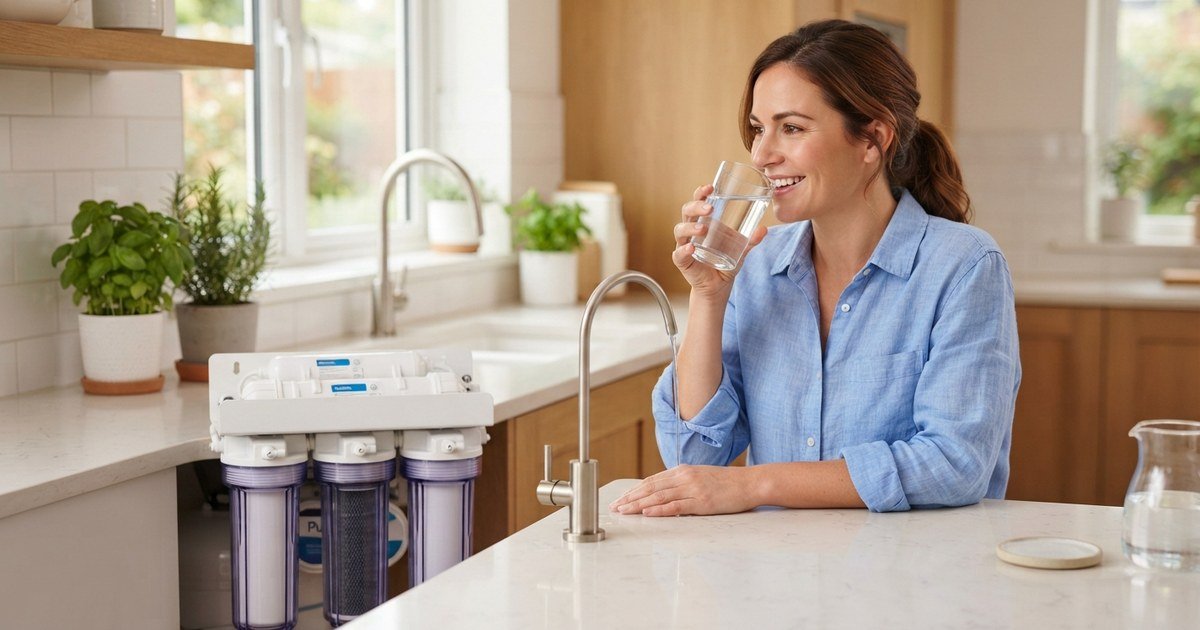
Yes — for most healthy adults, drinking bottled water every day is safe. The FDA regulates bottled water as a packaged food and sets its quality standards based on the same limits the EPA applies to tap water, so a daily habit is not a health hazard on its own. The real trade-offs of drinking bottled water every day are quieter ones: you likely get almost no fluoride, you swallow plastic particles you would not get from a glass at the sink, you can’t look up a quality report the way you can for your utility, and you pay hundreds of times more per gallon for the privilege.
That is the honest answer, and it is more nuanced than either side of this argument usually admits. Bottled water is not poison. It is also not the upgrade the packaging implies. Here is what the evidence actually shows about daily use — and how to decide whether the habit is worth keeping.
Some links below are affiliate links. If you buy through them we may earn a commission at no extra cost to you. See our Affiliate Disclosure.
Yes, but by a different agency than your tap water. The EPA regulates public drinking water systems; the FDA regulates bottled water as a food product. Under FDA’s Current Good Manufacturing Practices, bottlers must process and transport water under sanitary conditions, protect their source from bacteria and chemicals, use quality control processes, and sample and test both the source water and the finished product for contaminants.
The CDC puts it plainly: no matter its source, bottled water must meet safe drinking water standards. The agency also notes that outbreaks of illness linked to bottled water are rarely reported — though they do happen, and contamination can occur at the source, during bottling, in shipping, or after you bring it home.
So the floor is real. What is missing is the ceiling — the transparency layer that public water systems are required to provide and bottlers are not.
This is the most concrete, most overlooked daily-use consequence, and it comes straight from the CDC. Drinking water needs roughly 0.7 mg/L of fluoride to reliably prevent cavities. Bottled water labeled purified, distilled, deionized or demineralized contains no fluoride or only trace amounts unless fluoride is specifically listed as an added ingredient — and those categories cover a large share of what sits on the shelf.
The CDC’s own guidance is direct: if you drink mostly bottled water, you may not get an optimal amount of fluoride to prevent cavities, and you should tell your dental provider so they can help you find another way to protect your teeth. For a family that switched to bottled water years ago and never mentioned it at a checkup, that is a real, cumulative effect of the daily habit.
In January 2024, researchers at Columbia University published a study in PNAS using a new laser-based imaging technique that can count and identify individual plastic particles far smaller than earlier methods could see. Testing three popular US bottled water brands, they found an average of about 240,000 detectable plastic fragments per liter — with individual samples ranging from 110,000 to 370,000 — and roughly 90% of those were nanoplastics rather than the larger microplastics previous studies had counted.
Two things are worth saying carefully here. First, the two most common plastics found were PET (what the bottle itself is made of) and polyamide — a nylon that likely comes from the filters used to purify the water before bottling. Second, and this matters: no one has established what, if anything, this does to human health. The study measured particles, not harm. Only three unnamed brands were tested. The researchers themselves described nanoplastics as a previously “uncharted” area where toxicity work is only beginning. Anyone telling you this study proves bottled water is making you sick is going well past what it found.
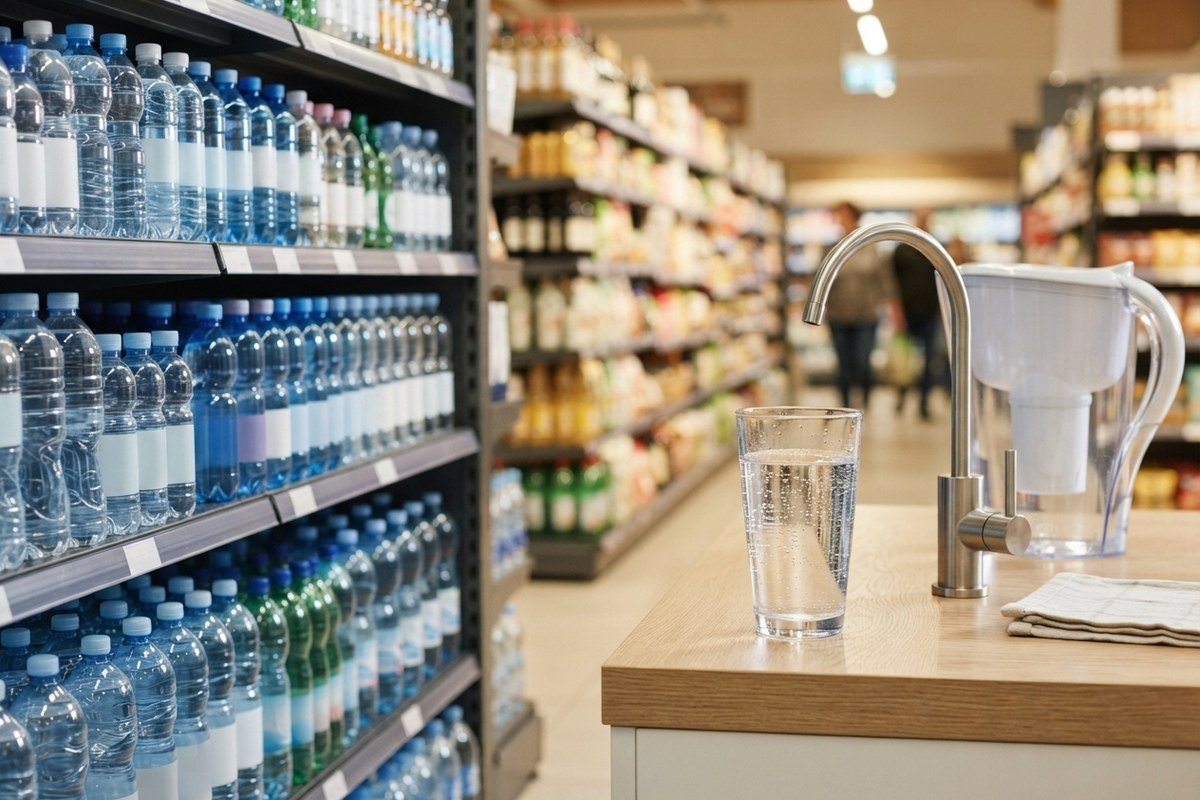
If you are on a public water system, your utility is required to send you a Consumer Confidence Report every year by July 1 — an itemized accounting of what was detected in your water and at what levels. Bottled water has no equivalent. The CDC notes that there is currently no standard label for bottled water, and recommends reading the bottle for whatever the company chooses to disclose: the source, the treatment method, and a phone number or web address to learn more.
This is the quiet reversal at the center of the whole debate. People often switch to bottled water because they don’t trust their tap — and in doing so they trade a source with mandatory annual public reporting for one with voluntary disclosure. If you want the same certainty about bottled water that you get from a utility report, you would have to call the manufacturer and ask.
Tap water in most US cities costs a fraction of a cent per gallon. Bottled water routinely runs $1 or more per gallon in multipacks and far more in single-serve bottles. One person drinking two bottles a day is spending real money annually on something that arrives at the kitchen sink for close to nothing — money that would buy a quality home filter several times over in the first year.
Most of the anti-bottled-water case rests on four arguments, and they vary a lot in strength:
What you will also find is a large amount of content claiming specific brands are dangerous. Some of that is grounded in documented testing; much of it is not. We covered which claims hold up in bottled water brands with documented problems, and our bottled and drinking water guide covers how to evaluate a brand yourself.
Not inherently. Bottled water is held to standards based on the same contaminant limits as tap water, and a meaningful share of bottled water on US shelves originates from a municipal supply before further treatment. Whether bottled beats tap in your specific case depends entirely on what is coming out of your pipes — which is a local question, not a national one.
That is why the honest comparison starts with knowing your own water. Contamination varies enormously by state and by system: New Jersey’s PFAS and lead picture looks nothing like Michigan’s. You can look up your own state on our drinking water quality by state hub, and for a fuller side-by-side see our guide to the pros and cons of drinking bottled water.
If you want an actual answer rather than a state average, test what comes out of your tap. A certified lab kit from Tap Score tests your specific water for lead, PFAS, and dozens of other contaminants — and it settles the bottled-versus-tap question for your household with data instead of assumptions.
A few situations warrant a conversation with a clinician rather than a blog post:
If bottled water suits your life, a few habits make it a better deal:
Everything above is general. Your water is specific. A certified lab test returns an itemised panel for your address — which contaminants are present, at what concentration, and whether they exceed EPA limits — so you can act on evidence instead of guesswork.
Not in terms of acute safety — FDA-regulated bottled water must meet standards based on EPA’s tap water limits. The daily-use downsides are reduced fluoride intake, plastic particle exposure whose health effects are not yet established, no mandatory quality reporting, and substantially higher cost.
There is no established bottled-water-specific limit. Total daily water needs vary by body size, activity and climate, and the guidance is the same whether the water came from a bottle or a tap. If you are trying to work out your own intake, talk to your clinician.
Some does, most does not. Water labeled purified, distilled, deionized or demineralized contains no or only trace fluoride unless fluoride is listed as an added ingredient. The CDC advises contacting the manufacturer to ask about a specific brand.
It depends on your tap. Both are regulated to comparable contaminant standards, but tap water quality varies by system while bottled water quality varies by brand. Testing your own water is the only way to know which is better where you live.
Every study that has looked has found plastic particles in bottled water, and the 2024 Columbia research found far more than earlier methods could detect. Tap water has been shown to contain them too, but generally at lower levels. What this means for health has not been established.
That is a personal call, and it depends more on your tap water than on the bottle. If your home water tests clean, filtering and refilling costs less and eliminates the plastic and fluoride questions. If your water has documented problems, bottled water is a reasonable stopgap while you address the source.
Last updated August 31, 2026.
This article is for general information only and is not medical or professional advice. For guidance about your own health, water source, or your family’s fluoride needs, consult a qualified clinician, dentist, or your local health department. See our Health Disclaimer.
