
Beautiful Plants For Your Interior

Confused about water softener vs whole house filter? Discover which system is right for your home's water needs and improve your water quality today.
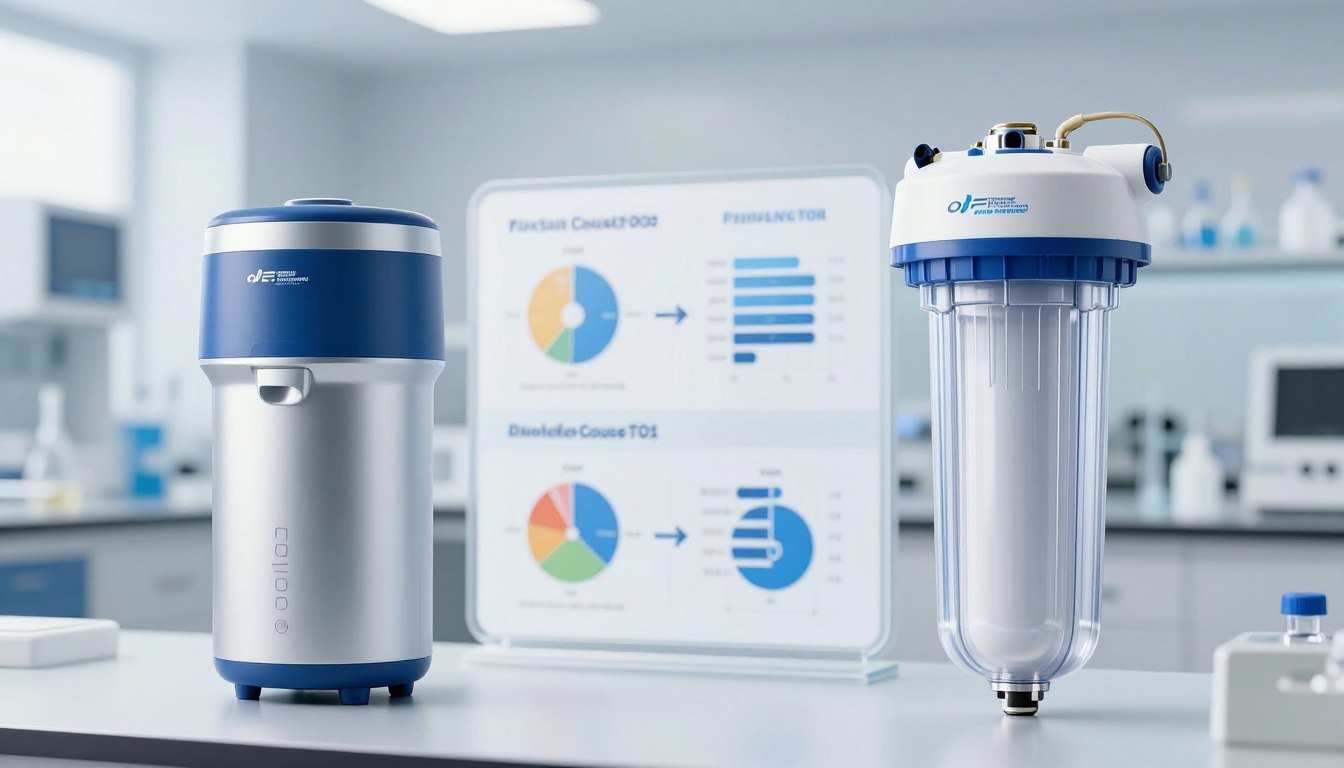
A water softener and a whole-house filter fix different problems. A softener uses ion exchange to pull calcium and magnesium out of your water, which stops scale and soap film; it does not reliably remove health-related contaminants. A whole-house filter (usually sediment plus carbon) reduces particles, chlorine taste and odor; it does not remove hardness. If your test shows hard water and scale is the complaint, you need a softener. If the problem is chlorine, sediment or odor, you need a filter. If you have both problems, you need both, and for lead or PFAS in drinking water the right tool is usually a point-of-use filter certified to NSF/ANSI 53 or 58 at the kitchen sink.
The way to choose is to test first and match the equipment to the result. Below: what each system removes and what it leaves behind, a decision table by hardness level and test result, the order to install them in if you need both, and what salt-free “conditioners” actually do.
Some links below are affiliate links. If you buy through them we may earn a commission at no extra cost to you. See our Affiliate Disclosure.
A conventional softener is a tank of resin beads. As water flows through, calcium and magnesium (the minerals that make water hard) stick to the resin and sodium or potassium is released in their place. When the resin is full, the unit regenerates by flushing it with a salt brine. Penn State Extension’s guide to water softening is blunt about the limits: softening “simply removes hardness minerals and eliminates problems that are a nuisance,” and softeners “will not necessarily remove any of the more serious drinking water contamination problems.”
Softeners can also take out some dissolved iron. Penn State notes that reduced (clear-water) iron is removed by the unit, but oxidized (red) iron clogs the resin, so that water should be filtered before it reaches the softener.
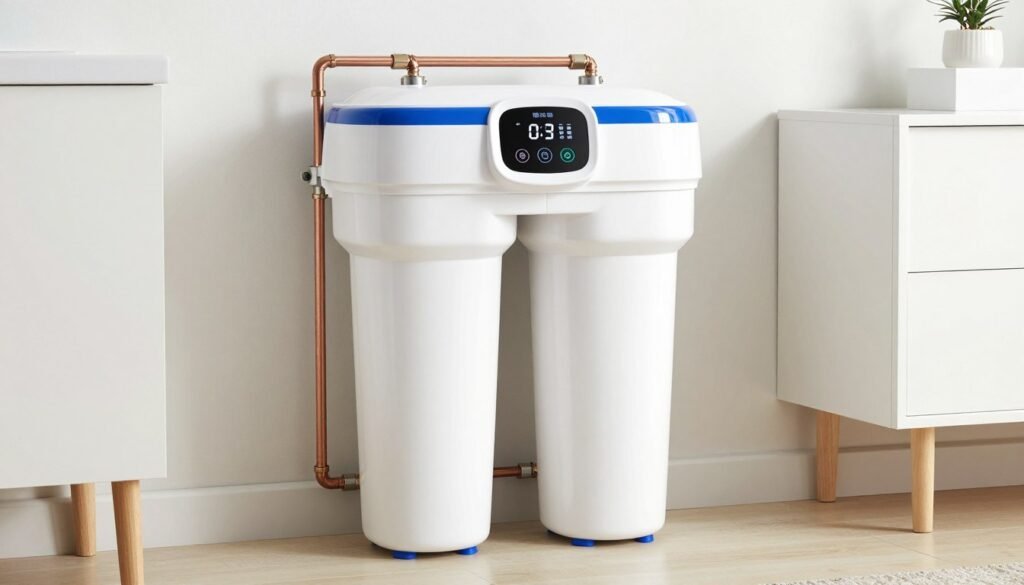
A whole-house (point-of-entry) filter sits on the main line and treats every tap. Most combine a sediment cartridge, which traps sand, silt and rust, with activated carbon, which reduces chlorine and many taste and odor compounds. The CDC points people who want better taste and smell to filters certified to NSF/ANSI 42 or using activated carbon. Carbon does nothing to calcium and magnesium, so a whole-house filter leaves your hardness reading unchanged.
For health-related contaminants in the water you drink, such as lead or PFAS, look for a product certified to NSF/ANSI 53 (or NSF/ANSI 58 for reverse osmosis) for that specific contaminant. Those are usually point-of-use systems at the kitchen sink; our reverse osmosis vs carbon filter guide compares the two technologies.
| Problem in your water | Water softener | Whole-house sediment + carbon filter |
|---|---|---|
| Calcium and magnesium (hardness, scale, soap film) | Removes | Does not remove |
| Dissolved (clear-water) iron | Removes some | Not designed for it |
| Oxidized (red) iron, rust particles | No; clogs the resin | Sediment stage traps particles |
| Sand, silt, sediment | No | Sediment stage traps them |
| Chlorine taste and odor | No | Carbon reduces it (NSF/ANSI 42) |
| Lead, PFAS and other health contaminants | Not a treatment for them | Only if certified for that contaminant; drinking water is usually treated at the tap (NSF/ANSI 53 or 58) |
| Bacteria | No | No; needs disinfection (for example UV or chlorination) |
Hardness is reported in milligrams per liter (mg/L, the same as parts per million) or grains per gallon (gpg). Penn State’s classification, and what it means for the softener decision:
| Hardness | Penn State class | What it means for a softener |
|---|---|---|
| Under 1.0 gpg (under 17 mg/L) | Soft | No softener needed. |
| 1.0–3.5 gpg (17–60 mg/L) | Slightly hard | No softener needed. |
| 3.5–7.0 gpg (60–120 mg/L) | Moderately hard | Penn State says levels below 7.0 gpg “will probably not cause major scaling and soap film.” Usually optional. |
| 7.0–10.5 gpg (120–180 mg/L) | Hard | Scale and soap film become noticeable. A softener is worth considering if they bother you. |
| Over 10.5 gpg (over 180 mg/L) | Very hard | The range where most households that soften do so. |
A whole-house filter doesn’t change anything in that table. Whether you need one depends on the rest of your test results. Not sure where your area falls? Our look at what state has the hardest water includes hardness figures from major utilities’ own reports.
| Your test or symptom shows | What fixes it |
|---|---|
| Hardness over about 7 gpg, with scale, spotty glassware or poor lather | Water softener |
| Chlorine taste or smell, sediment, cloudy water | Whole-house sediment + carbon filter |
| Both of the above | Both systems |
| Lead, PFAS, arsenic or nitrate | Point-of-use filter certified to NSF/ANSI 53 or 58 for that contaminant; neither a softener nor a basic whole-house filter is the answer |
| Bacteria (common concern on private wells) | Disinfection, ahead of any softener |
| Red (oxidized) iron or rust staining | Iron filtration ahead of any softener |
Penn State recommends having water tested by an independent lab before choosing a softener. If you’re on city water, your utility’s annual report is a starting point; our guide to reading your Consumer Confidence Report shows where hardness and the regulated contaminants appear. If you’re on a well, our roundup of well water filters for iron, sulfur and PFAS covers the extra steps wells usually need.
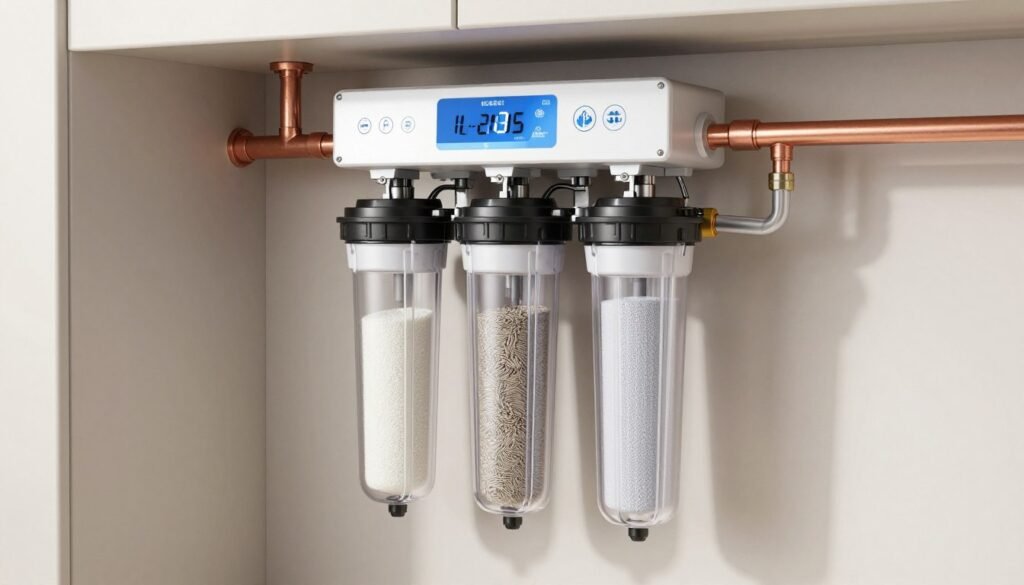
Penn State’s guidance puts filtration and disinfection ahead of the softener: you “may have to filter turbid water or disinfect bacteria-laden water—all before it even reaches the softening unit,” and filtering first keeps oxidized iron out of the resin. A typical layout on the main line looks like this:
Where a whole-house carbon filter goes relative to the softener varies by system, so follow the installation instructions for the specific equipment. Penn State also notes that not every outlet needs softened water: showers, sinks and laundry hookups probably should be softened, while toilets, outside spigots and basement sinks can be bypassed.
Salt-free systems are often sold as softener alternatives. University of Nebraska–Lincoln Extension’s review of these devices says they generally “do not remove most of the hardness-causing minerals from the water”; template-assisted crystallization units “convert (not remove)” hardness ions into scale-resistant crystals. The same review notes that “few conclusive studies confirm the efficiency of these devices for residential use,” and calls magnetic treatment unproven. A hardness test after a salt-free unit will read about the same as before.
Ready to compare specific units? Our best whole house water filters for hard water guide covers softeners, conditioners and combination systems.
Dealing with hard water? Compare Crystal Quest water softeners alongside filtration so you fix scale and contaminants in one pass.
No. Sediment and carbon filters don’t remove calcium and magnesium, so they don’t stop scale. If hardness is your problem, you need ion exchange (a softener) or, if you accept that hardness stays in the water, a salt-free scale-reduction device.
Not by itself. A softener removes hardness minerals, not contaminants such as lead, PFAS, nitrate or bacteria. Test your water and treat those separately with a filter certified for the contaminant or with disinfection.
For most people, yes, but it contains added sodium in proportion to how hard the water was. People on sodium-restricted diets should talk to their doctor and can ask an installer about potassium-based regeneration or leaving a cold-water drinking tap unsoftened.
Usually not. Penn State says hardness below 7.0 gpg will probably not cause major scaling and soap film. Many households only soften once hardness is well into the hard or very hard range.

[…] ion-exchange route. If you are not sure which problem you are actually solving, start with water softener vs whole house filter, then compare units in our best whole house water filters for hard water […]