
Beautiful Plants For Your Interior

There is no federal ranking of water hardness by state. USGS mapping puts the hardest water in the Southwest, Great Plains and east-central limestone belt - here is what that means for your tap.
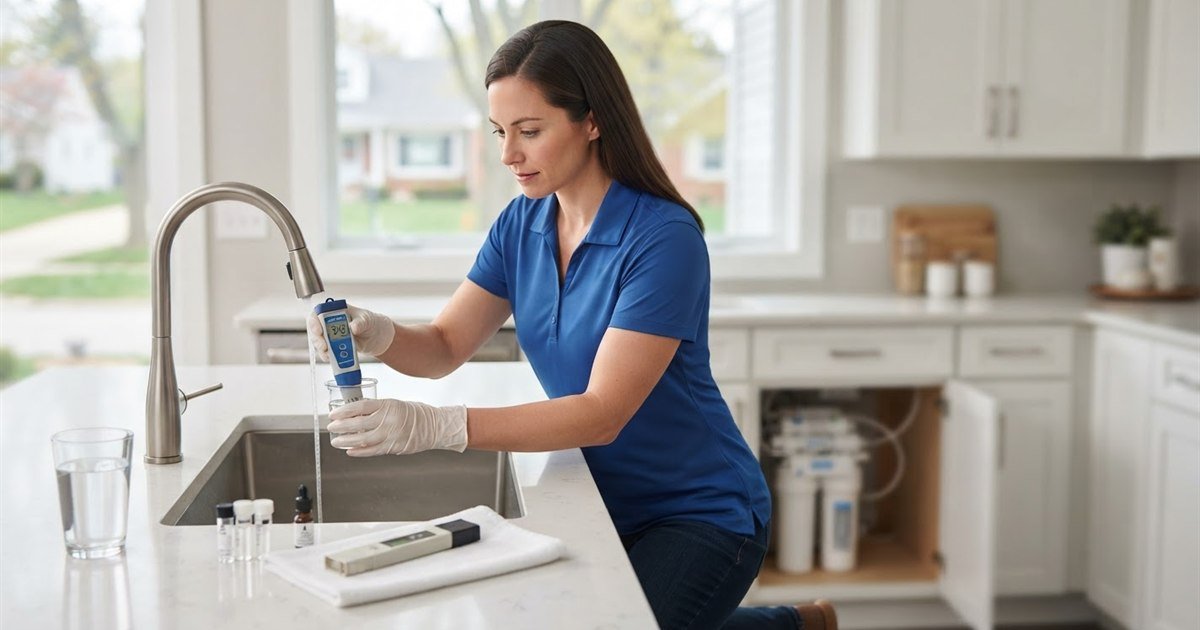
There is no official federal ranking of water hardness by state, because the U.S. Environmental Protection Agency does not regulate hardness at all. Based on U.S. Geological Survey mapping, the hardest water in the country runs in a broad band through the Southwest, the Great Plains and the east-central limestone belt — states such as Arizona, Nevada, New Mexico, Utah, Texas, Kansas, Nebraska and Indiana, where large areas fall into the USGS “very hard” category of more than 180 mg/L of calcium carbonate. Hardness tracks the rock your water moves through, not state lines, so two towns in the same state can sit at opposite ends of the scale.
That is the short answer. The longer one is more useful, because it tells you what number to look for and where to find it for your own address.
Some links below are affiliate links. If you buy through them we may earn a commission at no extra cost to you. See our Affiliate Disclosure.
Hardness is unusual among water-quality measures: it is one of the few things people complain about constantly that the federal government has no rule for. The EPA’s National Primary Drinking Water Regulations set enforceable limits for contaminants that pose a health risk. Hardness is not one of them. It is not even among the 15 non-enforceable Secondary Drinking Water Standards the EPA publishes for aesthetic problems. The closest thing is the secondary guideline for total dissolved solids, set at 500 mg/L, where the EPA lists “hardness” among the noticeable effects above that level.
The practical consequence: utilities are not required to test for hardness, not required to report it, and not required to treat for it. There is no national database to rank states from. Every “top 10 hardest water states” list you find online is somebody’s estimate built on partial data — often a water-softener company’s.
What does exist is USGS mapping. The USGS national hardness map is built from mean hardness as calcium carbonate measured at NASQAN monitoring sites, and the agency notes that although the data date from 1975, major-ion chemistry in groundwater is relatively stable and the map is still considered accurate for national and regional assessment. USGS is explicit about the limit, though: the data represent hardness at a national and regional scale and are not designed for decisions at the level of an individual property.
A separate USGS study, Circular 1332, sampled about 2,100 domestic wells across 48 states and 30 principal aquifers. Its finding on hardness is the cleanest regional statement available: hard water was prevalent in the east-central and western United States, reflecting the distribution of carbonate aquifers and aquifers with relatively high concentrations of dissolved solids.
This is the region most often named, and the geology supports it. Groundwater across Arizona, Nevada, New Mexico, Utah, west Texas, Kansas, Nebraska and Oklahoma moves through limestone, dolomite and mineral-rich sediment, and the arid climate concentrates dissolved solids rather than diluting them. Colorado River supply, which serves a large share of the Southwest, is naturally high in calcium and magnesium before it ever reaches a treatment plant. If you want the local picture, our Arizona drinking water guide and Texas water quality guide break down what utilities in those states actually report.
Less famous, but on the USGS maps it is just as pronounced: Indiana, Ohio, Illinois, Iowa, Missouri, Wisconsin and Michigan sit on carbonate bedrock and glacial aquifers that put calcium straight into the groundwater. Communities there that pump from wells rather than lakes routinely land in the very hard band.
On the same USGS mapping, the softest water shows up in the Pacific Northwest, New England and parts of the Southeast — regions where the bedrock is largely granite and basalt, rainfall is higher, and utilities lean more on surface water than on mineral-rich aquifers. Seattle and Portland are the classic examples of major cities with genuinely soft tap water.
Hardness is reported either in milligrams per liter of calcium carbonate (mg/L, the same as parts per million) or in grains per gallon (gpg), the unit softener installers use. One grain per gallon equals 17.1 mg/L. The USGS classification is the standard everyone works from:
| Classification | mg/L as CaCO₃ | Grains per gallon |
|---|---|---|
| Soft | 0–60 | 0–3.5 |
| Moderately hard | 61–120 | 3.6–7.0 |
| Hard | 121–180 | 7.1–10.5 |
| Very hard | more than 180 | more than 10.5 |
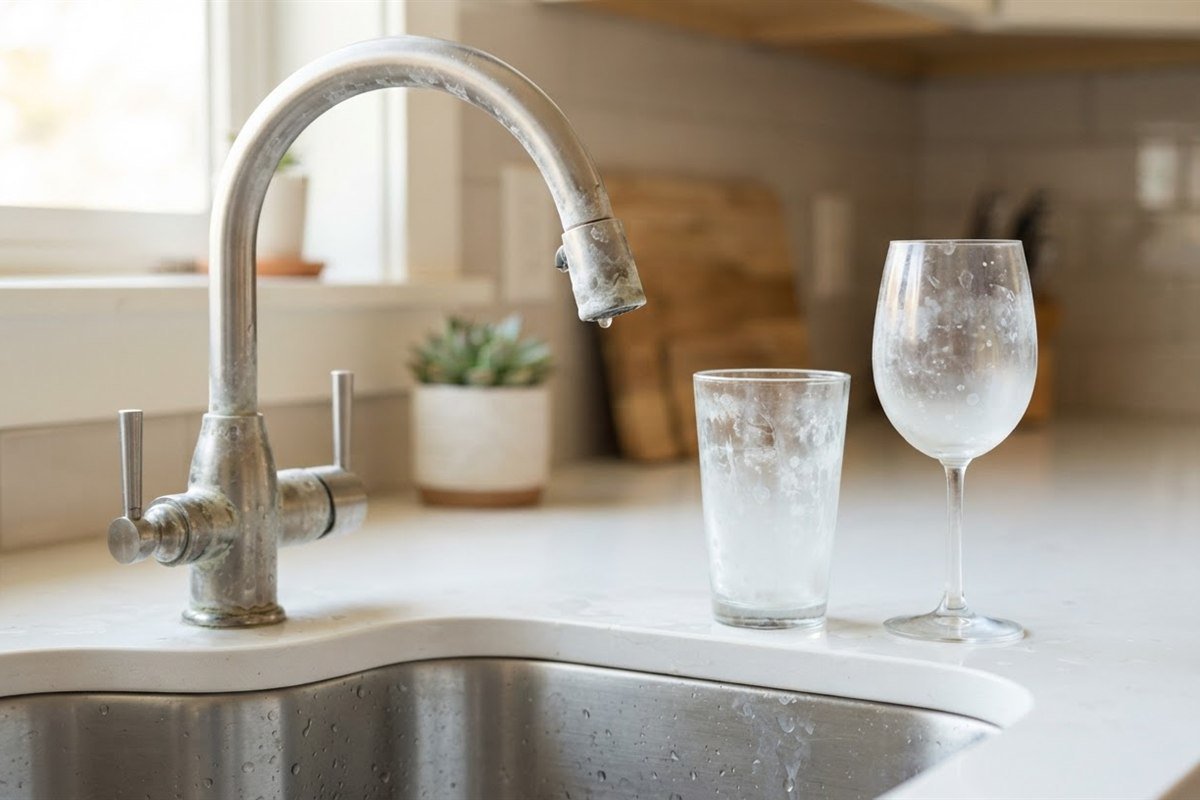
Most people start noticing hard water — soap that will not lather, spots on glassware, a chalky ring in the kettle — somewhere in the “hard” band, and it becomes hard to ignore above 180 mg/L.
Not according to the science. The USGS states plainly that hardness is a property of water that is not a health concern, but can be a nuisance. The World Health Organization goes slightly further in the other direction, noting that drinking water may contribute calcium and magnesium to the diet and could matter for people whose intake of those minerals is marginal.
The damage hard water does is to your plumbing and your budget, not your body. When hard water is heated, calcium carbonate precipitates out as scale. That scale coats heating elements, narrows pipes, shortens the life of water heaters and dishwashers, and drives up the energy needed to heat water. It also means more detergent for the same result, and it is rough on fabrics. We go through the health question in more depth in Is hard water harmful to health?
State-level maps are useful for orientation and useless for decisions. Three ways to get your actual number, in order of effort:
That last point matters more than most people realize. USGS Circular 1332 found that more than 43 million Americans — about 15 percent of the population — rely on domestic wells, and those wells are not regulated by the Safe Drinking Water Act or, in most cases, by state law. Nobody is testing that water but you. In the same study, about 48 percent of sampled wells contained at least one contaminant outside the range EPA recommends for aesthetic water quality.
A state average does not describe your tap.
Hardness can swing by a factor of five between two water systems in the same county, depending on which aquifer each one pumps. Before you buy any equipment, get a real number for your own address — test your water first, then treat what you actually have.
The single most common mistake here is buying a filter to fix hardness. Carbon filters and most reverse osmosis systems are built to remove contaminants, not dissolved calcium and magnesium at whole-house volumes. Removing hardness takes ion exchange — a conventional salt-based softener that swaps calcium and magnesium for sodium or potassium, run on softener salt.
Salt-free “conditioners” are a different product. They crystallize hardness minerals so they are less likely to stick as scale, but the minerals stay in the water and your hardness reading does not change. They are a reasonable choice where scale is the only complaint and a poor one where you want the slippery-soft feel.
Most households in very hard areas end up with both jobs handled: a softener for hardness and a whole-house filter for chlorine, sediment and anything the test flagged. Systems like the Aquasana Rhino whole-house line pair a filter with a salt-free conditioner in one install, while Crystal Quest water softeners take the traditional ion-exchange route. If you are not sure which problem you are actually solving, start with water softener vs whole house filter, then compare units in our best whole house water filters for hard water guide.
Renting, or only bothered by what hard water does to your hair and skin? A shower head filter is a fifteen-minute fix that treats one fixture and moves with you.
There is no federal ranking, but USGS hardness mapping puts the highest values in the Southwest and Great Plains — Arizona, Nevada, New Mexico, Utah, Texas, Kansas and Nebraska — along with the carbonate-aquifer belt through Indiana and its neighbors. Within any of those states, individual systems vary widely.
No. Hardness has no enforceable maximum contaminant level and is not one of the EPA’s 15 secondary standards. The only related guideline is the 500 mg/L secondary standard for total dissolved solids, which is advisory rather than enforceable.
Yes. The USGS describes hardness as a nuisance rather than a health concern, and the WHO notes that calcium and magnesium in drinking water may contribute usefully to dietary intake. Hard water damages appliances, not people.
Look for white crust on faucets and shower heads, cloudy film on glassware straight out of the dishwasher, soap that will not lather, and a slimy feel on your hands after washing. Any two of those together usually mean you are above 120 mg/L.
Not at whole-house scale. Carbon filters do not remove calcium and magnesium. Point-of-use reverse osmosis will reduce hardness at that one tap, but treating a whole home for hardness means ion exchange — a softener.
Often, yes, because well water comes straight from the aquifer with no blending or central treatment. USGS found hard water was prevalent among domestic wells in the east-central and western United States. Since private wells fall outside Safe Drinking Water Act oversight, testing is entirely on the homeowner.
Last updated September 10, 2026.
This article is for general information only and is not medical or professional advice. See our Health Disclaimer.
