
Beautiful Plants For Your Interior

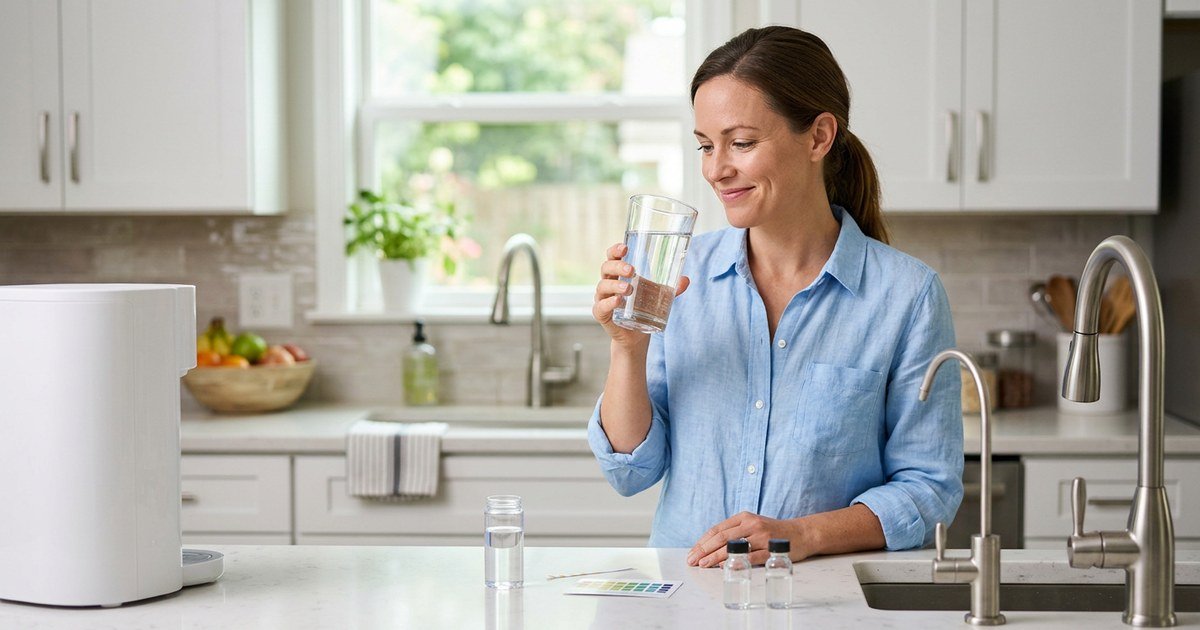
There is no single official ranking of which U.S. state has the “best” water quality, because the EPA does not score states against one another. That said, states that consistently report the fewest Safe Drinking Water Act violations and draw from clean, well-protected sources—such as Hawaii, Rhode Island, Minnesota, South Dakota, and Vermont—are frequently cited as having some of the highest-quality public tap water in the country. The most reliable answer for your home, though, comes from your local Consumer Confidence Report and an at-home test, not a national leaderboard.
The U.S. Environmental Protection Agency (EPA) regulates public drinking water under the Safe Drinking Water Act (SDWA), setting national limits called Maximum Contaminant Levels for roughly 90 contaminants. But the EPA enforces these standards system-by-system, not state-by-state, and it does not publish a ranked “best to worst” list of states. Every state must meet the same federal floor, and many set stricter standards of their own.
Some links below are affiliate links. If you buy through them we may earn a commission at no extra cost to you. See our Affiliate Disclosure.
💧 Curious what’s in your city’s tap water — at YOUR faucet?
Utility reports cover the treatment plant, not your pipes. SimpleLab’s Tap Score Advanced City Water Test screens the water you actually drink for lead, disinfection byproducts, PFAS and more.
Because of this, any claim that one state has “the best” water is really a comparison built from indirect measures: how often water systems in that state violate federal rules, what contaminants show up in testing databases, and how clean the underlying source water is. When people compare states, they usually lean on the EPA’s compliance data and independent databases like the Environmental Working Group’s Tap Water Database.
Three data sources do most of the heavy lifting when comparing states:
A crucial distinction sits underneath all of these comparisons: a violation is not the same as a detection. A violation means a system broke a federal rule—a contaminant exceeded its legal limit, or required testing was skipped. A detection simply means a substance was found, often at levels well below the legal limit and sometimes below what some health advocates would prefer. A state can have very few violations while its databases still show low-level detections of common substances like chlorine byproducts or naturally occurring minerals. When you compare states, it helps to know whether a “ranking” is built on violations, on raw detections, or on both.
States that frequently appear near the top in independent analyses share a few traits: protected source water, lower industrial and agricultural runoff, and strong utility compliance records. Examples often mentioned include Hawaii, where deep volcanic aquifers naturally filter rainwater; Rhode Island and Connecticut, which draw from well-managed reservoirs; and upper-Midwest and Northern Plains states such as Minnesota, South Dakota, and Vermont, where population density and heavy industry are lower.
These are tendencies, not guarantees. A state with excellent overall numbers can still contain individual towns with lead service lines or PFAS plumes, and a state with weaker averages can have utilities delivering excellent water. That is why a state-level answer is only a starting point—you can compare any state directly on our drinking water quality by state hub.
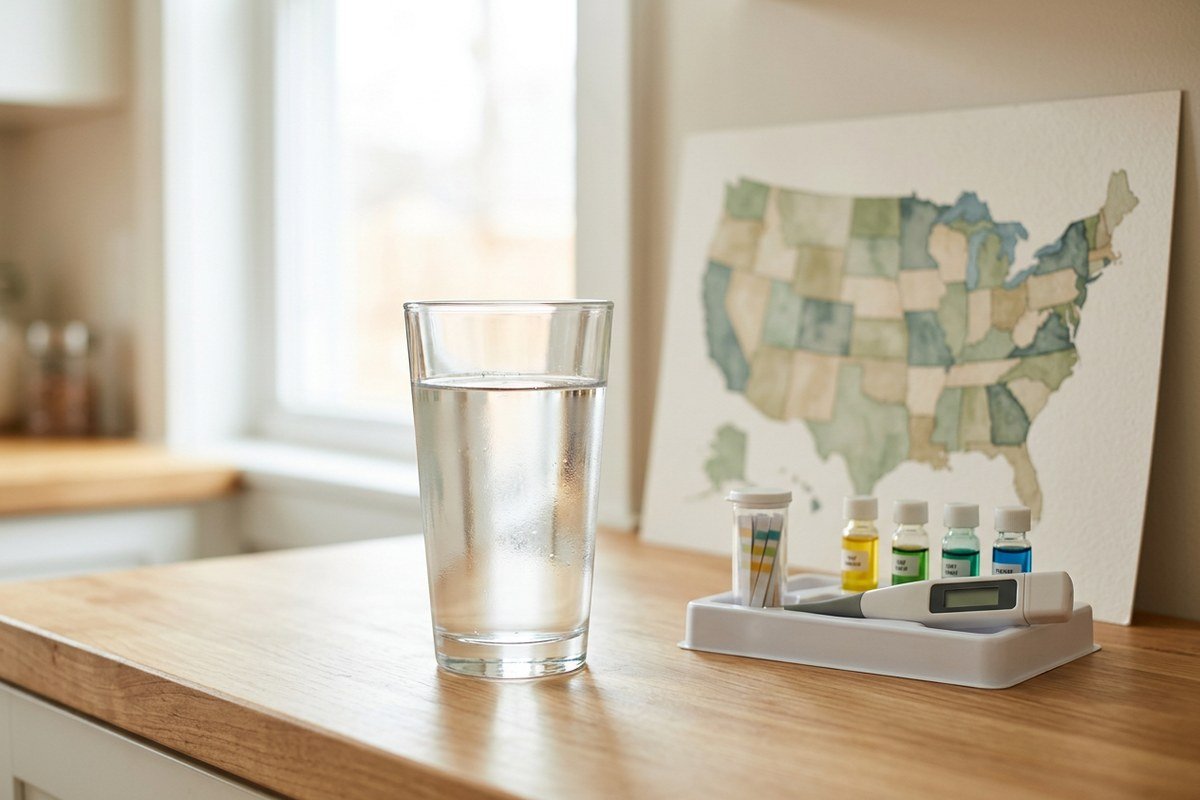
States facing the biggest challenges usually have aging infrastructure, legacy industrial contamination, or large rural populations on small systems that are harder to maintain. Common issues include lead from old service lines, PFAS (“forever chemicals”) near manufacturing and military sites, disinfection byproducts, nitrate from agriculture, and naturally occurring arsenic. The presence of these problems does not mean every tap in the state is unsafe—it means residents should pay closer attention to their CCR and consider testing or filtration.
Two big factors explain most of the difference between states: where the water comes from, and what happens to it on the way to your tap.
States with protected, naturally clean sources start with an advantage. Mountain snowmelt, deep aquifers, and well-managed reservoirs tend to carry fewer contaminants before treatment even begins. Hawaii’s rainfall filtering slowly through porous volcanic rock is a textbook example, and several New England and Northern Plains states benefit from forested watersheds and low population pressure. By contrast, surface water near heavy agriculture can pick up nitrate and pesticides, and groundwater in certain regions carries naturally occurring arsenic, radon, or uranium that has nothing to do with pollution.
Even pristine source water has to be disinfected and piped to homes, and that infrastructure varies enormously. Larger, well-funded utilities can invest in advanced treatment and routine monitoring, while small rural systems may struggle to keep up—one reason states with many tiny water systems can post more violations regardless of how clean their source water is. The “last mile” matters too: lead and copper most often enter water from aging service lines and household plumbing after the water has already left a treatment plant that meets every standard. This is why a state-level grade can never fully describe what flows from a specific kitchen faucet.
Whether you live in a top-ranked state or not, your home’s water can differ from the state average because of your specific utility, your plumbing, and how far the water travels. To know what you are actually drinking:
Matching the filter to the contaminant matters more than the brand: NSF certification confirms a product actually reduces what it claims to.
There is no official winner, but Hawaii is frequently named because its volcanic rock naturally filters groundwater, and states like Rhode Island, Minnesota, South Dakota, and Vermont also report consistently low violation rates and clean source water. “Cleanest” still varies city to city within any state.
No. The EPA sets and enforces national drinking-water standards for individual water systems but does not publish a state-versus-state ranking. Comparisons come from analyzing EPA compliance data and independent databases such as the EWG Tap Water Database.
Not necessarily. Bottled water is regulated by the FDA and tap water by the EPA, and in many high-quality systems treated tap water meets or exceeds bottled-water standards. Some bottled water is simply filtered municipal tap water.
Start with your utility’s annual Consumer Confidence Report, which lists detected contaminants. For water from a private well—which the EPA does not regulate—or to confirm what reaches your tap, use a certified at-home test kit.
Yes. Lead usually enters water from old service lines and household plumbing rather than the source, so even a state with excellent overall water can deliver lead at an individual home. Testing at your own tap is the only way to know.
Not automatically. Private wells are not regulated by the EPA, so a household well sits outside the public-system data that state rankings are built on—regardless of how the state scores overall. If you rely on a well, the responsibility for testing falls on you, typically at least once a year for bacteria, nitrate, and any local contaminants of concern.
Underlying compliance and testing data update continuously, but the third-party “best states” lists that circulate online are usually refreshed once a year or less and can lag behind real conditions. Treat any ranking as a snapshot, and lean on your utility’s most recent Consumer Confidence Report for the current picture in your area.
No state holds an official title for “best water quality,” but states with protected sources and strong compliance records—Hawaii, Rhode Island, Minnesota, South Dakota, Vermont, and similar—tend to lead independent comparisons. Use those rankings as context, then verify what comes out of your own tap with your Consumer Confidence Report and a simple test. That local answer is the one that actually affects your health.
Last updated June 22, 2026.
This article is for general informational purposes only and is not professional medical or health advice. See our Health Disclaimer.
