
Beautiful Plants For Your Interior


Most people taking a GLP-1 medication do not need a daily electrolyte supplement. Electrolytes matter when you are actually losing them — through vomiting, diarrhea, heavy sweating, or a sharp drop in how much food you are eating — because those are the situations where ordinary dehydration can turn into a medical problem. If you are eating regular meals and your side effects are mild, plain water plus normal food will usually cover your sodium, potassium, and magnesium needs without a powder, packet, or subscription.
That answer is less exciting than what most of the internet tells you, and it is worth understanding why the advice splits the way it does.
Some links below are affiliate links. If you buy through them we may earn a commission at no extra cost to you. See our Affiliate Disclosure.
Two things happen on semaglutide, tirzepatide, and similar drugs that make electrolytes a real topic rather than a marketing invention.
The first is gastrointestinal side effects. Nausea, vomiting, and diarrhea are common, especially during the first weeks and after every dose increase. Every one of those events costs you fluid and the minerals dissolved in it.
The second is simply eating less. These medications work partly by reducing appetite, and a meaningful share of the sodium, potassium, and magnesium most adults get comes from food, not from drinks. Cut your intake by a third and you have quietly cut your mineral intake too.
So the question is not whether electrolytes matter. It is whether your current situation is one where you are losing more than food and water are replacing. For most people on a stable dose eating normally, it is not.
This is where the risk stops being theoretical. The prescribing information for tirzepatide (Zepbound, Mounjaro) and semaglutide (Ozempic) all carry the same warning about kidney injury: there have been postmarketing reports of acute kidney injury and worsening chronic renal failure, in some cases requiring hemodialysis, in patients treated with GLP-1 receptor agonists.
The important detail is the next sentence. The majority of those reported events occurred in patients who had experienced nausea, vomiting, or diarrhea leading to dehydration. The labels direct clinicians to monitor kidney function when starting the medication or escalating the dose in patients reporting severe gastrointestinal reactions.
Read that carefully, because it reframes the whole electrolyte conversation. The documented danger is not “low electrolytes” as a vague wellness concept. It is volume depletion from GI losses — and the fix for that is fluid and mineral replacement together, in the specific window when you are losing them. It is not a daily maintenance ritual.
Reach for electrolyte replacement, rather than plain water alone, when any of these apply:
Outside those windows, an extra electrolyte drink is mostly extra sodium and, depending on the product, extra sugar.
Useful anchors, because most electrolyte marketing skips them entirely:
The asymmetry is the practical takeaway. If you are going to pay attention to a mineral while eating less on a GLP-1, potassium is the one most people are genuinely low on — and it comes more reliably from potatoes, beans, yogurt, bananas, and leafy greens than from a stick pack.
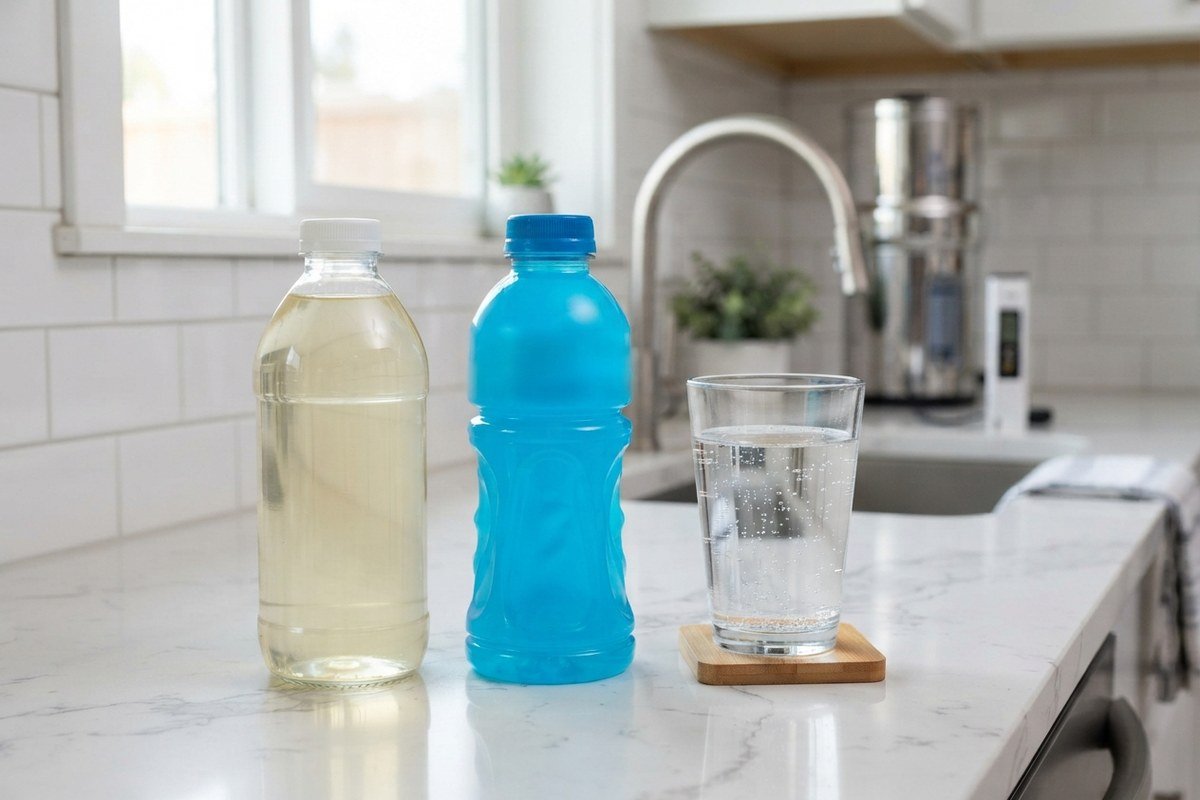
If you are replacing real losses from vomiting or diarrhea, the product category matters more than the brand.
Oral rehydration solution (ORS) is the right tool. CDC guidance for significant diarrheal fluid loss points to oral rehydration solutions such as Ceralyte, Pedialyte, or Oralyte, and states plainly that sports drinks like Gatorade do not replace the losses correctly and should not be used to treat diarrheal illness. High-sugar drinks can make diarrhea worse. ORS is formulated with a specific glucose-to-sodium ratio that drives absorption; sports drinks are formulated for sweat loss during exercise, which is a different problem. You can compare oral rehydration solutions on Amazon if you want one in the cabinet before you need it.
For mild, everyday topping-up — a hot day, a light workout, a day you ate less than usual — a low-sugar or unsweetened electrolyte powder is fine. Check the sodium per serving. Some popular packets carry 500–1,000 mg each, which is a large share of a 2,300 mg day if you are drinking several.
What to skip: daily high-sodium packets taken as a routine when you have no losses to replace, and anything marketed as a GLP-1 “support” blend at a premium price for the same three minerals. If you want the longer comparison of mineral water, added-electrolyte water, and plain water, we covered it in electrolyte water vs. regular water.
There is no GLP-1-specific dose, and anyone quoting one precisely is guessing. Sensible practice: match replacement to loss. A day with one loose stool does not need the same response as a day of repeated vomiting. Start with fluid, add an ORS serving when GI symptoms are active, and stop when symptoms stop.
The bigger lever for most people is total fluid, not mineral content. If nausea is your main barrier to drinking enough, hydration tactics for GLP-1 nausea will move the needle further than switching powders. For how this fits the broader picture, see our pillar guide to water for weight loss and GLP-1 medications.
Municipal water carries dissolved minerals, and the amount varies widely by source and region — hard water in one state can contribute meaningfully more calcium and magnesium than soft water in another. It is a small contribution next to food, but it is not zero, and it is one more reason a single national electrolyte recommendation does not fit everyone.
If you are drinking noticeably more water than you used to, knowing what is in it is reasonable due diligence. Our drinking water quality by state hub covers what utilities report region by region, and a certified lab test of your own tap tells you what your specific line delivers rather than the system average.
Home electrolyte management has limits. Contact your prescriber promptly if you have persistent vomiting or diarrhea you cannot keep ahead of, you cannot keep fluids down at all, you are urinating much less than usual, or you have confusion, fainting, or a racing heartbeat. Those are the circumstances the FDA kidney warning was written about, and they are not a supplement problem.
Also flag it if you take a diuretic, an ACE inhibitor or ARB, or have known kidney or heart disease. Adding sodium or potassium on your own can interact badly with those, and your dosing needs a clinician’s input rather than a label’s.
If you’ve been increasing your water intake, it’s worth knowing what’s actually coming out of your tap. Your utility’s annual report covers the whole system average, not your house — and it says nothing at all about private wells or your own plumbing. A certified lab test gives you a full contaminant panel and, just as often, tells you your water is fine and you don’t need to buy anything.
Not routinely. You need them when you are losing them — vomiting, diarrhea, heavy sweating, or a prolonged drop in food intake. On a stable dose with normal eating and mild side effects, food and water cover it.
For real losses from vomiting or diarrhea, an oral rehydration solution, which CDC guidance favors over sports drinks for diarrheal illness. For mild everyday use, a low-sugar electrolyte powder. There is no evidence a GLP-1-branded blend outperforms a standard one.
They can help if the fatigue or lightheadedness is coming from dehydration, which is common during dose escalation. They will not fix nausea caused by delayed gastric emptying, which is a different mechanism. If symptoms persist, that is a conversation with your prescriber.
There is no clinical guidance recommending daily electrolyte supplementation for GLP-1 users as a class. Daily use mainly adds sodium at a time when most adults already exceed the 2,300 mg chronic-disease-risk-reduction intake. Use them situationally instead.
For most days, yes. Plain water plus regular meals replaces both fluid and minerals. Water alone becomes insufficient specifically when you are losing sodium and potassium faster than you are eating them.
The FDA prescribing labels document postmarketing reports of acute kidney injury in GLP-1 patients, with most cases occurring after nausea, vomiting, or diarrhea led to dehydration. That is a reason to take significant GI symptoms seriously and involve your clinician — not a reason to panic about ordinary thirst.
Electrolytes on a GLP-1 are a tool for a specific job, not a daily habit. Match replacement to actual losses, favor oral rehydration solution when GI symptoms are active, watch potassium more closely than sodium, and treat persistent vomiting or diarrhea as a medical issue rather than a hydration one.
Last updated August 27, 2026.
This article is informational only and is not medical advice. Talk to your prescriber or a registered dietitian before changing how you hydrate or supplement on a GLP-1 medication. See our Health Disclaimer.
