
Beautiful Plants For Your Interior


The most common symptoms of drinking contaminated tap water are gastrointestinal: diarrhea, stomach cramps, nausea, vomiting, and bloating, usually appearing hours to days after exposure. But the dangerous truth is that the contaminants most worth worrying about — lead, PFAS, arsenic, disinfection byproducts — produce no symptoms at all in the short term. Feeling fine is not evidence that your water is safe, and a testing kit is the only way to know.
That split is the whole story. Water problems fall into two categories that behave completely differently in your body: germs, which make you sick fast and noticeably, and chemicals, which cause damage quietly over years. Below is what each one actually feels like, how long symptoms take to show up, when to see a doctor, and how to find out what is in your water instead of guessing from how you feel.
Some links below are affiliate links. If you buy through them we may earn a commission at no extra cost to you. See our Affiliate Disclosure.
When bacteria, viruses, or parasites get into drinking water, the body responds quickly and unmistakably. The CDC identifies diarrhea as the most common symptom of waterborne illness, and the broader gastrointestinal picture includes abdominal cramps, greasy stools, bloating or gas, nausea, vomiting, weight loss, and dehydration.
Waterborne germs are not limited to the gut, though. The CDC groups waterborne disease into gastrointestinal, respiratory, neurological, skin, and bloodstream infections — Legionella, for example, causes pneumonia when contaminated water droplets are inhaled rather than swallowed, which is why a shower or a humidifier can be an exposure route even when the water is never consumed.
Incubation period depends entirely on the organism, and knowing the rough windows helps you connect an illness to a suspected water event rather than to last night’s dinner.
A useful diagnostic clue: if several people in the household who drank the same water get sick around the same time, and people who drank bottled water did not, that pattern points at the tap.
This is where intuition fails badly. The chemical contaminants that draw the most regulatory attention are precisely the ones that produce nothing you would ever feel.
The EPA is direct about this: most children and adults exposed to lead have no symptoms, and a child with lead in their blood may look and act completely healthy. There is no known safe level of lead in a child’s blood. Meanwhile the documented effects at low exposure include reduced IQ and attention span, learning disabilities, behavioral problems, impaired growth, and hearing loss. The only reliable way to know whether a child has been exposed is a blood lead test ordered by a physician — not a symptom check.
Lead almost never comes from the treatment plant. It leaches from service lines, solder, and brass fixtures in the plumbing between the water main and your faucet, which means your neighbor’s water can be fine while yours is not. States with aging infrastructure carry more of this risk; our page on Michigan’s drinking water quality covers what a large-scale lead problem looks like in practice.
PFAS have no taste, no odor, and no acute symptoms. Their health concerns are chronic and epidemiological rather than something you would feel after a glass of water. If you are trying to work out whether they apply to you, our guide to PFAS in drinking water explains the sources and what the certifications mean.
Nitrate is the one chemical contaminant that can cause a fast, dramatic reaction, and it is a genuine emergency. In infants under about four months, nitrate is converted to nitrite, which binds hemoglobin and reduces the blood’s ability to carry oxygen — methemoglobinemia, commonly called blue baby syndrome. The symptoms are shortness of breath and a blue tint to the skin, and the EPA describes it as an acute condition in which health can deteriorate rapidly over days. The EPA’s maximum contaminant level for nitrate is 10 mg/L.
If an infant on formula made with tap water shows bluish skin or breathing difficulty, that is an emergency room visit, not a wait-and-see. Nitrate is most common in private wells and shallow groundwater in agricultural areas.
Copper is the other short-term exception. The EPA’s action level is 1.3 mg/L, set because people drinking water above it for a relatively short time can experience gastrointestinal distress, including nausea and vomiting. Over many years, excess copper can cause liver or kidney damage. Like lead, copper usually enters from household plumbing rather than the source water, and it is more likely in homes with newer copper pipes and corrosive water.
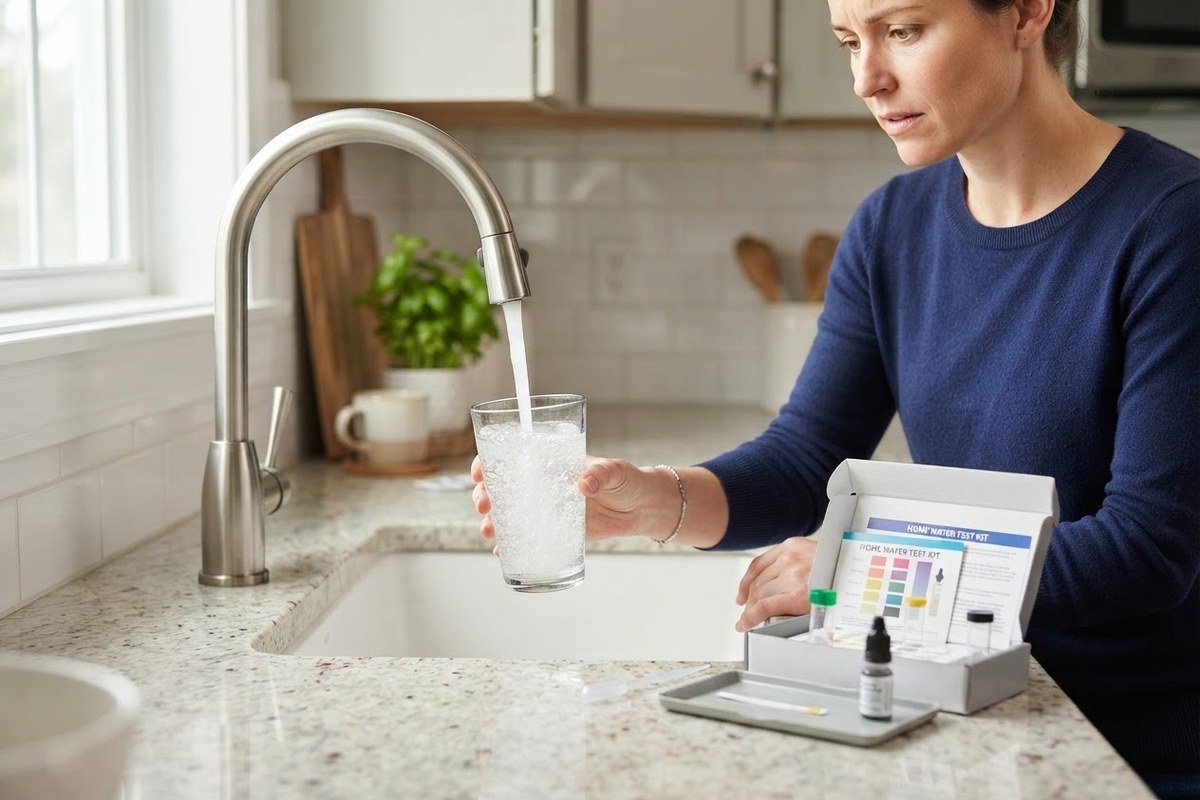
Taste, smell, and appearance are real signals, but they detect the wrong things. They are sensitive to aesthetic issues that are largely harmless and blind to the contaminants that matter most.
Lead, PFAS, arsenic, nitrate, radium, and Cryptosporidium are all invisible, tasteless, and odorless at levels that matter. This is why “my water tastes fine” is not a defensible conclusion, and it is also why boiling is not the fix people assume — our breakdown of what boiling water does not remove covers that gap.
Seek medical care promptly if you or someone in your household has:
Infants, adults over 65, pregnant women, and anyone immunocompromised should be evaluated sooner rather than later, since waterborne infections hit these groups harder. Tell the clinician you suspect a water source — it changes which tests they order.
Start with the public record, then close the gap it leaves. If you are on a municipal system, your utility’s annual Consumer Confidence Report tells you what left the treatment plant, and our state-by-state water quality hub gives you the regional picture. Neither one accounts for what your own plumbing adds afterward — which is exactly where lead and copper enter. A certified lab test at your own tap, such as a mail-in kit from SimpleLab’s Tap Score, is what closes that gap. Well owners have no utility report at all, since private wells are unregulated and nobody tests them for you; our walkthrough on how to test your well water covers the annual routine. If you want to know what a standard panel actually screens for, see our breakdown of contaminants commonly included in water tests.
For lead specifically, test the child, not just the water. Because exposure is silent, the EPA and CDC both point to a blood lead test as the way to establish whether a child has been exposed. Ask your pediatrician.
Then match treatment to the result. Do not buy a filter before you have a test in hand — that is how people end up with a pitcher that does nothing for their actual problem. Once you know, look for independent certification against the specific contaminant: NSF/ANSI 53 for lead and many organics, NSF/ANSI 58 for reverse osmosis covering nitrate, arsenic, and PFAS, and NSF/ANSI 55 for UV against microbes. An uncertified reverse osmosis system or lead-certified filter pitcher is a marketing claim, not a guarantee. For whole-house treatment, Aquasana and Crystal Quest are worth comparing once your results tell you what you are treating.
Everything above is general. Your water is specific. A certified lab test returns an itemised panel for your address — which contaminants are present, at what concentration, and whether they exceed EPA limits — so you can act on evidence instead of guesswork.
Look for a pattern rather than a single symptom. If gastrointestinal illness appears in multiple household members who drank the tap water within a similar window, and people who drank bottled water stayed well, water is a plausible source. Recurring unexplained diarrhea or bloating over weeks can point to Giardia. For chemical contaminants there is no symptom pattern to find — you need a lab test.
For microbial contamination, typically 12 hours to two weeks depending on the organism: viruses in 12 to 48 hours, most bacteria in 1 to 4 days, Giardia in one to two weeks. For chemical contaminants like lead, PFAS, and arsenic, there is usually no acute illness at all — the harm accumulates over years.
Yes. The CDC categorizes waterborne disease as gastrointestinal, respiratory, neurological, skin, and bloodstream infections. Legionella causes pneumonia through inhaled water droplets, and some waterborne pathogens cause skin or ear infections rather than digestive illness.
It depends on the contaminant. Lead and nitrate are not meaningfully absorbed through skin during a shower, so bathing is generally acceptable during those advisories. Microbial and chemical “do not use” notices are different — Legionella and volatile organic compounds both become airborne in a hot shower. Always follow the specific wording of the advisory your utility issued.
Yes, and this is the central point. Lead, PFAS, arsenic, nitrate, and Cryptosporidium are all colorless, tasteless, and odorless at harmful concentrations. Clear, pleasant-tasting water tells you nothing about whether these are present.
Stop drinking it and switch to bottled water. Check your utility’s website for an active advisory. Seek medical care if symptoms are severe or persistent, and tell the clinician you suspect a water source. Then order a certified lab test at your tap, since the illness itself will not tell you which contaminant caused it.
The right filter does, but no single technology covers everything. Carbon filtration certified to NSF/ANSI 53 addresses lead and many organic chemicals; reverse osmosis certified to NSF/ANSI 58 handles nitrate, arsenic, and PFAS; UV disinfection handles microbes. Boiling kills germs but concentrates chemicals. Match the technology to your test results.
Last updated September 8, 2026.
This article is for general information only and is not medical advice. If you are concerned about a specific contaminant, a symptom, or an exposure, consult your physician or your state or local health department. See our Health Disclaimer.
