
Beautiful Plants For Your Interior

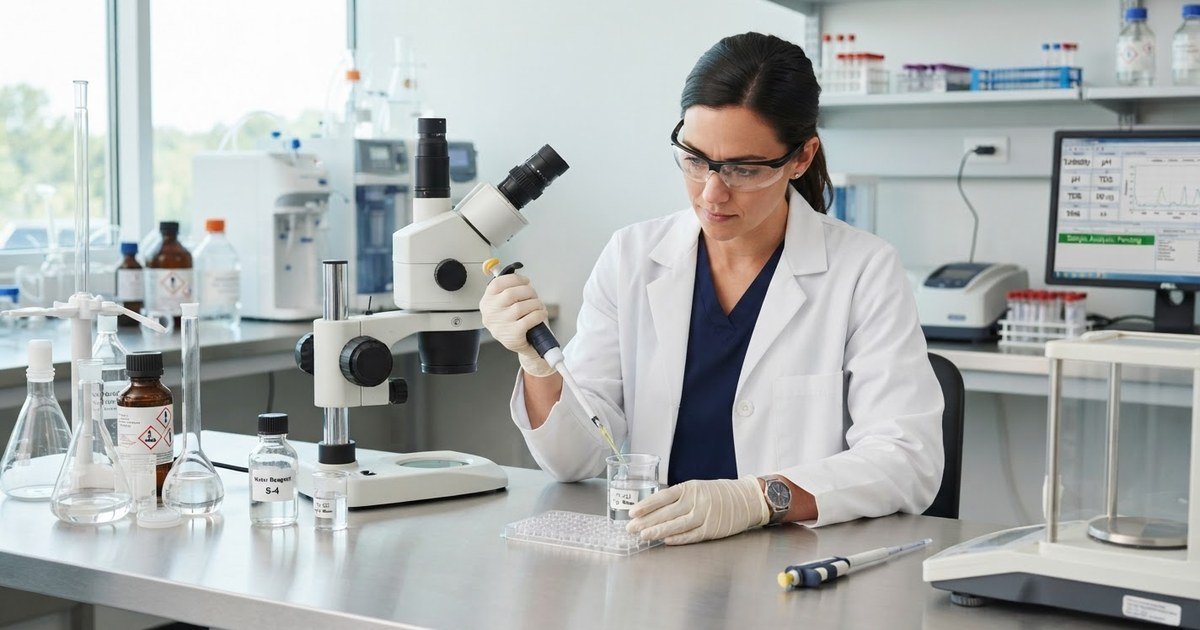
Water testers check for six main groups of contaminants: microorganisms (like coliform bacteria and E. coli), inorganic chemicals and heavy metals (lead, arsenic, copper, nitrate, and fluoride), organic chemicals (VOCs, pesticides, and PFAS), disinfectants and their byproducts (chlorine and trihalomethanes), radiological contaminants (radon, uranium, and radium), and physical or aesthetic factors (pH, hardness, turbidity, and total dissolved solids). A standard home or lab water test screens for the contaminants most likely to affect your health and your plumbing — typically bacteria, lead, nitrate, arsenic, hardness, and chlorine — while more advanced panels add PFAS, pesticides, and radiological elements. Which ones matter most depends on your water source, your location, and the age of your pipes.
Some links below are affiliate links. If you buy through them we may earn a commission at no extra cost to you. See our Affiliate Disclosure.
Certified laboratories and at-home kits organize the thousands of possible water contaminants into a handful of practical groups. Understanding these groups helps you choose the right test and read your results with confidence.
These are living organisms — bacteria, viruses, and parasites — that can cause immediate gastrointestinal illness. The most commonly tested indicators are total coliform bacteria and E. coli. Coliform bacteria are widespread in the environment and are not always harmful themselves, but their presence signals that disease-causing organisms could get into your water. The U.S. Environmental Protection Agency (EPA) sets the goal for E. coli at zero, because any detection indicates recent fecal contamination. Private well owners should test for bacteria at least once a year, since wells are not treated or monitored the way municipal supplies are.
💧 Not sure what’s actually in your water?
A certified-lab Tap Score test kit from SimpleLab screens your tap or well water for lead, PFAS, bacteria, and 100+ other contaminants — sampling takes minutes and results arrive in days.
This group includes lead, arsenic, copper, nitrate, fluoride, and nitrite. Lead is one of the most important to test for because it usually enters water from old pipes, solder, and fixtures rather than the source itself — so two homes on the same street can have very different results. The EPA action level for lead is 15 parts per billion, but both the EPA and the Centers for Disease Control and Prevention (CDC) emphasize there is no known safe level of lead exposure for children. Nitrate, common in agricultural areas from fertilizer and septic runoff, is regulated at 10 milligrams per liter because higher levels can cause “blue baby syndrome” in infants. Arsenic, which occurs naturally in some bedrock, is limited to 10 parts per billion.
Organic contaminants are carbon-based compounds that include volatile organic compounds (VOCs), pesticides, herbicides, and PFAS (“forever chemicals”). PFAS have become one of the fastest-growing testing categories because they persist in the environment and have been linked to health effects at very low concentrations. In 2024 the EPA finalized its first national drinking-water limits for several PFAS, setting the standard for PFOA and PFOS at 4 parts per trillion; compliance timelines have since been revised, so check the EPA for the latest limits. If you are on a private well or near industry, farms, or a military base, PFAS and VOC testing are worth adding. Our guide to PFAS in drinking water explains where these chemicals come from and how to remove them.
Utilities add chlorine or chloramine to kill microbes, and testers measure residual levels to confirm treatment is working without being excessive. When these disinfectants react with natural organic matter, they form disinfection byproducts such as trihalomethanes (TTHMs) and haloacetic acids. The EPA caps total trihalomethanes at 0.080 milligrams per liter because long-term exposure to elevated levels is a health concern. If your tap water smells strongly of chlorine, a test can tell you whether it is simply an aesthetic nuisance or something worth filtering.
Naturally occurring radioactive elements — radium, uranium, and radon — can dissolve into groundwater from surrounding rock. They are most relevant for private wells in regions with granite bedrock or known uranium deposits. Uranium and radium are federally regulated in drinking water; radon in water is not yet federally regulated but is often tested where indoor-air radon is a concern.
These do not always pose a direct health risk but affect taste, odor, appearance, and your plumbing. Testers commonly measure pH, total dissolved solids (TDS), hardness, turbidity, iron, and manganese. Hard water leaves scale on fixtures and shortens the life of water heaters, while high TDS can make water taste metallic or salty. A simple TDS meter gives you a quick snapshot, though it does not identify which specific solids are present.
If you are on a private well, the EPA recommends prioritizing bacteria (total coliform and E. coli), nitrate, pH, and total dissolved solids every year, plus lead and arsenic depending on your geology. Our walkthrough on how to test your well water covers the full annual checklist. If you are on city water, your utility already tests the source, so focus on what can change inside your home — especially lead and copper from plumbing, and chlorine byproducts. Because contamination risk varies widely by region, it is worth reviewing the typical issues where you live on our drinking water quality by state hub.
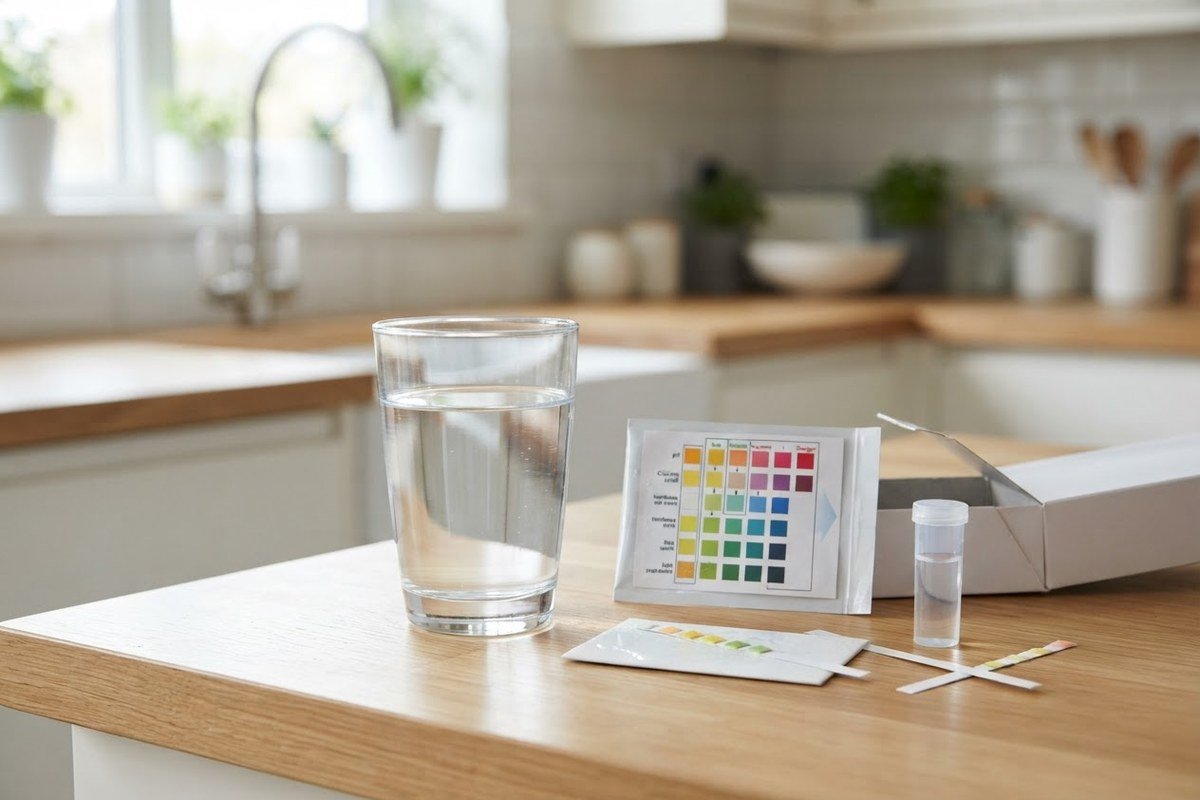
There are two broad approaches. At-home test kits use color-changing strips or reagent drops that react with a contaminant, giving you an approximate reading in minutes — convenient for screening hardness, chlorine, pH, nitrate, and sometimes lead or bacteria. A quality home drinking water test kit is a good first step. For metals specifically, a dedicated lead-in-water test kit is more reliable than a general strip, and a simple digital TDS meter tracks overall dissolved solids over time.
Certified laboratory testing is the gold standard, especially for health-based contaminants like arsenic, PFAS, and radiological elements that home kits cannot measure accurately. A lab uses instruments such as mass spectrometry to detect contaminants down to parts per trillion. For emerging concerns, mail-in PFAS water test kits send your sample to an accredited lab. When choosing any treatment product afterward, look for units certified to NSF/ANSI standards, which verify a filter actually reduces the contaminant it claims to.
The EPA and CDC recommend private well owners test at least once a year for bacteria, nitrate, and pH, and more often if you notice a change in taste, color, or odor, if someone in the household is pregnant or nursing, after flooding, or if there is a spill or new industrial activity nearby. City-water households generally test when they move into an older home, after plumbing work, or if they are concerned about lead. Any time an infant, pregnant person, or immunocompromised individual relies on the water, testing sooner rather than later is wise.
First, confirm the result with a certified lab before acting, since home kits can produce false positives. Then match the treatment to the specific contaminant: carbon filters handle chlorine, taste, and many organics; reverse osmosis reduces lead, arsenic, nitrate, PFAS, and dissolved solids; and UV or boiling addresses bacteria. For broad protection against dissolved contaminants, an under-sink reverse osmosis system is one of the most versatile options. Always verify the product is certified to reduce your specific contaminant — no single filter removes everything.
For municipal water, chlorine and its disinfection byproducts and traces of lead from household plumbing are among the most frequently detected. For private wells, bacteria (coliform), nitrate, and hardness are the most common findings.
Some home kits include a lead strip, but they are best used for screening. Because lead is harmful even at low levels and there is no safe amount for children, a positive or borderline result should always be confirmed by a certified laboratory.
Standard basic panels usually do not include PFAS; you typically need to request a specific PFAS test, most reliably through an accredited lab. PFAS testing is increasingly recommended near industrial sites, airports, and military bases.
A chlorine residual is intentional and shows your water is being disinfected. The concern is with disinfection byproducts that form over time; testing tells you whether levels are within EPA limits or worth filtering with an activated carbon system.
Basic mail-in lab panels typically run from around $30 to $150 depending on how many contaminants are included, while comprehensive panels covering metals, PFAS, and radiological elements can cost more. Many county health departments also offer low-cost bacteria and nitrate testing for private wells.
Boiling kills bacteria and other microorganisms, but it does not remove chemical contaminants like lead, nitrate, arsenic, or PFAS — and it can actually concentrate them. Use filtration or reverse osmosis for chemical contaminants.
Last updated July 6, 2026.
This article is for general informational purposes only and is not professional medical, health, or safety advice. Water quality and regulatory limits vary by location and change over time; consult a certified laboratory, your local health department, and the EPA for guidance specific to your water. See our Health Disclaimer.
