
Beautiful Plants For Your Interior

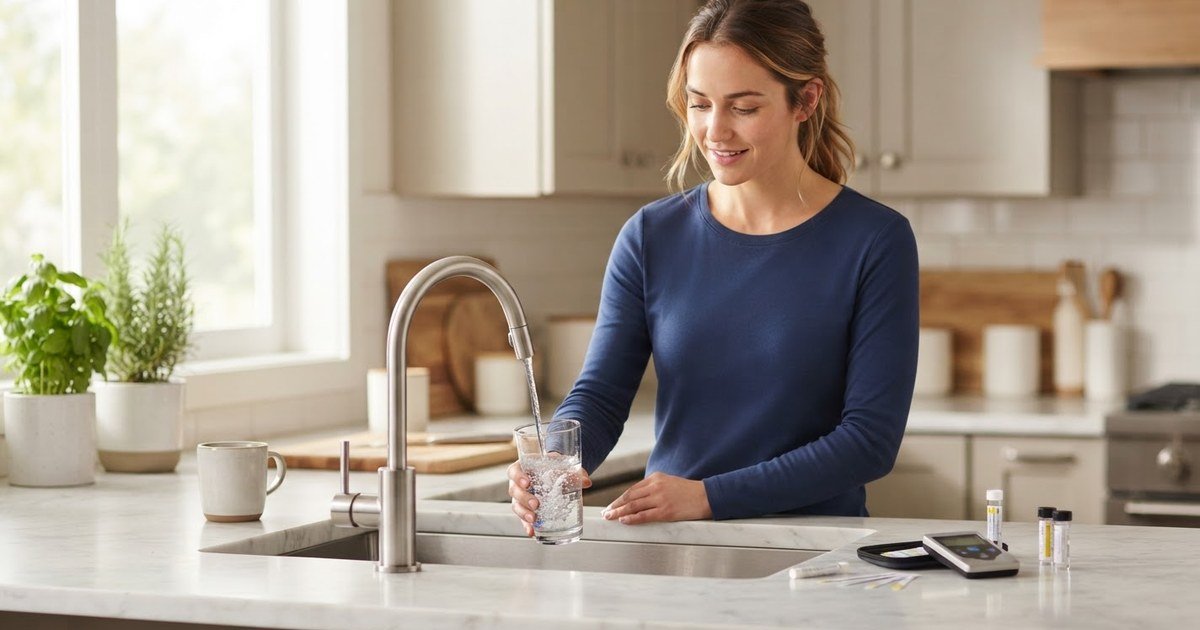
Boiling water does not remove lead, PFAS, nitrate, arsenic, or any other dissolved chemical. Boiling only kills living organisms — bacteria, viruses, and parasites — and because some water evaporates while the chemicals stay behind, a rolling boil actually concentrates those contaminants and makes the water slightly worse. The only contaminants boiling reliably handles are biological ones; everything chemical needs filtration, distillation, or a different water source.
That distinction matters more than most people realize, because “just boil it” is the default advice passed around whenever tap water tastes off or a utility issues a notice. Below is exactly what boiling kills, what it leaves untouched, the one surprising exception researchers found, and what to do instead when the problem is chemical rather than microbial.
Some links below are affiliate links. If you buy through them we may earn a commission at no extra cost to you. See our Affiliate Disclosure.
Heat is a disinfectant, not a filter. The CDC calls boiling the surest way to kill disease-causing organisms, including viruses, bacteria, and parasites, and its instructions are simple: bring clear water to a rolling boil for one minute, or three minutes at elevations above 6,500 feet. That is why boil-water advisories exist after a main break, a flood, or a loss of system pressure — those events risk letting microbes into the distribution system, and heat solves microbes.
What heat cannot do is make a molecule disappear. A lead ion, a nitrate ion, or a PFAS chain is not alive, so there is nothing for boiling to kill. The CDC states plainly that boiling does not remove chemicals, and that water containing fuel, toxic chemicals, or radioactive material cannot be made safe by boiling or disinfecting at all.
The EPA’s answer to “does boiling water remove lead?” is a flat no. Worse, lead dissolves more readily into hot water, and boiling concentrates whatever lead is present as steam leaves the pot. Michigan’s environmental agency puts it in the imperative: do not boil water to remove lead. The EPA’s guidance instead is to use only cold water for drinking, cooking, and infant formula, flush the tap before use, and install a filter independently certified for lead reduction.
PFAS survive heat by design — thermal stability is the property that made them useful in nonstick coatings and firefighting foam in the first place. EPA documentation on PFOS states that boiling water will concentrate it and that boiling should not be treated as an emergency response. The Minnesota Department of Health reaches the same conclusion for home treatment, and the technologies that do work are narrow: activated carbon adsorption, ion exchange resin, and high-pressure membranes such as reverse osmosis. If PFAS is your concern, our guide to PFAS in drinking water covers where it comes from and which certifications actually mean something.
Nitrate is the clearest example of boiling making things worse. The EPA and the Minnesota Department of Health both warn that boiling will not reduce nitrate and will raise its concentration as water evaporates — a serious issue for infants under six months, who are vulnerable to methemoglobinemia (“blue baby syndrome”). Nitrate is most common in private wells and shallow groundwater in agricultural areas, which is why states like Minnesota issue specific nitrate guidance for well owners.
Arsenic behaves the same way. Heating or boiling well water will not remove arsenic, and evaporation only concentrates it. Conventional water softeners and standalone activated carbon filters do not remove arsenic either — reverse osmosis and distillation are the standard household options.
Boiling drops some calcium carbonate out of solution as the white scale you see in a kettle, but the water you pour off still carries most of its dissolved mineral load. Boiling is not a way to reduce TDS, and it does nothing at all for sodium, chloride, or sulfate.
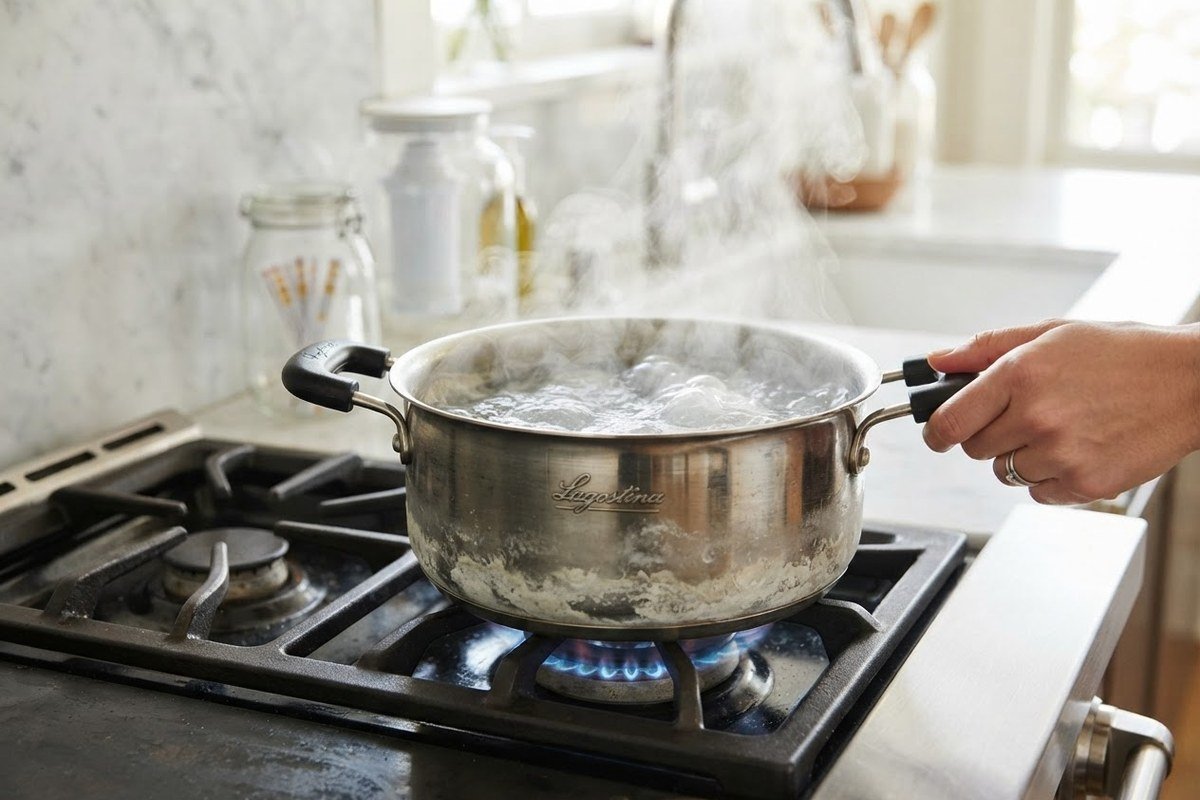
Picture a pot holding one liter of water with a fixed amount of nitrate dissolved in it. Boil away a tenth of that water and you still have all the original nitrate — now spread through 900 milliliters instead of 1,000. The concentration rises by roughly 11 percent. Boil it down aggressively while you are distracted and the increase is larger still. New York State’s health department makes exactly this point in its boil-water guidance: a boil order is not an appropriate response to chemical contamination, because boiling can raise exposure both by concentrating chemicals in the pot and by volatilizing solvents into the air you are breathing in the kitchen.
This is the reason utilities issue “do not drink” or “do not use” notices for chemical events rather than “boil water” notices. The two advisories mean opposite things about your stove.
There are real exceptions, and they are narrower than the marketing around them suggests.
None of these change the headline: for lead, PFAS, nitrate, arsenic, and the rest of the dissolved chemical list, boiling is not a treatment.
Find out what is actually in your water first. Every treatment decision downstream depends on this, and guessing is how people end up with a filter that does nothing for their real problem. If you are on a municipal system, start with your utility’s annual Consumer Confidence Report and our state-by-state water quality hub. Neither tells you what your own plumbing adds after the water leaves the main — which is precisely where lead enters — so a certified lab test at your own tap, such as a mail-in kit from SimpleLab’s Tap Score, is what closes the gap. Well owners should read our walkthrough on how to test your well water, since private wells are unregulated and nobody tests them for you. Our breakdown of contaminants commonly included in water tests explains what the panels actually cover.
Then match the treatment to the contaminant. A carbon filter certified to NSF/ANSI 53 handles lead and many organics. Reverse osmosis, certified to NSF/ANSI 58, is the broad-spectrum answer for nitrate, arsenic, and PFAS. Distillation works for dissolved metals but is slow. UV handles microbes without heat. Our guide to the four types of water filtration systems maps each technology to what it can and cannot do — and whichever you buy, look for independent certification against the specific contaminant, since an uncertified reverse osmosis system or lead-certified pitcher is a claim, not a guarantee. Whole-house options from Aquasana and Crystal Quest are worth comparing once your test results tell you what you are treating.
And keep boiling for what it is good at. During an actual boil-water advisory — main break, flooding, loss of pressure — one minute at a rolling boil is the right response, and it is free.
Everything above is general. Your water is specific. A certified lab test returns an itemised panel for your address — which contaminants are present, at what concentration, and whether they exceed EPA limits — so you can act on evidence instead of guesswork.
No. The EPA states that boiling does not remove lead, and because lead dissolves more easily in hot water and evaporation concentrates what is there, boiling can slightly increase the concentration. Use cold water for drinking and cooking, and use a filter certified for lead reduction.
No. Boiling is highly effective against bacteria, viruses, and parasites, but it does nothing for dissolved chemicals, heavy metals, nitrate, PFAS, or radioactive material. “Disinfected” and “purified” are not the same claim.
A rolling boil inactivates the waterborne pathogens of practical concern in drinking water, including bacteria, viruses, and protozoan cysts such as Cryptosporidium and Giardia. Some bacterial spores and heat-stable toxins can survive typical boiling times, which is one more reason boiling is an emergency measure rather than a permanent treatment.
No. A “do not drink” or “do not use” notice usually signals chemical contamination, and boiling can concentrate the chemical and release solvents into your kitchen air. Follow the utility’s instructions and use bottled or hauled water until the notice is lifted.
No. Fluoride is a dissolved ion that does not evaporate with the water, so boiling leaves it behind at a slightly higher concentration. Reverse osmosis, distillation, and activated alumina are the treatments that reduce fluoride.
They solve different problems. Boiling handles biological contamination and nothing else; filtration handles chemical contamination and, depending on the technology, some biological contamination as well. If your water is microbially unsafe and you have no filter, boil it. For everyday use with a known chemical issue, filtration is the answer.
Last updated August 17, 2026.
This article is for general information only and is not medical advice. If you are concerned about a specific contaminant or a health effect, consult your physician or your state or local health department. See our Health Disclaimer.
