
Beautiful Plants For Your Interior

Learn how to test well water at home before buying a filter. Discover the best methods and Amazon test kits to ensure your water is safe to drink.
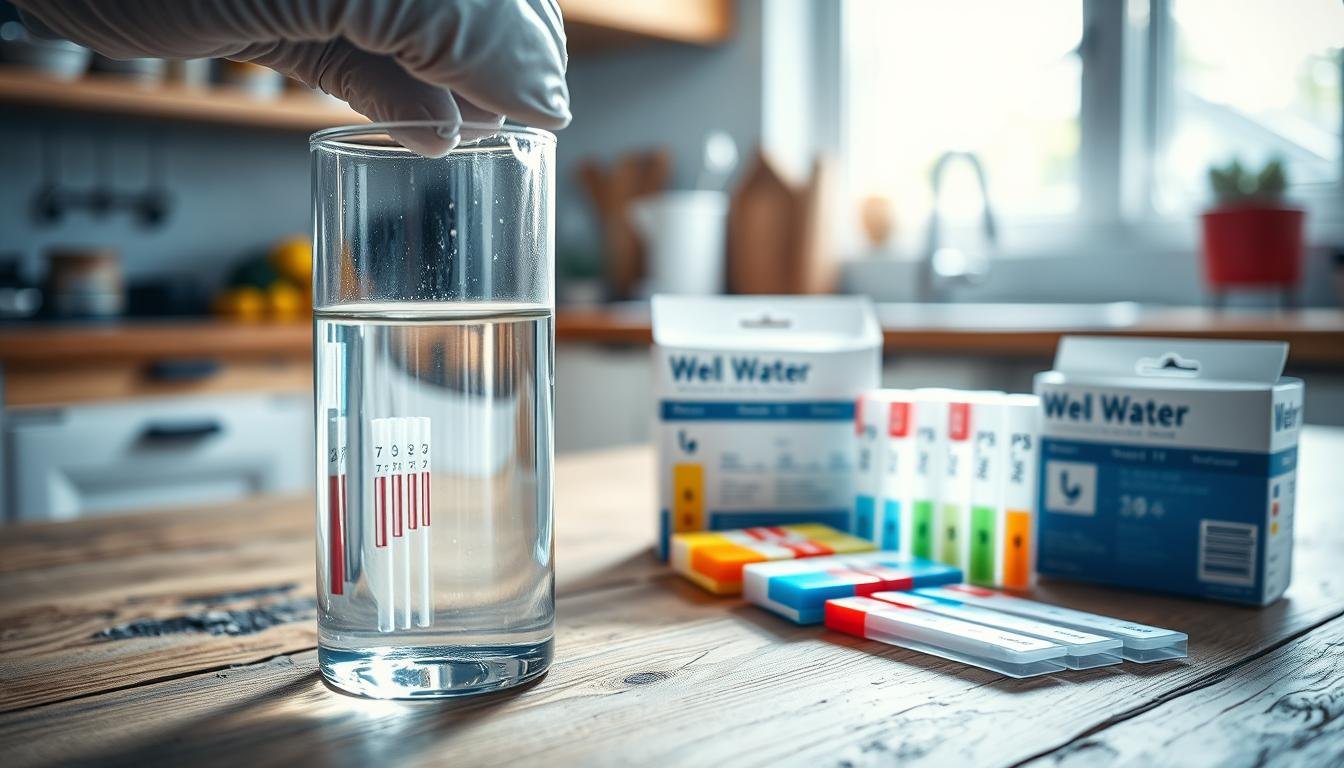
To test well water at home, collect samples in sterile bottles from a state-certified laboratory and get them back to the lab within its hold time. The CDC’s baseline is to test a private well at least once every year for total coliform bacteria, nitrate, total dissolved solids (TDS) and pH. Then add extra tests based on your local geology, what is near the well and the age of your plumbing.
Nobody does this for you. The EPA does not regulate private wells or set standards for them, so the household is responsible for testing and for any treatment. This guide covers the annual tests, the sampling steps labs actually use, what testing costs at public labs, which extra tests fit which risks, and how to find a certified lab.
Some links below are affiliate links. If you buy through them we may earn a commission at no extra cost to you. See our Affiliate Disclosure.
The CDC’s guidelines for testing well water name four annual tests, and the EPA’s private well guidance lists the same four:
| Test | What it tells you |
|---|---|
| Total coliform bacteria | An indicator that disease-causing microorganisms may be getting into the well. A positive result means the well needs attention before anyone drinks the water. |
| Nitrate | A sign of fertilizer, septic or animal-waste influence. The EPA standard is 10 mg/L (as nitrogen). Bottle-fed infants under six months are most at risk. |
| Total dissolved solids (TDS) | The total mineral and salt load. A sudden change from earlier results is a signal to look closer. |
| pH | How acidic or basic the water is, which affects corrosion of pipes and fixtures. |
The CDC also says to ask your local health department which other germs or chemicals are common where you live. Our breakdown of the main types of water quality tests explains what each category of lab panel covers.
The CDC and EPA both call for an extra test, outside the yearly schedule, when:
The CDC also recommends checking the well for mechanical problems every spring.
Collection mistakes are the most common reason a test result comes back wrong. Always follow the instructions that come with your lab’s kit, because bottles, preservatives and deadlines differ between labs. The steps below are drawn from Penn State’s Agricultural Analytical Services Lab and the Kenosha County (Wisconsin) Public Health Laboratory, and they show what a typical kit asks for.
One special case: hydrogen sulfide (the rotten-egg odor) escapes from a sample quickly. Penn State Extension says it must be tested in the home or chemically stabilized before going to a lab. If odor is your problem, see our guide on getting rid of rotten egg smell in well water.
Public labs post their fees, so you can price a test before you order. The figures below come from current published fee schedules. Private certified labs set their own prices, so ask for a written quote for the same tests before comparing.
| Option | Example published prices | Best for |
|---|---|---|
| County health department lab (Kenosha County, WI) | Bacteria $35; nitrate $35; bacteria + nitrate + fluoride $90; arsenic $36 (sent to the state lab) | The annual bacteria and nitrate check at the lowest cost |
| State laboratory (Wisconsin State Laboratory of Hygiene, prices effective July 1, 2026) | Bacteria $35; nitrate $35; arsenic $38; metals screen $97; VOC screen $141 | Annual tests plus add-on screens, mailed statewide |
| State laboratory (Rhode Island State Health Laboratories) | Annual kit (Kit A) $95; coliform $25; nitrate $15; VOCs $130; PFAS $200 | A bundled annual kit, or adding PFAS and VOCs |
| Private state-certified lab (mail-in) | Varies by lab and panel; get a written quote | Broad panels, states without a public program, or a test your public lab does not offer |
| Home test strips and meters | Not a substitute for a lab result | Quick screening between lab tests (pH, hardness, TDS) |
Home strips can flag an obvious change, but the CDC and EPA both tell well owners to use a state-certified laboratory. A strip that reads “safe” for bacteria is not the result you want to rely on for a newborn or for a decision about treatment equipment.
The four annual tests miss many contaminants. The CDC notes that testing can be expensive, so figure out which problems are likely before ordering more. The EPA’s private well guidance and state health agencies tie extra tests to specific conditions:
| If this applies to your well | Add these tests | Why |
|---|---|---|
| Bedrock well, especially in granite or other areas with known natural arsenic or uranium | Arsenic; uranium and other radionuclides | Both come naturally from rock. A USGS study of 478 private bedrock wells in Massachusetts found about 13% above the 10 µg/L arsenic standard and about 3.5% above the 30 µg/L uranium standard. Minnesota recommends testing every well for arsenic at least once. |
| Near a gas station, buried fuel tanks, a landfill, factory, junkyard or dry cleaner, or you smell fuel | Volatile organic compounds (VOCs); also TDS, pH, sulfate, chloride and metals | EPA’s list of conditions that call for VOC testing |
| Near waste sites, places where firefighting foam was used, manufacturing waste, or fields spread with biosolids | PFAS, using a certified lab that runs EPA drinking water methods | EPA names these as PFAS sources for private wells. For comparison, EPA’s limit for PFOA and PFOS in public water is 4 parts per trillion. |
| Lead service line, older plumbing (lead pipes are more likely in homes built before 1986) or visible corrosion | Lead, copper and pH (first-draw sample) | Lead usually comes from plumbing, not the aquifer, and you cannot see, taste or smell it |
| Intensive agriculture nearby | Nitrate, nitrite, pesticides, coliform | Runoff and fertilizer. Minnesota says nitrate above 1 mg/L may point to other contaminants. |
| Radon in indoor air or a radon-rich region | Radon in water | EPA’s risk chart |
| Nearby oil or gas drilling | Chloride, sodium, barium, strontium | EPA’s risk chart |
| Bad taste, rotten-egg odor or staining | Hydrogen sulfide, corrosion indicators, metals (iron, manganese) | Points you to the right treatment. Minnesota also advises a manganese test before a baby drinks the water. |
If PFAS is the concern, our guide to PFAS in drinking water explains sources and which filter certifications matter. If you also rely on a cistern or roof catchment, our off-grid well and rainwater contamination guide covers the different risks.
Compare each number against the standard printed on the report, or ask your health department to help you read it. A few results call for action right away:
Then match the treatment to what the lab actually found. Our comparison of the best water filters for well water sorts systems by iron, sulfur, bacteria and PFAS. Look for independent certification against the specific contaminant on your report.
💧 On well water? Test it before you treat it.
Private wells aren’t covered by EPA monitoring — a certified-lab Tap Score well test from SimpleLab checks iron, sulfur, bacteria, nitrates, arsenic and more, so you buy the right treatment the first time.
At least once a year for total coliform bacteria, nitrate, TDS and pH, according to the CDC. Test again after flooding, well repairs, a change in taste, color or smell, or when someone in the home becomes pregnant or a baby arrives.
You can screen with strips or a TDS meter, but they do not replace a lab result. The CDC and EPA tell private well owners to use a state-certified laboratory. You collect the sample yourself at home, and the lab runs the analysis.
At public labs, the annual basics are modest. Kenosha County, Wisconsin charges $35 each for bacteria and nitrate, and Rhode Island’s state lab sells an annual kit for $95. Add-ons cost more: Wisconsin’s state lab lists a VOC screen at $141, and Rhode Island lists PFAS at $200.
The CDC recommends checking the well for mechanical problems every spring, which makes spring a natural time for the annual test. Testing after events like flooding or repairs matters more than the calendar.
It means coliform bacteria were not found in that sample. It says nothing about nitrate, arsenic, uranium, lead, VOCs or PFAS, which need their own tests based on your well’s risks.
Last updated October 31, 2026.
This article is for general information only. For questions about a specific result or a health concern, contact your state or local health department or your physician. See our Health Disclaimer.

[…] at all, since private wells are unregulated and nobody tests them for you; our walkthrough on how to test your well water covers the annual routine. If you want to know what a standard panel actually screens for, see our […]
[…] SimpleLab’s Tap Score, is what closes the gap. Well owners should read our walkthrough on how to test your well water, since private wells are unregulated and nobody tests them for you. Our breakdown of contaminants […]
[…] well, the stakes are higher because no utility is testing for you — our step-by-step guide on how to test your well water walks through exactly what to test and […]
[…] If you are advising a senior on daily nutrition, water quality deserves the same attention as food quality. Check your state’s drinking water safety: Drinking Water Quality by State: All 50 States Rated. For private well users, see our testing guide: How to Test Your Well Water (2026). […]
[…] This guide is split into two parts, private wells and rainwater catchment, each with a contaminant, source, test and treatment table. For sampling steps and lab costs, see our guide on how to test well water at home. […]
[…] contaminants are common in your area, and some offer free well testing. Our step-by-step guide to testing well water at home covers […]
[…] to protect the more expensive stages downstream. If your water carries a lot of sediment (common on private wells), this cheap cartridge is what keeps the RO membrane from clogging […]