
Beautiful Plants For Your Interior

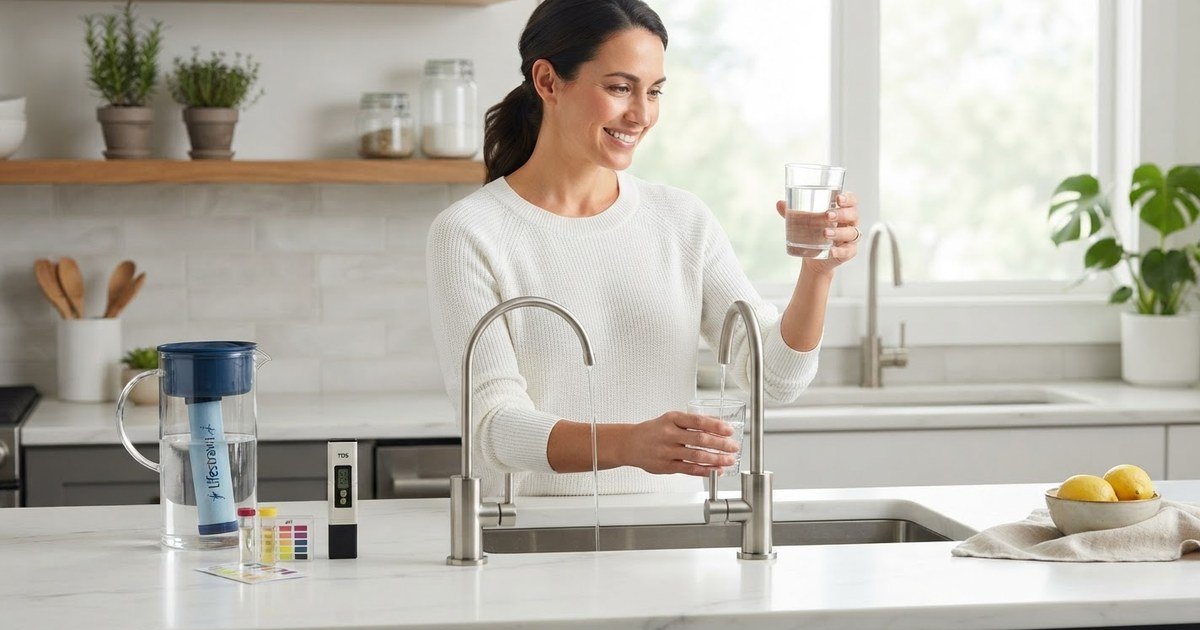
The most important factors to compare when buying a water filter are: which contaminants it’s certified to remove, the filtration technology it uses, its independent certifications (look for NSF/ANSI 42, 53, 58, or 401), its flow rate and filter capacity, how it installs, and the true cost of ownership once you add replacement cartridges. Start by testing your water so you know what you actually need to remove, then match a certified filter to those specific contaminants rather than buying on price or marketing claims alone.
A water filter that’s perfect for one home can be useless in another. The “best” filter is the one certified to remove the contaminants in your water, sized for your household’s demand, and affordable to maintain over years of cartridge changes. Below are the seven factors that matter most, in the order you should weigh them.
Some links below are affiliate links. If you buy through them we may earn a commission at no extra cost to you. See our Affiliate Disclosure.
This is the first and most important question, because every other decision flows from it. A filter designed to improve taste and remove chlorine does nothing for lead, arsenic, nitrates, or PFAS. Before you compare products, find out what’s in your water. Public utilities publish an annual Consumer Confidence Report, and you can look up broad patterns for your area on our drinking water quality by state hub. For a home-specific answer, use a certified lab test kit such as a SimpleLab Tap Score test, which reports exactly which contaminants are present and at what levels.
Once you have results, you can shop with intent: chlorine and taste issues point to carbon filtration; lead, cysts, or PFAS point to filters certified for those specific reductions; and dissolved solids, arsenic, or nitrates usually point to reverse osmosis.
Different technologies remove different things, and no single method removes everything. The main types are activated carbon (great for chlorine, taste, odor, and many organic chemicals), reverse osmosis or RO (removes dissolved solids, lead, arsenic, nitrates, fluoride, and PFAS), ion exchange and water softeners (target hardness minerals), and UV (disinfects bacteria and viruses but removes no chemicals). Many quality systems combine several stages. For a deeper breakdown, see our guide to the 4 types of water filtration systems and our head-to-head on reverse osmosis vs. carbon filters.
Certification is where marketing meets proof. Independent, third-party certification confirms a filter actually does what the box claims. The key standards to look for are NSF/ANSI 42 (aesthetic effects like chlorine, taste, and odor), NSF/ANSI 53 (health-related contaminants such as lead, cysts, and some VOCs), NSF/ANSI 58 (reverse osmosis system performance), and NSF/ANSI 401 (emerging contaminants like certain pharmaceuticals). A filter “tested to NSF standards” is not the same as one that is certified — certification means an accredited body verified and continues to audit the claim. Match the certification to the contaminant you identified in step one.
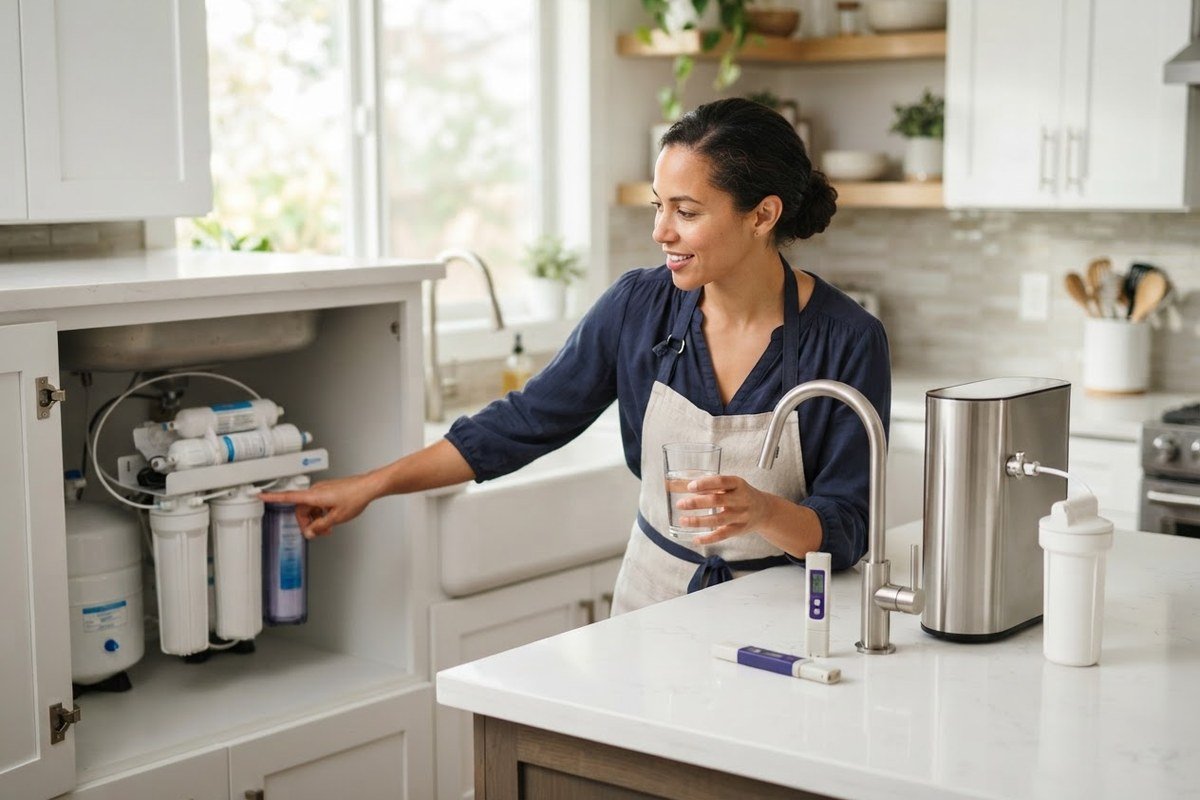
A filter has to keep up with how you actually use water. Flow rate (measured in gallons per minute) determines whether your shower and kitchen tap still feel normal, which matters most for whole-house systems. Capacity (rated in gallons before a cartridge is spent) determines how often you’ll replace filters. A pitcher rated for 40 gallons and an under-sink cartridge rated for 1,000 gallons are very different commitments. If you have high demand or hard water, prioritize higher flow and longer-life cartridges — our roundup of whole-house filters for hard water compares systems built for exactly that.
Installation type shapes both cost and convenience. Pitcher and faucet-mount filters need no plumbing and suit renters or small budgets. Countertop and under-sink systems handle more volume and last longer but take up space or need a simple plumbing connection. Whole-house (point-of-entry) systems treat every tap but require professional installation. Well owners have their own considerations — iron, sulfur, sediment, and bacteria — covered in our guide to the best filters for well water. Consider a system like a Crystal Quest under-sink filter for kitchens that need capacity without countertop clutter, or a whole-home unit from Aquasana if you want treated water at every tap.
Sticker price is only the down payment. The number that matters is cost per gallon over the life of the system, and that’s driven by replacement cartridges. A cheap pitcher with pricey monthly filters can cost more over three years than a mid-range under-sink unit with annual cartridges. Before you buy, look up the replacement-filter price and schedule, then do the math for a year or two. Stocking up on replacement filter cartridges that fit your chosen system keeps performance consistent and often lowers the per-cartridge price.
Finally, weigh how the filter fits your life. How easy is a cartridge swap? Does the system have an indicator so you don’t forget? Reverse osmosis systems produce some wastewater — newer models are far more efficient than older ones, but it’s worth checking the pure-to-drain ratio. And a simple, well-certified pitcher you’ll actually refill beats a powerful system you neglect. If you’re weighing convenience against performance, an NSF-certified filter pitcher is a low-commitment way to improve taste and reduce chlorine while you plan a larger system. For a full side-by-side of system types and price tiers, see our main water filter comparison guide.
It’s the single best thing you can do. Testing tells you which contaminants are present, so you can buy a filter certified to remove them instead of guessing. Utility customers can start with their annual water-quality report, but a home test captures issues from your own plumbing (like lead from old pipes) that a utility report won’t.
Match the standard to your goal: NSF/ANSI 42 for chlorine, taste, and odor; NSF/ANSI 53 for health contaminants like lead and cysts; NSF/ANSI 58 for reverse osmosis systems; and NSF/ANSI 401 for emerging contaminants such as certain pharmaceuticals. Confirm the product is “certified,” not merely “tested to” a standard.
A filter removes contaminants like chlorine, lead, or sediment to make water cleaner and safer to drink. A softener uses ion exchange to remove calcium and magnesium that cause hard-water scale and spotting — it doesn’t filter contaminants. Homes with hard water often use both.
It depends on the cartridge’s rated capacity and your water quality, but typical ranges are every 2–3 months for pitchers, every 6–12 months for under-sink cartridges, and every 6–12 months (with periodic membrane changes) for RO systems. Dirtier or harder water shortens filter life, so follow the manufacturer’s gallon rating rather than the calendar alone.
Neither is universally “better” — they solve different problems. Reverse osmosis removes far more, including dissolved solids, arsenic, nitrates, fluoride, and PFAS, but costs more and produces some wastewater. A carbon filter is simpler and cheaper and excels at chlorine, taste, and many organic chemicals. If your test shows dissolved contaminants, choose RO; if it’s mostly taste and chlorine, carbon is plenty.
Only if the extra cost buys certifications and capacity you actually need. A pricier system certified for lead and PFAS is worth it if those are in your water; the same system is overkill if you only need better taste. Compare cost per gallon over a few years, not just the purchase price.
Buying a water filter well comes down to matching, not spending. Test your water, identify the specific contaminants, then compare filters on certification, technology, flow and capacity, installation fit, and total cost of ownership. Do that and you’ll skip the marketing noise and buy a system that genuinely improves the water coming out of your tap. When you’re ready to compare specific models, start with our water filter comparison and the guide to the 4 types of filtration systems.
