
Beautiful Plants For Your Interior

Wondering what to eat for breakfast on Zepbound? We provide a list of nutritious, protein-rich meal ideas to help you start your day feeling your very best.
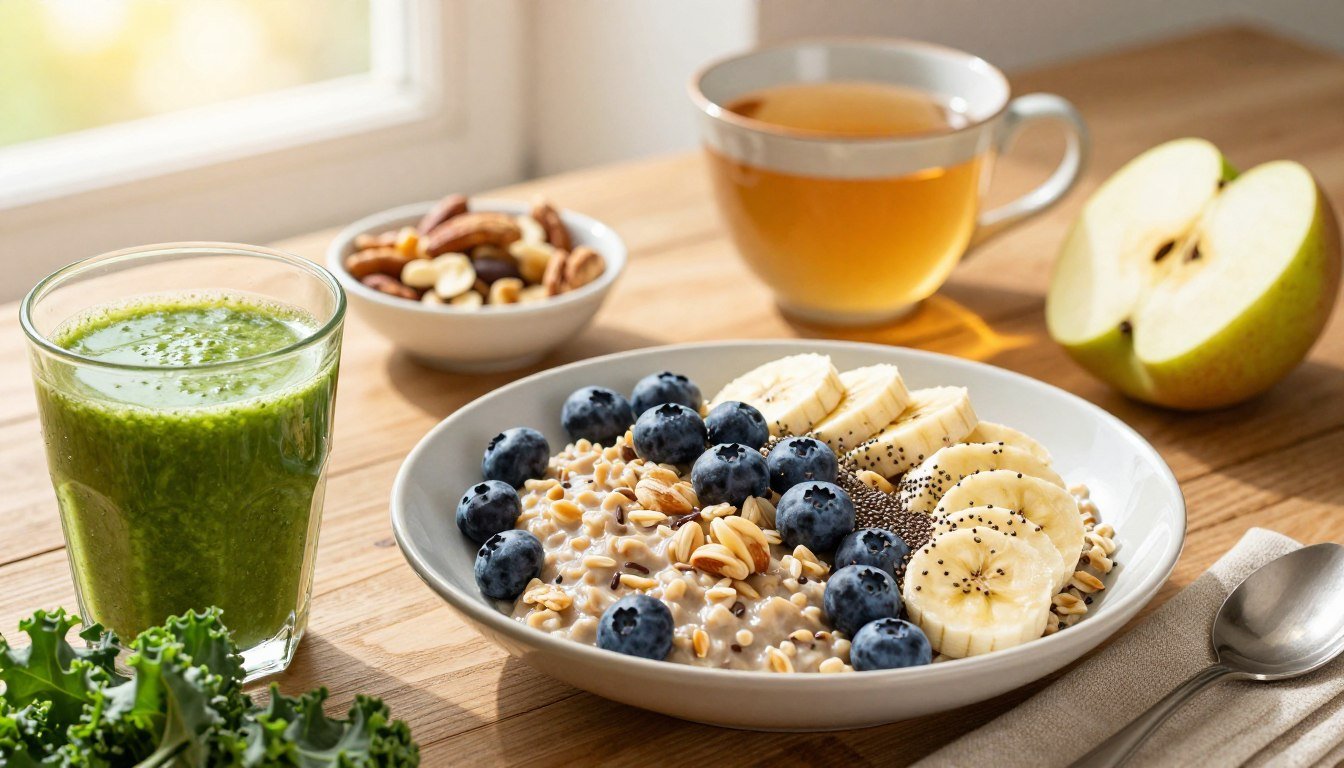
The best breakfast on Zepbound is a small, protein-forward meal that is low in grease: think eggs, plain Greek yogurt, cottage cheese, tofu, or a milk-based smoothie, landing somewhere around 15 to 25 grams of protein. Tirzepatide slows how fast your stomach empties and turns down appetite, so a big or fatty plate is more likely to sit badly. The goal in the morning is to get a solid share of the day’s protein into a portion you can actually finish, and to start sipping fluids early.
Below are eight concrete breakfasts with portions and protein counts, how much protein to aim for across the day according to the major obesity and nutrition societies, what to go easy on in the first weeks, and what to do on mornings when you cannot face food at all.
Some links below are affiliate links. If you buy through them we may earn a commission at no extra cost to you. See our Affiliate Disclosure.
The clearest guidance comes from a 2025 joint advisory by the American College of Lifestyle Medicine, the American Society for Nutrition, the Obesity Medicine Association, and The Obesity Society, written specifically for people on GLP-1 medications. It notes that the standard recommended allowance for adults is 0.8 grams of protein per kilogram of body weight per day, that higher targets of 1.2 to 1.6 g/kg/day have been proposed during active weight loss, and that setting an absolute target of 80 to 120 grams per day may make it easier to stick with. You can read the full joint nutrition advisory on GLP-1 therapy for the reasoning behind those numbers.
Two practical points follow from that advisory. First, protein matters more than usual because you are eating less of everything, and losing weight fast can cost lean tissue along with fat (we cover that trade-off in the downsides of GLP-1 medications). Second, the advisory suggests eating the protein-rich part of a meal first, so it does not get crowded out when you fill up quickly.
The arithmetic is simple: if you are aiming for 80 grams over three small meals and a snack, a breakfast with about 20 grams gets you a quarter of the way there before lunch. Your own target depends on your size, kidney function, and what your prescriber or dietitian recommends.
Each option below is sized for a reduced appetite. Protein figures are approximate, calculated from USDA FoodData Central values for the listed portions; packaged brands vary, so check the label on what you buy.
| Breakfast | Portion | Protein (approx.) | Why it works on Zepbound |
|---|---|---|---|
| Veggie egg scramble | 2 large eggs + 2 egg whites, ½ cup spinach, 1 slice whole-wheat toast | 24 g | Soft texture, mild flavor, easy to make smaller |
| Greek yogurt bowl | 1 container (170 g, about ¾ cup) plain nonfat Greek yogurt, ½ cup blueberries, 1 Tbsp hulled hemp seeds | 21 g | No cooking; cold foods are easier for some people when queasy |
| Cottage cheese and fruit | ¾ cup 2% cottage cheese, ½ cup strawberries | 18 g | High protein for a small volume |
| Smoked salmon toast | 2 oz smoked salmon, 2 Tbsp part-skim ricotta, 1 slice whole-wheat toast | 18 g | Savory option; smoked salmon is salty, so keep the portion modest |
| Tofu scramble | ½ cup firm tofu, ½ cup spinach, 1 slice whole-wheat toast | 26 g | Plant-based, low in fat |
| Protein overnight oats | ⅓ cup dry oats, ¾ cup 2% milk, ½ container plain Greek yogurt, berries | 19 g | Made the night before; higher in fiber, so better once early nausea settles |
| Milk and yogurt smoothie | 1 cup 2% milk, ½ container plain Greek yogurt, ½ cup frozen berries | 17 g | Sippable when solid food is unappealing; add protein powder per its label for more |
| Grab-and-go eggs and cheese | 2 hard-boiled eggs, 1 oz reduced-fat cheddar | 20 g | No prep in the morning; eat half now and half later if you fill up |
None of these is a magic combination. They are simply ways to put 15 to 25 grams of protein into a portion most people on a GLP-1 can finish. If a full serving is too much, eat half and save the rest for mid-morning; the advisory notes that small, frequent meals can work well when hunger and interest in food are low.
The joint advisory gives specific food guidance for the common gastrointestinal side effects:
If constipation is your main problem rather than nausea, the advisory encourages fluids and fiber, and notes that very high-protein or high-fat meals can slow things down further, so a temporary adjustment may help.
There is no special breakfast water rule for tirzepatide. Sip steadily through the morning in amounts your stomach tolerates rather than drinking a large volume at once. For a baseline, the National Academies set an adequate intake of about 3.7 liters (125 oz) of total water a day for men and 2.7 liters (91 oz) for women, counting all drinks and food, with roughly 80% usually coming from drinks. Because you are eating less on Zepbound, less of your water arrives in food, so drinks have to cover more of it. For Zepbound-specific amounts, see our guide to how much water to drink on Zepbound.
Drink water at whatever temperature you tolerate. Some people find cool sips easier when they are nauseated; warm drinks such as ginger or peppermint tea, which the advisory mentions as possibly helpful, work for others. If nausea is the main thing stopping you from drinking, our guide to water and Zepbound nausea has more on getting fluids down.
Low appetite is expected on a GLP-1, and the Zepbound label notes that most nausea, vomiting, and diarrhea happen during dose escalation and decrease over time. You do not have to force a full meal. The advisory’s approach for nausea is to eat a small breakfast and then additional small meals every three to four hours. In practice that can mean half a yogurt cup or a few sips of a milk smoothie at breakfast, then the other half an hour or two later.
What matters is the total across the day: protein and fluids. If you skip breakfast on a rough morning, make the next small meal protein-first and keep sipping. If you cannot keep food or fluids down, or you are vomiting repeatedly or have ongoing diarrhea, call your prescriber. The Zepbound label warns that most reported cases of acute kidney injury occurred in people whose nausea, vomiting, or diarrhea led to dehydration. Our guide to not drinking enough water on a GLP-1 lists the warning signs.
No. The FDA prescribing information says Zepbound can be injected once weekly at any time of day, with or without meals. Keeping a few no-cook, high-protein options on hand makes low-appetite mornings easier whenever they happen. For more on the broader eating pattern, see our guide to water, weight loss and GLP-1 medications.
If you’ve been increasing your water intake, it’s worth knowing what’s actually coming out of your tap. Your utility’s annual report covers the whole system average, not your house — and it says nothing at all about private wells or your own plumbing. A certified lab test gives you a full contaminant panel and, just as often, tells you your water is fine and you don’t need to buy anything.
For most people, yes. Coffee counts toward your fluids, but if it makes nausea or reflux worse, scale back or switch to tea or water for a while. We cover the details in can I drink coffee on Zepbound.
Occasionally, yes, as long as you still reach your protein and fluid needs over the day. If skipping breakfast means you fall well short on protein, a small breakfast followed by more small meals is the better pattern.
It can on days when solid food is unappealing. A milk-and-yogurt smoothie or a shake made with protein powder lets you sip protein slowly. Check the label for protein per serving and added sugar.
There is no official per-meal number. The joint advisory suggests an overall target of 80 to 120 grams per day, so a breakfast of roughly 15 to 25 grams covers a meaningful share. Ask your prescriber or a dietitian to set a target for your body size and health conditions.
Last updated October 31, 2026.
This article is for general information only and is not medical advice. Talk to your prescriber or a registered dietitian about protein and fluid targets that fit your health conditions. See our Health Disclaimer.

[…] you’re building a whole morning routine around the medication, our guide to what to eat for breakfast on Zepbound covers the food side. For the bigger picture on side effects and warnings, see the downsides of […]