
Beautiful Plants For Your Interior

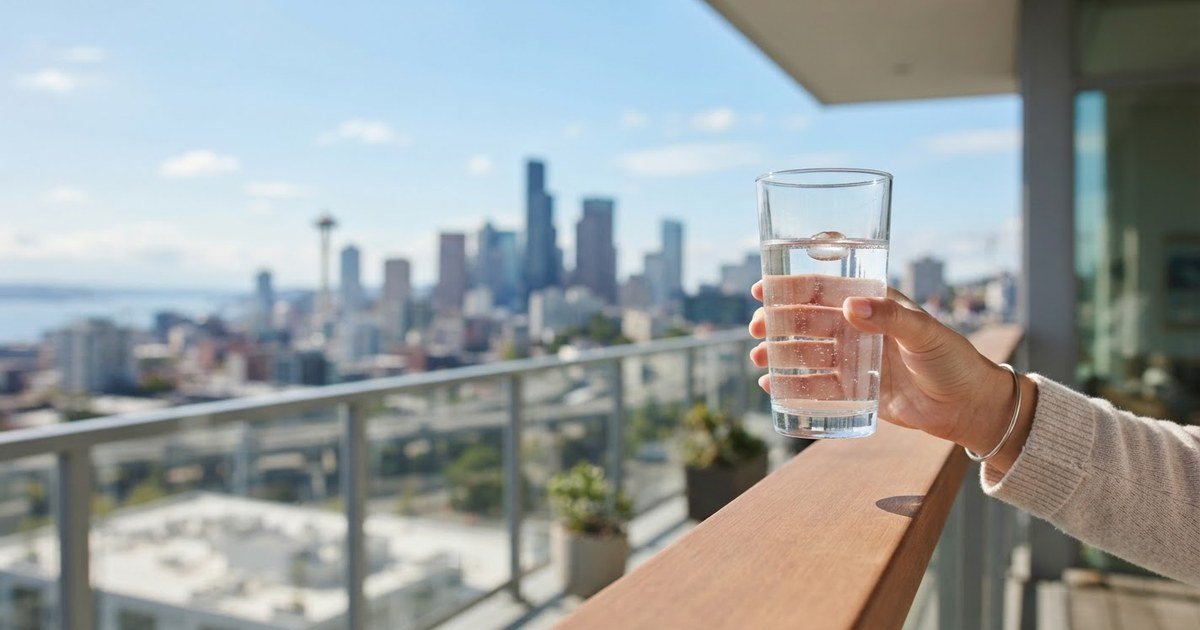
No U.S. government agency publishes an official “cleanest tap water” ranking, but a handful of cities are consistently recognized for exceptional water quality: New York City, Boston, San Francisco, and Seattle — all supplied by highly protected watersheds so pristine the EPA allows them to skip conventional filtration — plus Memphis, whose water comes from a naturally filtered underground aquifer. What separates these cities is source protection: their water starts cleaner, so less treatment is needed. Here’s how those systems earn that reputation, and how to find out how your own city’s water compares.
Some links below are affiliate links. If you buy through them we may earn a commission at no extra cost to you. See our Affiliate Disclosure.
Some links below are affiliate links. If you buy through them we may earn a commission at no extra cost to you. See our Affiliate Disclosure.
Last updated July 30, 2026. This article is informational only and is not professional medical advice — see our Health Disclaimer.
Under the Safe Drinking Water Act, the EPA sets legal limits for over 90 contaminants in public drinking water — from microorganisms like E. coli and Cryptosporidium to lead, arsenic, nitrates, and disinfection byproducts. Every community water system must test regularly and publish the results in an annual Consumer Confidence Report (CCR), which is the single best public record of what’s in your city’s water.
“Cleanest,” then, isn’t just about passing those tests — nearly every large U.S. system does. The cities with the best reputations go further on three fronts: they draw from exceptionally well-protected sources, they detect contaminants at levels far below federal limits, and they maintain strong records on infrastructure issues like lead service lines. Taste is a separate question entirely — mineral content that affects flavor has little to do with safety.
The clearest objective signal the EPA gives is the filtration avoidance determination: permission for a surface-water system to forgo conventional filtration because its watershed is so well protected and its source water so consistently clean. Only a small number of large American systems have ever earned one. That short list overlaps heavily with every informal “cleanest water” conversation.
NYC operates one of the largest unfiltered water supplies in the world. Its water travels from protected reservoirs in the Catskill Mountains and Delaware watershed, and the city spends heavily on land acquisition and watershed protection to keep its EPA filtration avoidance status. The water is disinfected with UV light and chlorine but never passes through a conventional filtration plant. Statewide water quality is a more mixed picture — see our New York drinking water guide for the full breakdown.
Boston’s water comes from the Quabbin and Wachusett reservoirs, managed by the Massachusetts Water Resources Authority. The watersheds are heavily protected, and the system treats with ozone and UV rather than conventional filtration. Boston’s water regularly performs well in national taste tests, and the MWRA publishes some of the most transparent water quality reporting in the country. More on the state’s systems in our Massachusetts water quality guide.
San Francisco’s famous Hetch Hetchy supply begins as Sierra Nevada snowmelt collected in a granite-basin reservoir inside Yosemite National Park. The source is so pristine that the system holds a filtration exemption — water is disinfected and pH-adjusted but not conventionally filtered. That puts San Francisco in a very different position from much of its home state, as our California water quality guide explains.
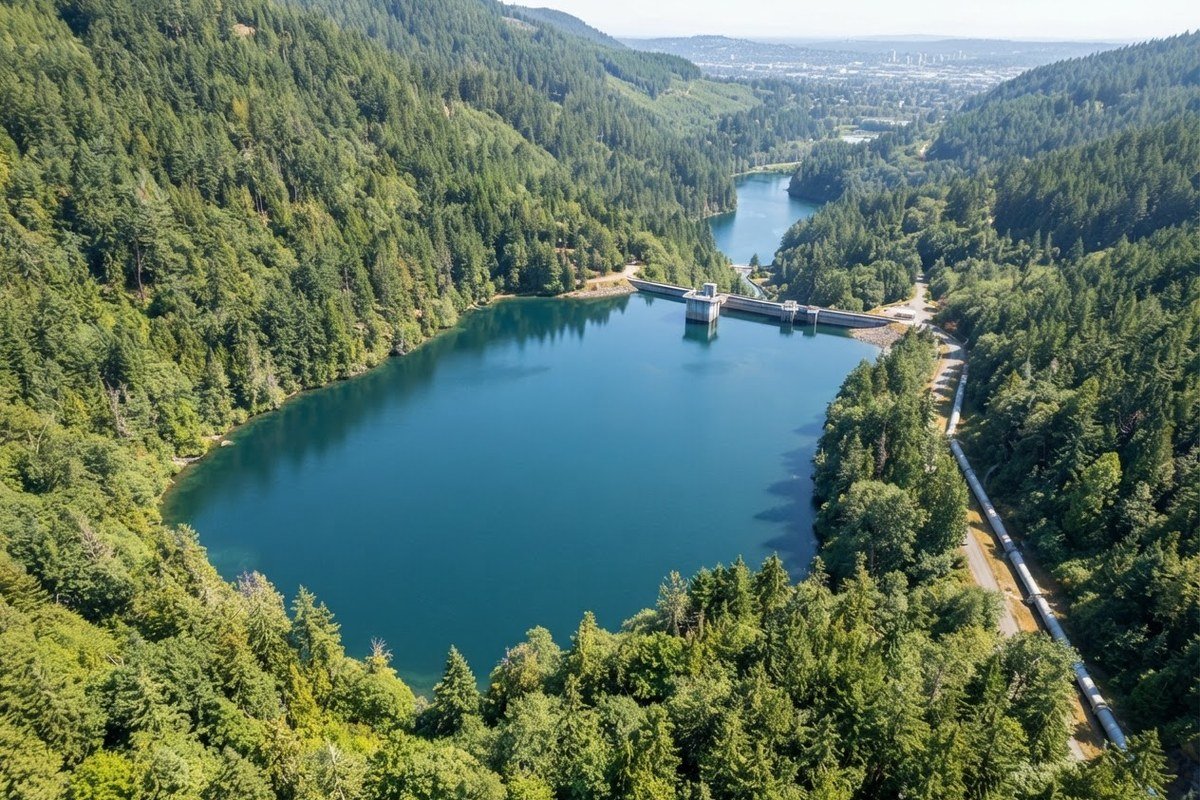
Seattle draws most of its water from the Cedar River watershed, a protected area closed to the public, plus the South Fork Tolt River. The Cedar supply is unfiltered — protected at the source, then disinfected. The Pacific Northwest’s combination of abundant precipitation and mountain watersheds gives the region some of the country’s best municipal water; our Washington State water guide covers the details.
Memphis is the standout groundwater story. The city pumps its drinking water from the Memphis Sand aquifer, where water has been naturally filtered through hundreds of feet of sand over centuries. Locals have long called it some of the sweetest-tasting water in America, and it needs minimal treatment before distribution. See our Tennessee drinking water guide for how the rest of the state compares.
Three reasons. First, the EPA regulates compliance, not rankings — a system either meets standards or it doesn’t, and the agency doesn’t grade on a curve above that line. Second, “clean” means different things: lowest contaminant detections, best source protection, fewest violations, best taste, and newest infrastructure would each produce a different list. Third, water quality varies block by block — lead, for example, usually enters water from service lines and household plumbing after it leaves the treatment plant, so two houses on the same street can test differently.
Annual taste competitions (the best known is held each year in Berkeley Springs, West Virginia) do crown “best tasting” municipal waters, but taste awards measure flavor, not safety.
You don’t have to guess. Three steps give you a clear picture:
1. Read your CCR. Search “your city + consumer confidence report” or find it through the EPA’s CCR portal. Look at detected contaminant levels relative to both the legal limit (MCL) and the public-health goal (MCLG) — big gaps between the two are worth understanding.
2. Check your state’s bigger picture. Our state-by-state drinking water quality hub summarizes the major issues, violations, and contaminants of concern for all 50 states.
3. Test your own tap. Utility reports describe water leaving the plant, not what comes out of your faucet after it passes through mains and household plumbing. A lab-based kit like the SimpleLab Tap Score Advanced City Water Test screens city water for metals, disinfection byproducts, and dozens of other contaminants with certified-lab analysis. For a fast, inexpensive first look, home water test strips can flag obvious issues like chlorine, hardness, and pH in minutes, though they’re far less precise than lab testing.
Most tap water concerns are fixable at the faucet. Look for filters certified to NSF/ANSI standards — Standard 42 covers taste and odor (chlorine), Standard 53 covers health contaminants like lead and cysts, and Standard 58 covers reverse osmosis systems. An under-sink or countertop unit like Aquasana’s drinking water filter systems handles chlorine, lead, and many organic contaminants, while a Crystal Quest under-sink system offers multi-stage options if your test results show specific problems. Match the filter’s certification list to whatever your CCR or home test actually found — that’s the whole trick.
There’s no official ranking, but New York City, Boston, San Francisco, and Seattle are consistently cited because their protected watersheds earned EPA permission to skip conventional filtration, and Memphis is renowned for naturally filtered aquifer water.
In the handful of systems with EPA filtration avoidance status, yes — the water is still disinfected (typically with UV, ozone, or chlorine) and continuously monitored. The exemption exists precisely because the source water is clean enough that filtration adds little.
Not necessarily. Taste is driven largely by mineral content and chlorine levels, not safety. Some perfectly safe water tastes strongly of chlorine or minerals, and taste-test winners aren’t automatically the safest systems.
Read your utility’s annual Consumer Confidence Report, available through the EPA’s CCR portal or your utility’s website. For faucet-level accuracy, use a certified lab test kit, since plumbing can add contaminants like lead after the water leaves the plant.
Systems with aging infrastructure, lead service lines, or contaminated sources — several well-documented cases have occurred in older industrial cities. Rankings shift year to year; check current CCRs rather than relying on headlines, and see our state-by-state hub for regional patterns.
Usually not. Bottled water is regulated by the FDA under standards comparable to the EPA’s tap water rules, and in cities with protected sources, tap water is tested far more frequently than bottled water — at a tiny fraction of the cost.
This article is for informational purposes only and is not professional medical or health advice. Read our full Health Disclaimer.
